Select your language




Blackbird (Eurasian)
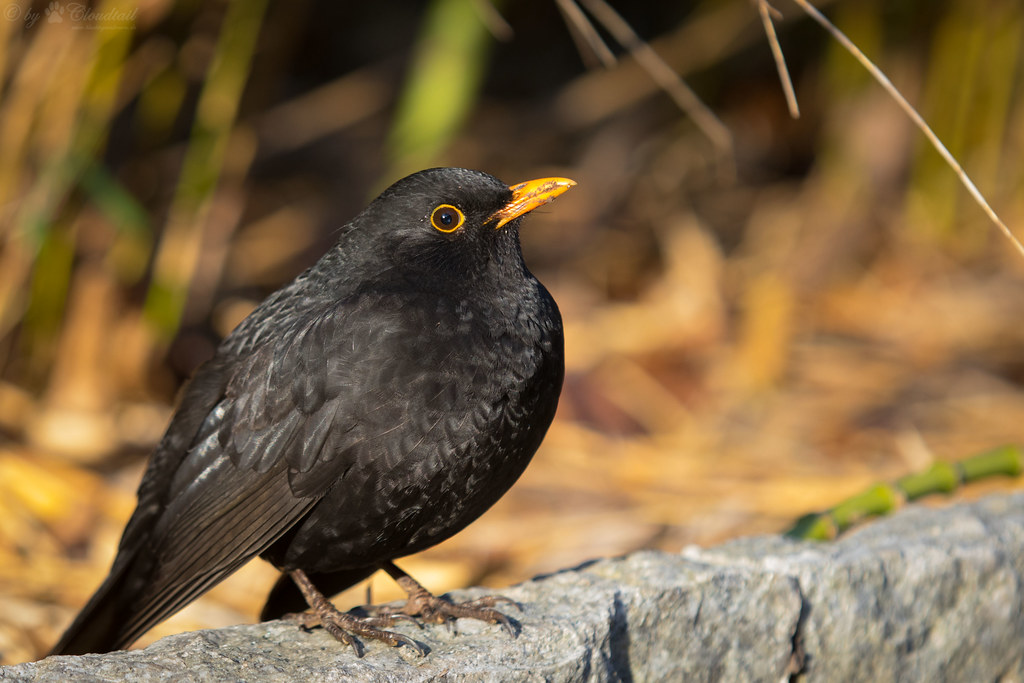
(C) Cloudtail the Snow Leopard (shared under a CC BY-NC-ND 2.0 license)
Scientific Name: Turdus merula
Appearance: Sexes differ. Adult male: dark, uniformly black with bright yellow bill and eye-ring. Female: dark brown with some lighter mottling on centre of throat and rufous tinge on breast. Yellow-brown bill.
Song: Melodic, fluent, vociferous but mellow whistling. Variable, with large repertoire of phrases, which often end with a high-pitched ‘scratchy’ flourish.
When heard: Resident. Full song from mid- to late-February, continuing through to the end of the breeding season in August or September.
Example:
Blackcap (Eurasian)
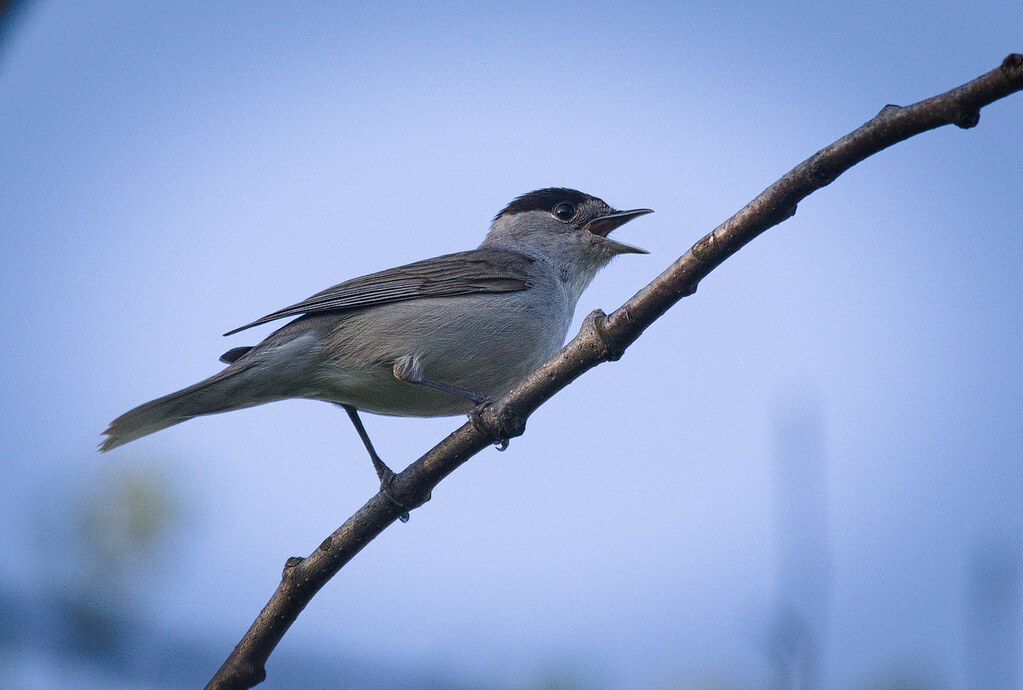
(C) hedera.baltica (shared under a CC BY-SA 2.0 license)
Scientific Name: Sylvia atricapilla
Appearance: Fairly sturdy warbler. Plumage grey-brown above, greyish-white or pale olive-grey below. Plain greyish wings and tail. Crown glossy black in adult male, and brown in female and juvenile male.
Song: Fast, jumbled warbling. Phrases often begin with a low-amplitude, scratchy warble, accelerating and growing in volume to bright, clear notes. Singing bouts consist of similarly constructed phrases interspersed with regular gaps.
When heard: Mainly summer migrant. Males sing from April until the end of the breeding season in July or August.
Example:
Bullfinch (Eurasian)
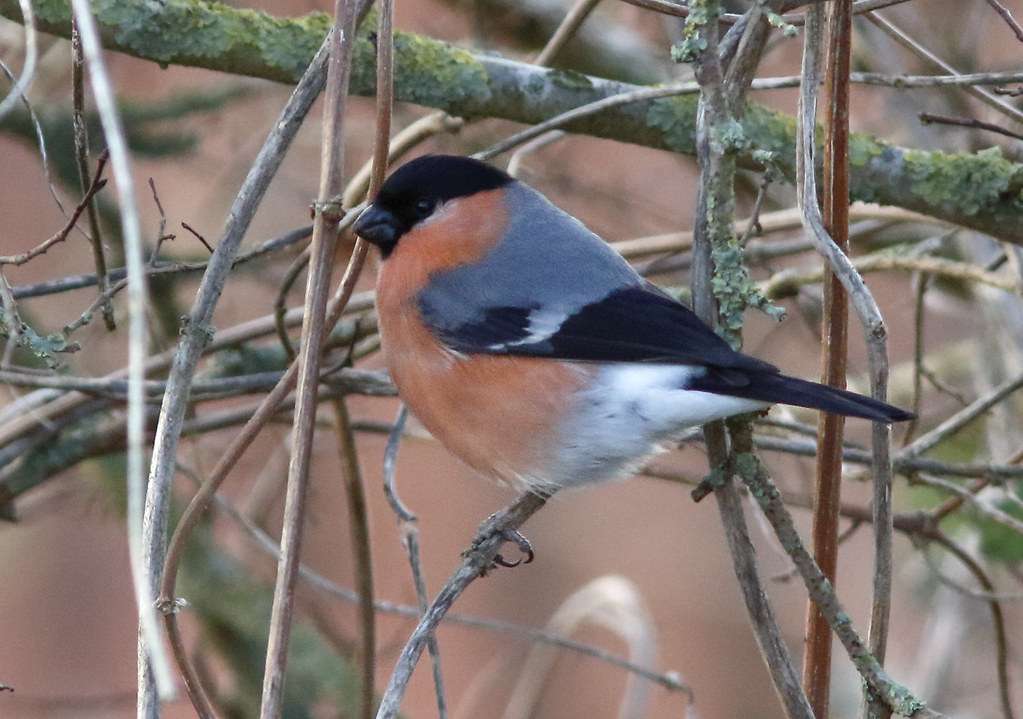
(C) Langham Birder (shared under a CC BY-NC-ND 2.0 license)
Scientific Name: Pyrrhula pyrrhula
Appearance: Bill short and thick. ‘Hood’ formed by black cap, bill and chin. Wing and tail feathers black with bluish gloss. White rump and thick grey-white wing-bar obvious in flight. Body plumage differs in sexes. Male; pure, pale grey back, and vivid red-pink from ‘cheeks’ to chest and underparts. Female; dull brownish back and beige-grey underparts.
Song: Song infrequently used. Most commonly heard calls are low, soft whistles peuuw, deu or phiu produced by both sexes.
When heard: Resident. Contact calls described above heard year-round.
Example:
Buzzard (Eurasian)
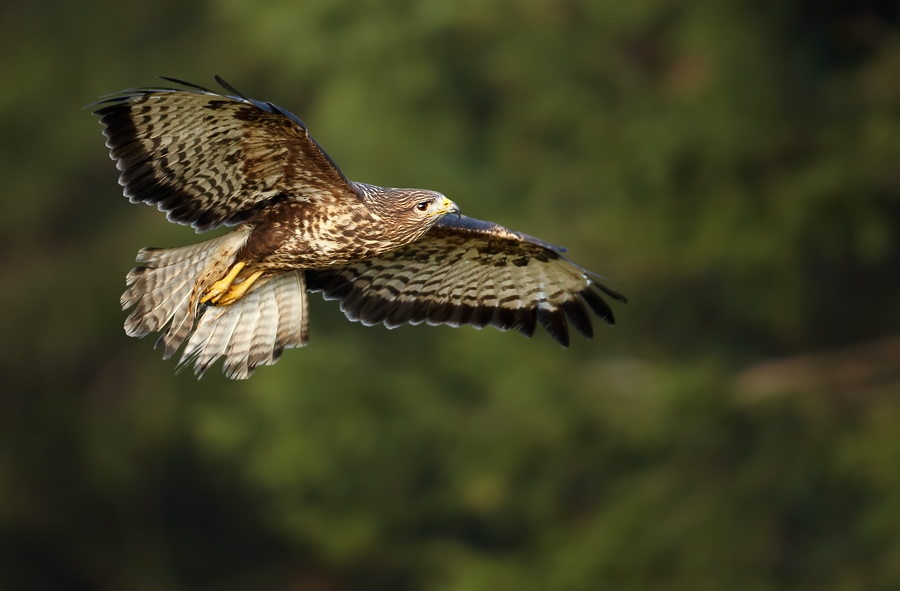
(C) Martin Mecnarowski (shared under a CC BY-SA 3.0 license)
Scientific Name: Buteo buteo
Appearance: Mid-sized raptor with variable plumage. Typically, head, upperparts and chest rich, dark brown. Underparts with varying amounts of white, often forming a pale “U”-shape across middle of torso. Pale, barred underwings and finely-barred tail visible in flight. Short, powerful, hooked beak. Female larger.
Song: Distinctive, descending, mournful pee-yah or pee-oo, often produced in flight.
When heard: Resident. Call may be heard year-round, but most frequent February through April when pair perform display flights over territory.
Example:
Carrion Crow
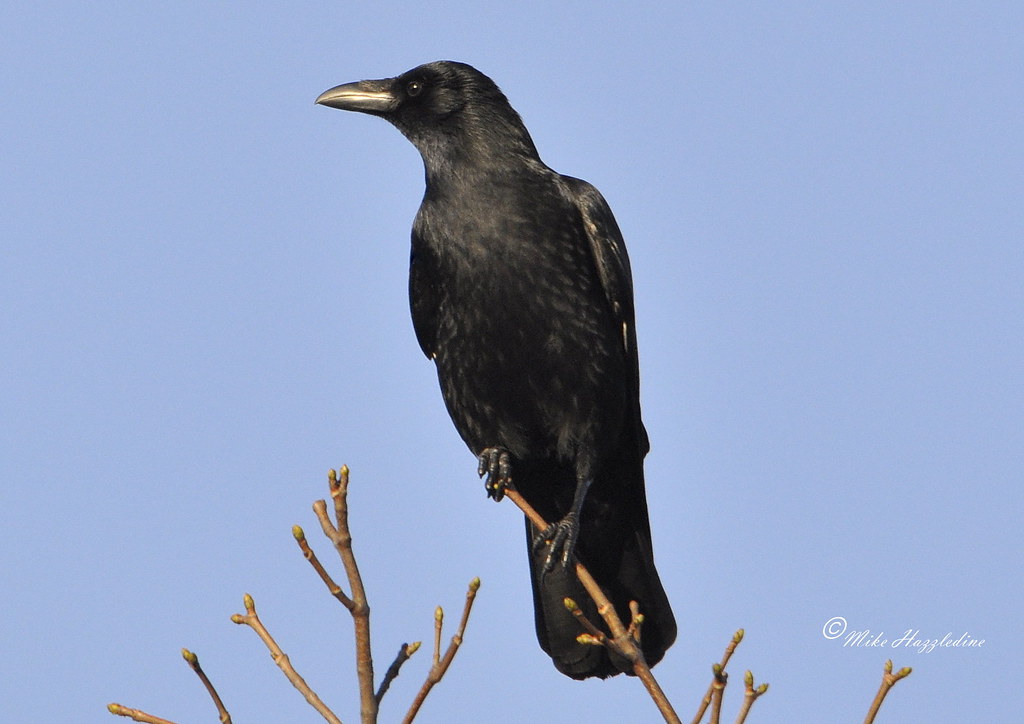
(C) Mike Hazzledine (shared under a CC BY-NC-ND 2.0 license)
Scientific Name: Corvus corone
Appearance: Large size. Thick, arched bill. Plumage all moderately-glossy black. Broad, flat-topped head and full feathering around bill-base distinguish from adult rook.
Song: Loud, harsh, grating caw, krra krra krra, metallic konk, korr and variants. Less ‘rolling’ than rook.
When heard: Resident. Calls produced year-round by both sexes.
Example:
Chaffinch (Common)
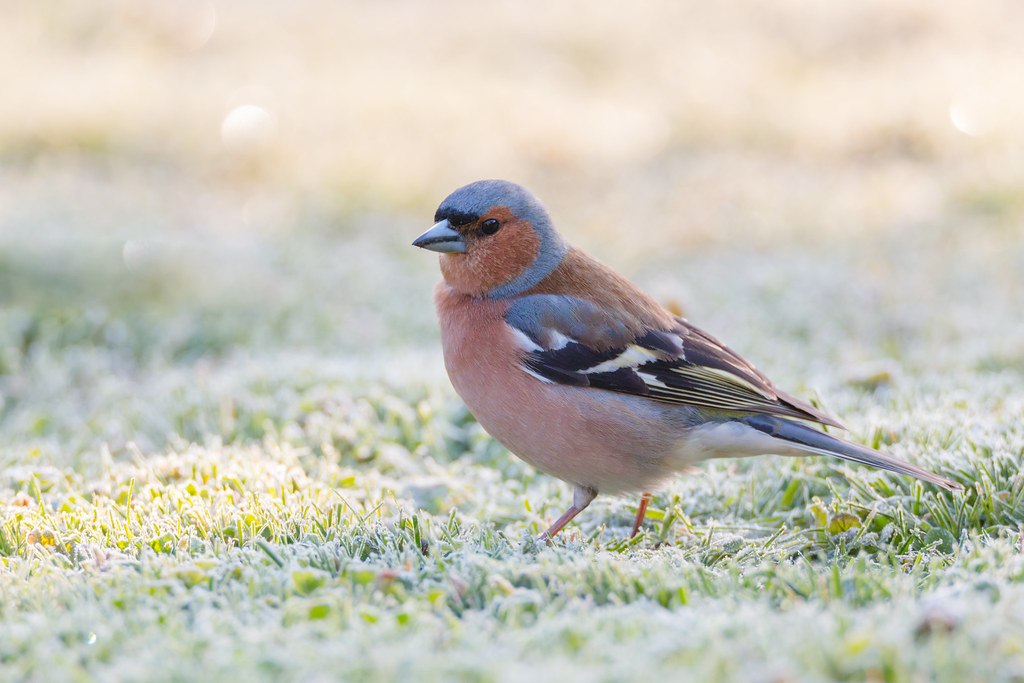
(C) clwhjsxy49 (shared under a CC BY-ND 2.0 license)
Scientific Name: Fringilla coelebs
Appearance: Sexes differ. Male: blue-grey head and bill, with brown-pink cheeks and throat. Upperparts brown, with greenish rump. Underparts rufous-pink. Female: head and upperparts light buffish-brown, and pale greyish underside. White on outer tail feathers and prominent double white wing-bar similar in both sexes.
Song: Cheerful, rattled, gradually descending phrase with a terminal flourish. Song bouts consist of similar phrases repeated at regular intervals.
When heard: Resident. Males begin singing by end of February and continue to the end of the breeding season in July.
Example:
Chiffchaff (Common)
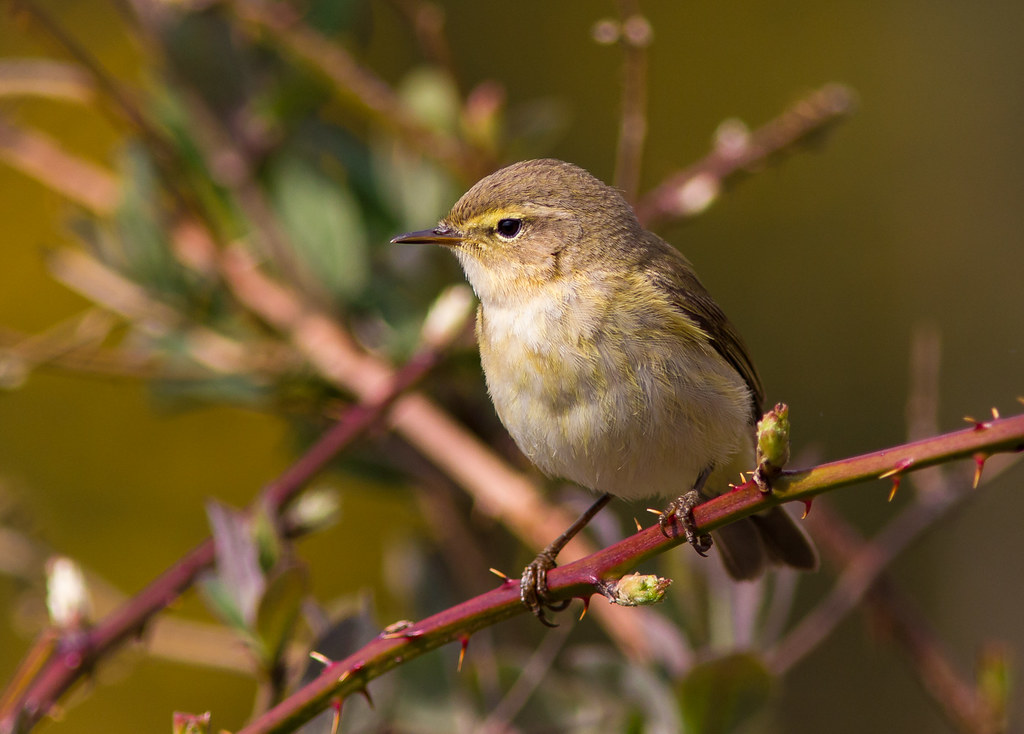
(C) naturalengland (shared under a CC BY-NC-ND 2.0 license)
Scientific Name: Phylloscopus collybita
Appearance: Small, dainty. Upperparts greyish-green, underparts off-white with a varying amount of yellow and buff on breast. Thin, off-white stripe over eye tinged with yellow. Thin, dark brown legs and fine, dark bill. Sexes alike.
Song: Highly distinctive, steady-paced repetition of few rather simple notes, chip-chap-chip-chap-chap-chup-chap-chap-chip.
When heard: Summer migrant. Males sing from March until the end of the breeding season in July or August. May also sing whilst on passage in autumn.
Example:
Coal Tit
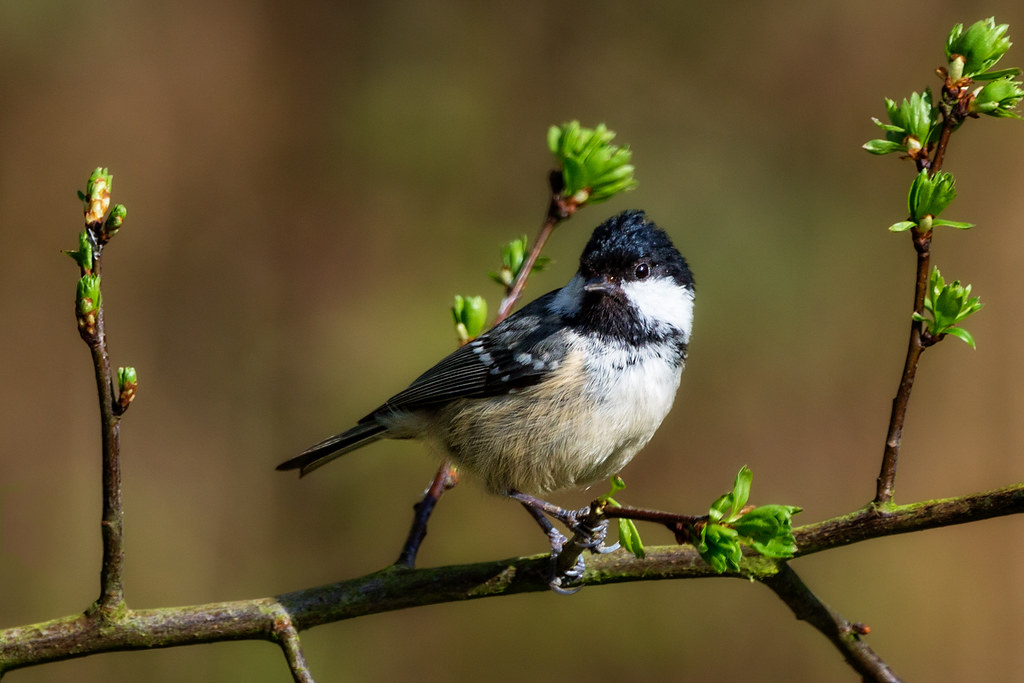
(C) stevehimages (shared under a CC BY-ND 2.0 license)
Scientific Name: Periparus ater
Appearance: Smaller than great tit, slighter than blue tit. Black head with white cheek patches, as great tit, but with well-defined white patch on nape. Greyish back. Underparts bright greyish-buff, with no dark central streak. Wings dark grey displaying double white wing-bar in flight. Sexes alike.
Song: Quick, repetitive wi-choo wi-choo wi-choo or sweetu sweetu. Resembling great tit, but higher and more fluid.
When heard: Resident. Male birds can be heard singing from January through to the end of the breeding season in July.
Example:
Collared Dove (Eurasian)
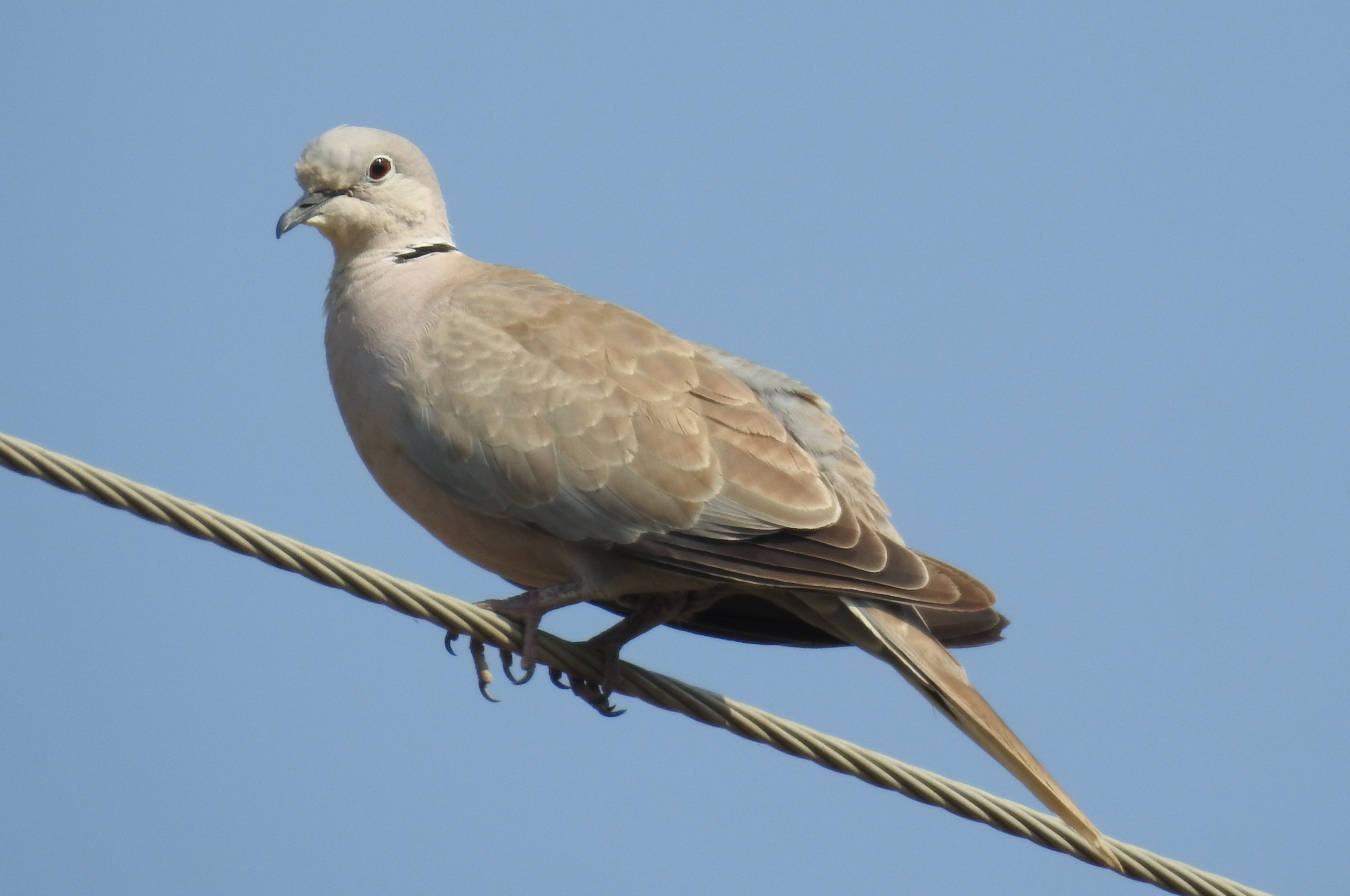
(C) Dr. Raju Kasambe (shared under a CC BY-SA 4.0 license)
Scientific Name: Streptopelia decaocto
Appearance: Markedly smaller than woodpigeon. Small, rounded head, subtly tinged pink, as is breast. Dark, ruby-red eye. Thin, clear black collar on back of neck, often edged white. Body uniform greyish-fawn. Grey area on upperwings, dark wingtips and white tip on dark tail visible in flight. Sexes similar.
Song: Loud, three-note coo, cu-coo-cuk or cooo-coo-coo. Softer and shorter than five- or six-note woodpigeon coo.
When heard: Resident. Territorial coo produced throughout much of the year in an extended breeding season from January through to October.
Example:
Cuckoo (Common)
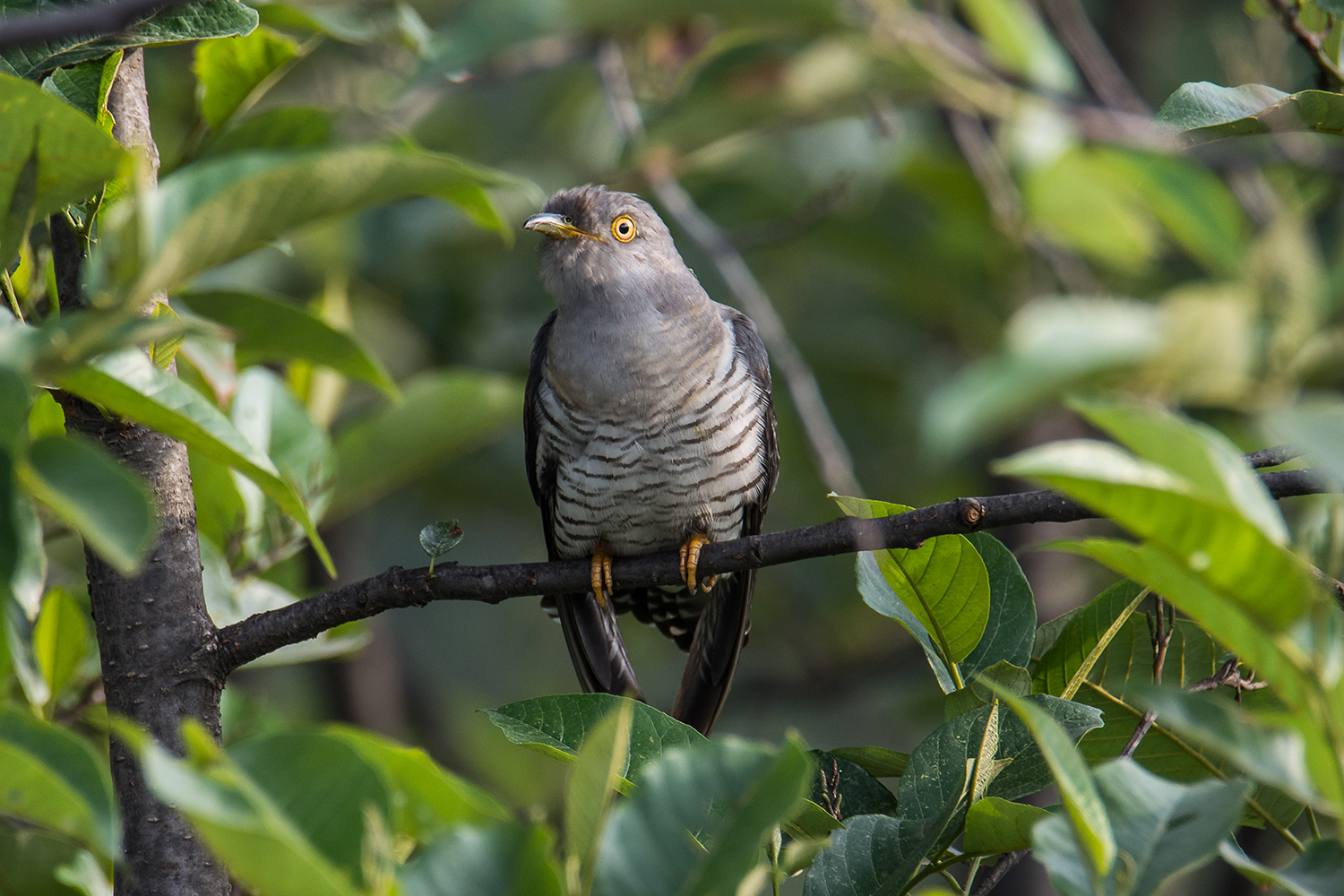
(C) creepanta (shared under a CC BY-SA 4.0 license)
Scientific Name: Cuculus canorus
Appearance: Fairly large size, with long, pointed wings and long, wedge-shaped tail. Short, thick, curved bill. Male: slate grey head, chin and throat, extending down breast. Medium grey upperparts. White underside with grey barring. Female: two colour morphs. Grey morph as male. Rarer rufous morph, upperparts rich rufous-cinnamon with well-spaced greyish-black barring, similar to juvenile.
Song: Males produce familiar loud, clear cuc-coo, sometimes cuc-cuc-coo. May be confused with collared dove, but syllables more sharply defined. Females produce less-frequently heard rich, throaty bubble.
When heard: Summer migrant. Males call upon arrival from mid- to late-April. Female bubbling calls produced slightly later during egg-laying period. Very short vocalisation period ends with departure as early as June.
Example:
Male:
Female:
Goldcrest
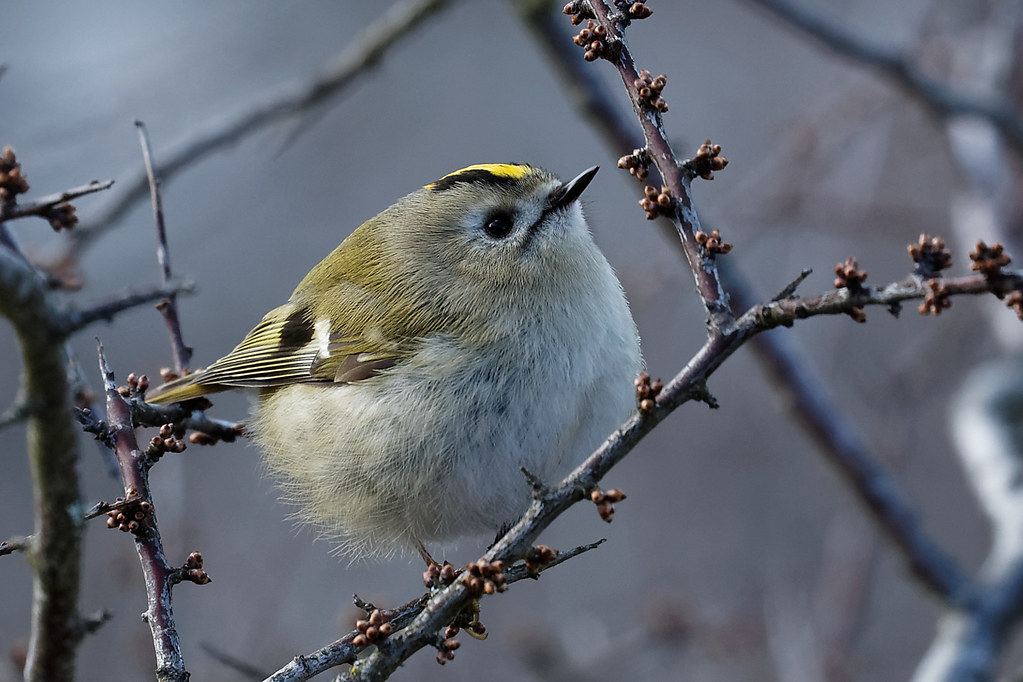
(C) solkatt64 (shared under a CC BY-NC-SA 2.0 license)
Scientific Name: Regulus regulus
Appearance: Tiny, ‘neckless’ outline. Plumage greenish above and dusky grey-white below. Off-white around eye and bill. Dark wings, displaying a broad white bar in flight. Broad black stripe on crown, with centre yellow and bright glossy orange in male, and yellow in female.
Song: High-pitched, fast, cyclical ‘jingling’ phrase with final flourish. Song bouts consist of similar phrases repeated at regular intervals.
When heard: Resident. Males sing from February onwards through to the end of the breeding season in August or September.
Example:
Goldfinch (European)
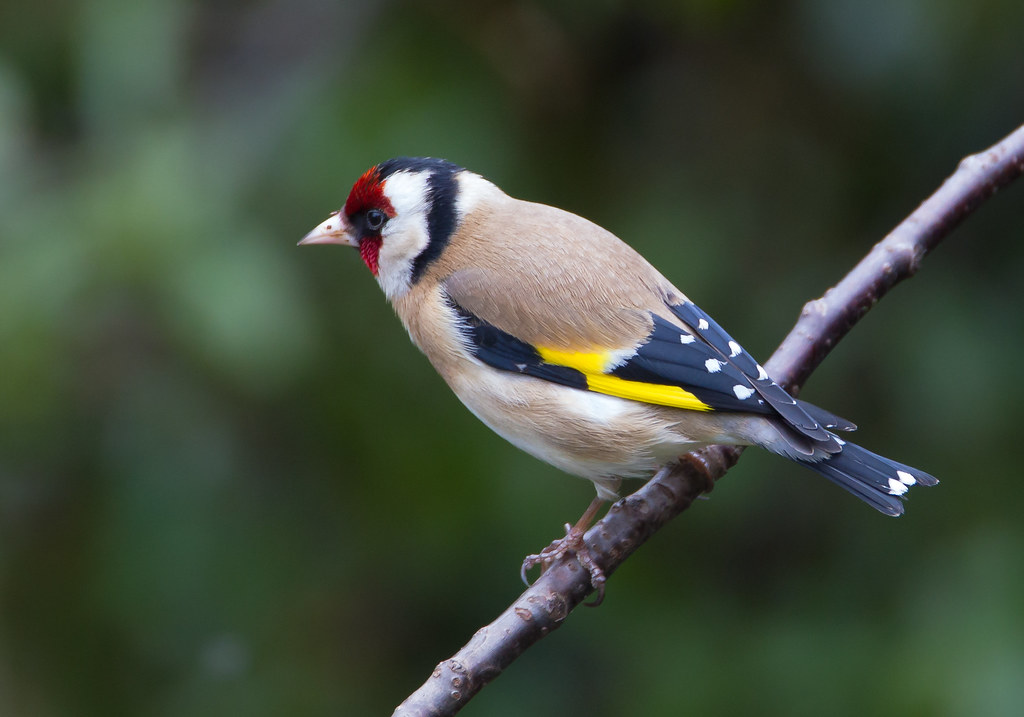
(C) naturalengland (shared under a CC BY-NC-ND 2.0 license)
Scientific Name: Carduelis carduelis
Appearance: Bold, black and white head with red face. Tawny-brown back. Tawny patch on either side of breast, extending down flanks. Underparts off-white. Broad yellow panel on black, white-tipped wings obvious in flight. Black tail with white spots on trailing half. Sharp, pale bill. Sexes alike.
Song: Sweet, musical and varied. Mixed 'tinkling' call-like notes and fluid trills.
When heard: Resident. Male song most intense during nest-building stage, which may occur two or three times in breeding season extending from late-March to end of August.
Example:
Great Spotted Woodpecker
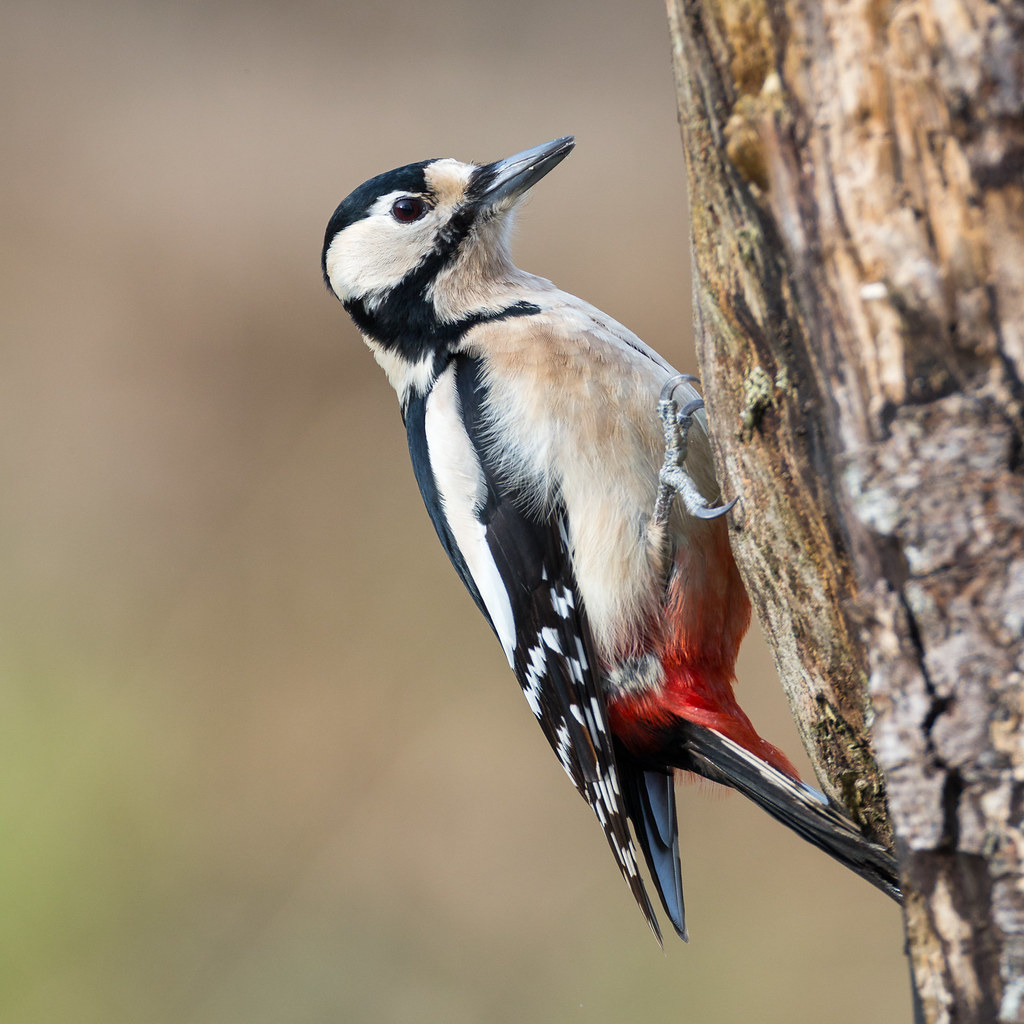
(C) The Wasp Factory (shared under a CC BY-NC-SA 2.0 license)
Scientific Name: Dendrocopos major
Appearance: Upperparts bold black and white. Underparts bright buff with sharply demarcated red patch under tail. Large white ‘shoulder’ patches and white-barring on black wings displayed in flight. Male has crimson patch on back of head, absent in female.
Song: Loud, short, fast drumming of beak on surface of tree. Also, sharp vocal tchik and a fast chattering alarm rattle.
When heard: Resident. Drumming; from mid-January to start of nesting in April or May. Calls; year-round.
Example:
Green Woodpecker (Eurasian)
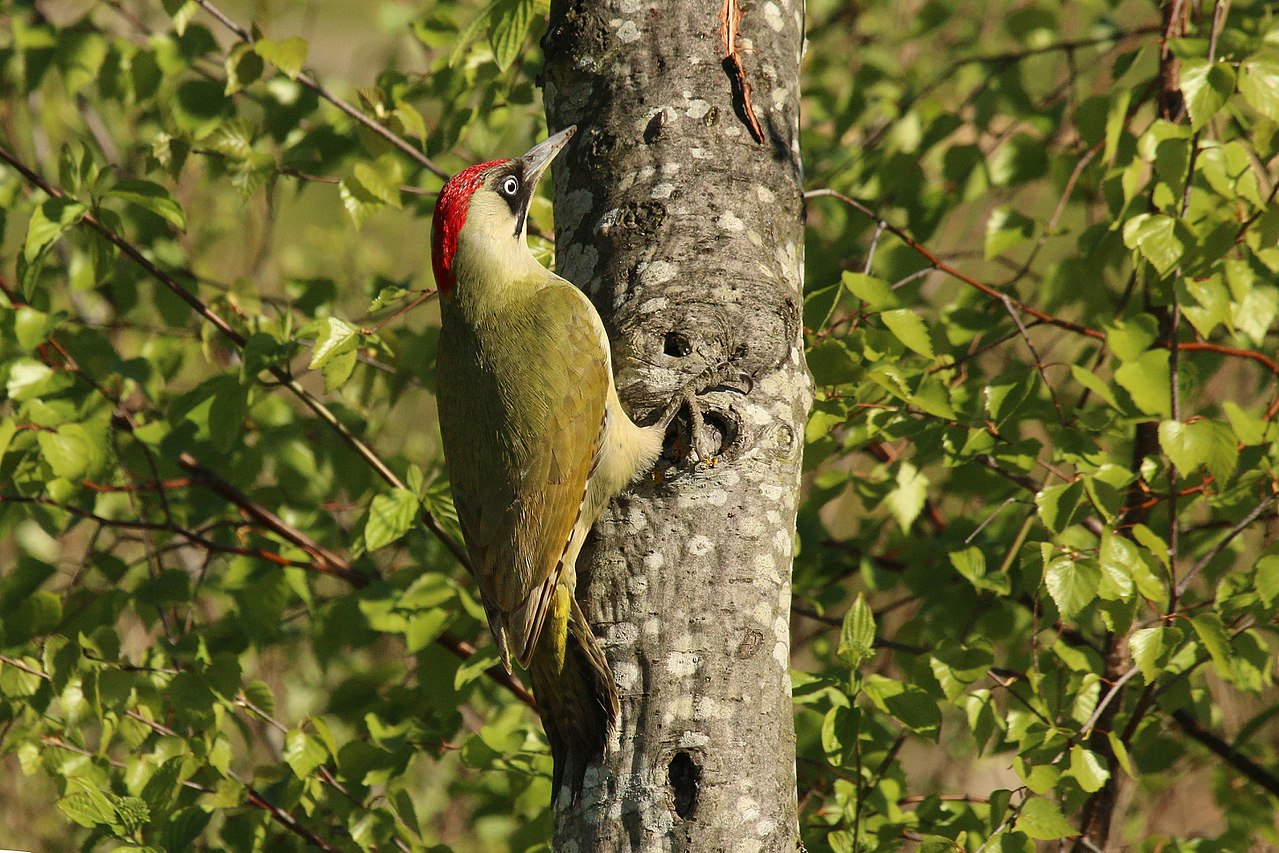
(C) Charles J Sharp (shared under a CC BY-SA 4.0 license)
Scientific Name: Picus viridis
Appearance: Large woodpecker, often encountered on the ground. Large, dagger-like beak. Vivid red cap, black around pale-coloured eye, and pale green ‘cheeks’. Male has black ‘moustache’ with a red centre, all-black in female. Upperparts apple-green. Underparts yellowish. White-barred, dark grey wing-tips and bright yellow-green rump obvious in flight.
Song: Most commonly heard call is raucous, slightly descending territorial ‘yaffle’. May be likened to some raptor calls.
When heard: Resident. ‘Yaffle’ call peaks February through April. Quieter outside of this period, but may be heard year-round.
Example:
Greenfinch (European)
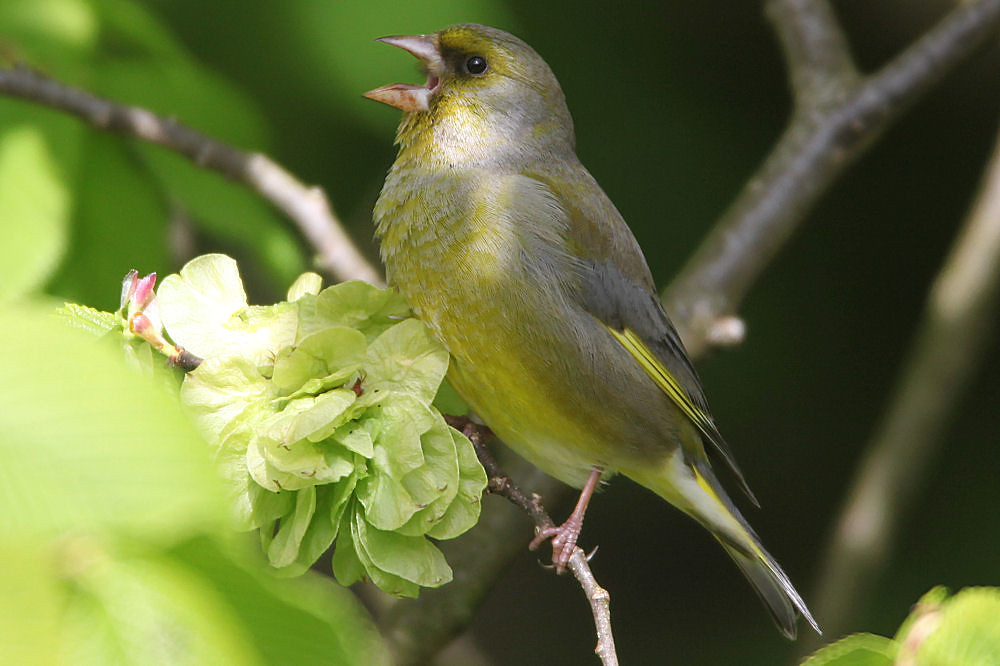
(C) Edwyn Anderton (shared under a CC BY-NC-SA 2.0 license)
Scientific Name: Chloris chloris
Appearance: Sexes differ. Male: Apple-green plumage above and below. Dark patch between eye and bill. Yellow edging to flight feathers visible as stripe with wings closed. Yellow-edged tail feathers. Grey wings with dark tips visible in flight. Female: overall duller plumage than male, with dull, dark streaking. Less extensive yellow on wings and tail. Both sexes have heavy, conical, pale bill.
Song: Disorderly-sounding series of trills and call notes of varying pace. Some musical, others metallic, intermixed with wheezing, buzzy dzweee.
When heard: Resident. Male song produced from March through to end of breeding season in August.
Example:
Jackdaw (Eurasian)
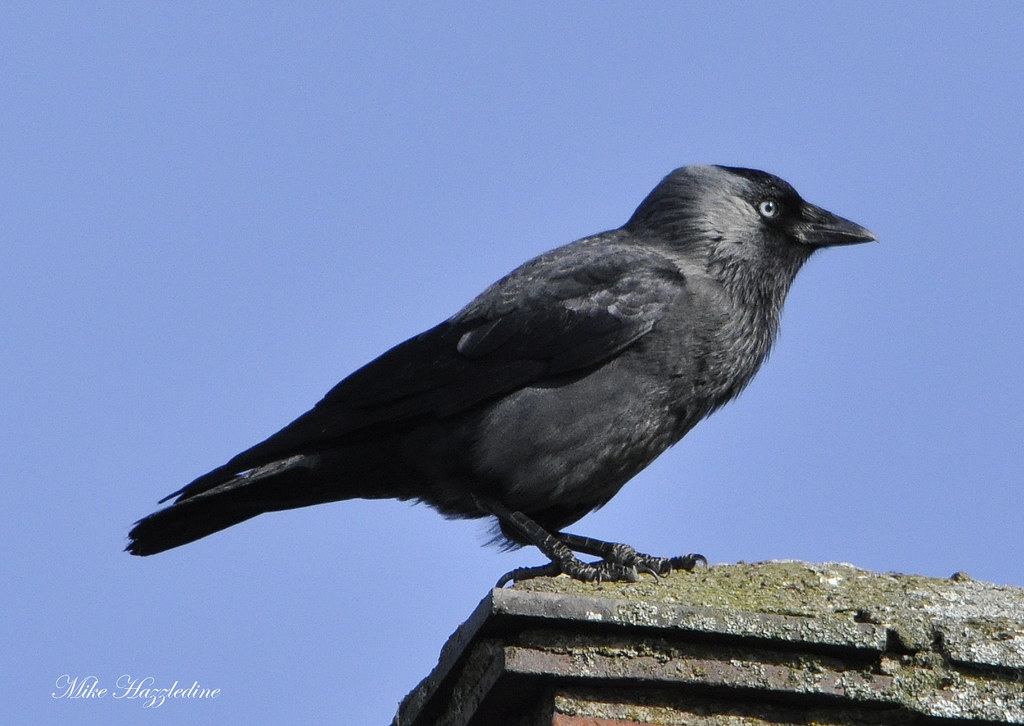
(C) Mike Hazzledine (shared under a CC BY-NC-ND 2.0 license)
Scientific Name: Corvus monedula
Appearance: Markedly smaller than carrion crow or rook. Plumage dark, sooty-grey. Face, throat and crown black. Sides of head, neck and nape pale grey. Wings black with bluish gloss, also appearing dark purplish and green. Iris light grey or white. Short, thick bill. Sexes alike.
Song: Many calls based on short, sharp yapping sound kyak!, often produced in flight, or a more rolling churr or chee-ar. Noisy when in flocks.
When heard: Resident. Calls described above produced year-round.
Example:
Jay (Eurasian)
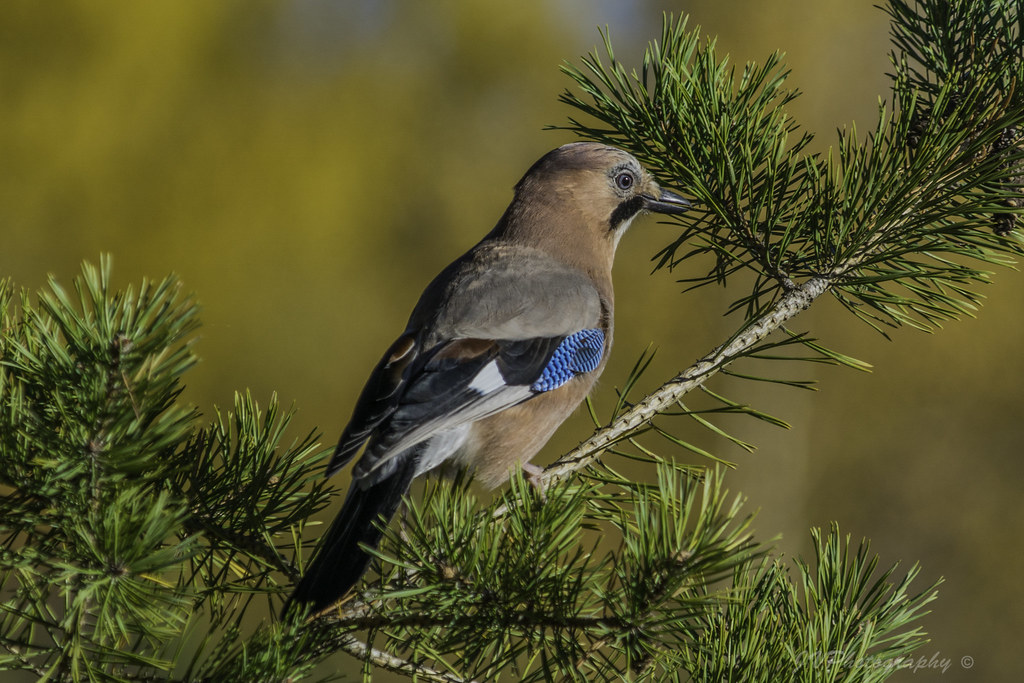
(C) jyrx (shared under a CC BY-NC-SA 2.0 license)
Scientific Name: Garrulus glandarius
Appearance: Smaller than jackdaw. White crown striped dark, white throat and thick black ‘moustache’. Body plumage pinkish grey-brown. Light blue panel barred dark on wings. White patch on black wings and large white rump evident in flight. Black tail and short, thick, dark bill. Sexes alike.
Song: Large repertoire of varied, but largely simple, calls, including mimcry of, e.g., buzzard, sparrowhawk, carrion crow. Soft, quiet ‘song’ rarely heard or described. Most frequently heard vocalisations are nasal mewing pee-oo, or loud, harsh skairk!, likened to the sound of tearing cloth.
When heard: Resident. Commoner calls described above produced year-round.
Example:
Long-tailed Tit
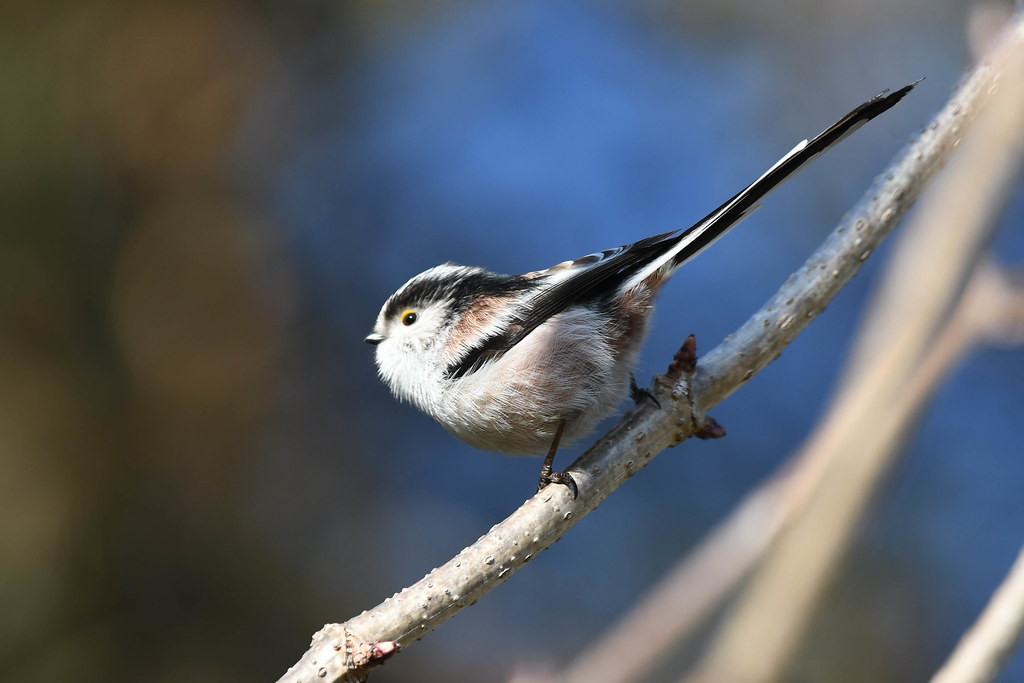
(C) christophmueller.org (shared under a CC BY-NC-SA 2.0 license)
Scientific Name: Aegithalos caudatus
Appearance: Tiny, neckless, ‘ball-shaped’ outline, with long tail. Crown white, with heavy black band from eye down side of neck. Upperparts black, white and pinkish-brown. Underparts dull white. Tail black with outer feathers white. Dark wings. Very short, dark bill. Sexes alike.
Song: Song is very rarely used. Most frequently heard vocalisations in a limited repertoire are contact calls as the birds travel in small family groups. A high, thin seee seee, or a short, abrupt trrp or longer zerrrp or tsirrup.
When heard: Resident. Contact calls described above are produced year-round.
Example:
Magpie (Eurasian)
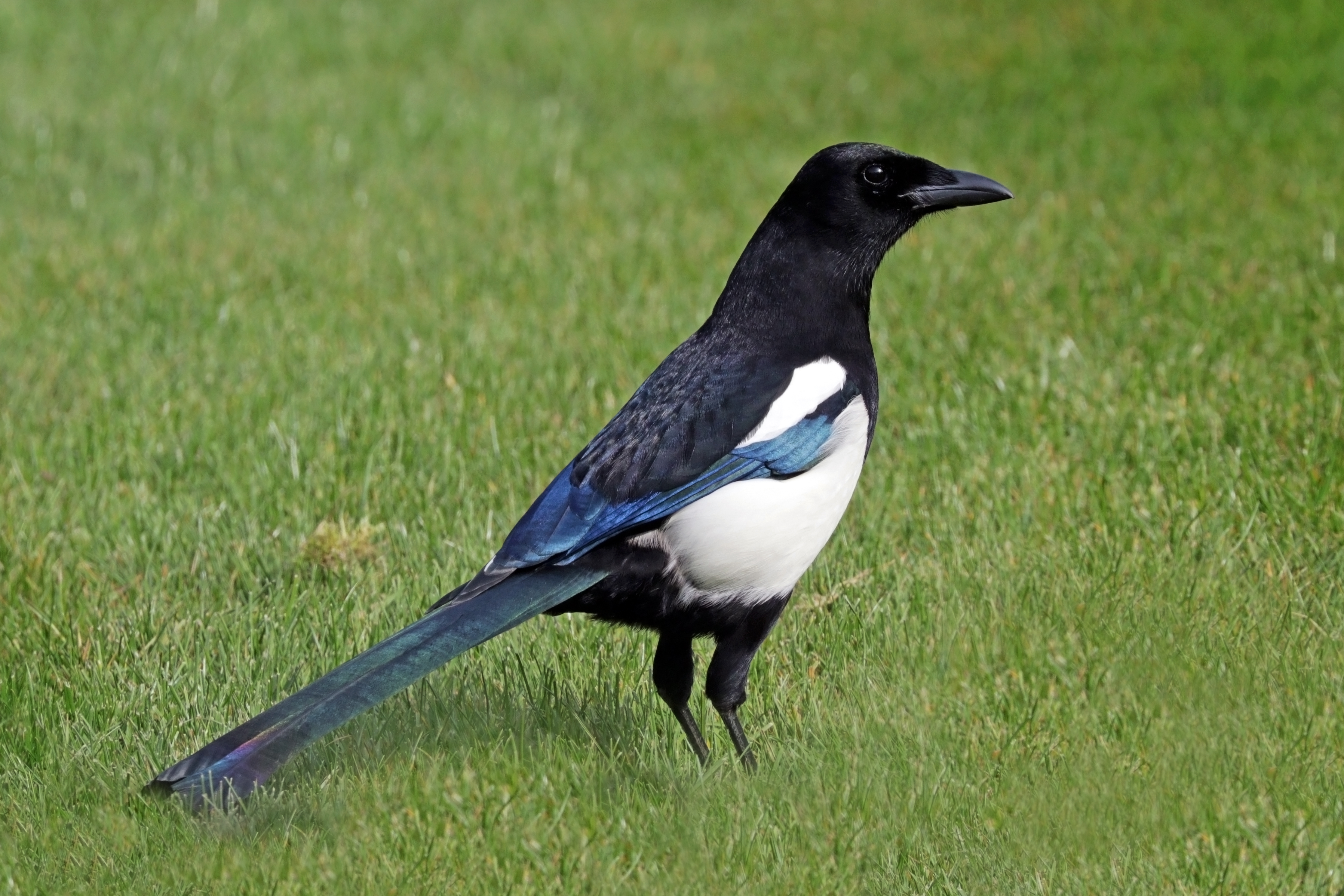
(C) Charles J Sharp (shared under a CC BY-SA 4.0 license)
Scientific Name: Pica pica
Appearance: Striking, long-tailed black and white crow. Plumage black from head to back and breast. White underparts, and large white ‘shoulder’ patch. Tail and wings blackish with metallic gloss of green, blue and purple. Bill black. Sexes alike.
Song: Soft, chattering, squeaky, musical song rarely heard. Harsh, chattering, mechanical rattle is most frequently heard vocalisation.
When heard: Resident. Rattle vocalisation produced year-round. Presumably, soft song is produced during the breeding season from February through to August.
Example:
Marsh Tit
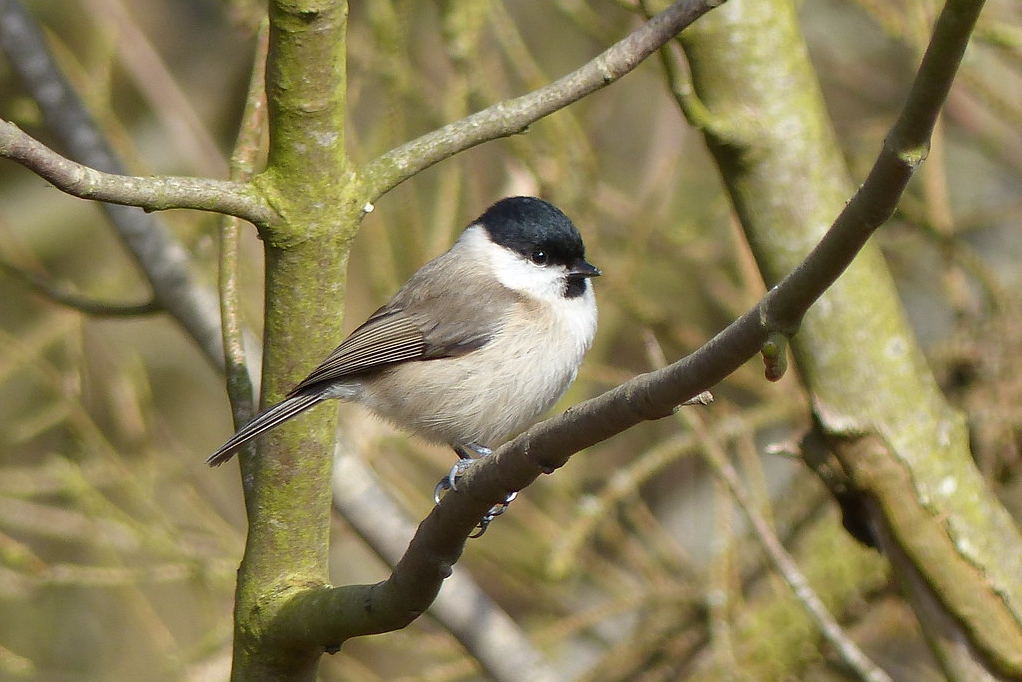
(C) ianpreston (shared under a CC BY 2.0 license)
Scientific Name: Poecile palustris
Appearance: Small size. Large, glossy black crown extending to back of neck. Small, neat, black ‘bib’ on chin, and white ‘cheeks’. Upperparts plain grey-brown. Underparts off-white, tinged grey-brown or buff on flanks and sides of breast. Small, rounded, plain grey-brown wings. Sexes alike.
Song: Relatively simple, rolling schip-schip-schip-schip repeated at regular intervals. Distinctive, loud pit-chew! contact call more frequently heard.
When heard: Resident. Song infrequently heard, although peak production is February to April. Contact call heard year-round.
Example:
Song:
Call:
Mistle Thrush
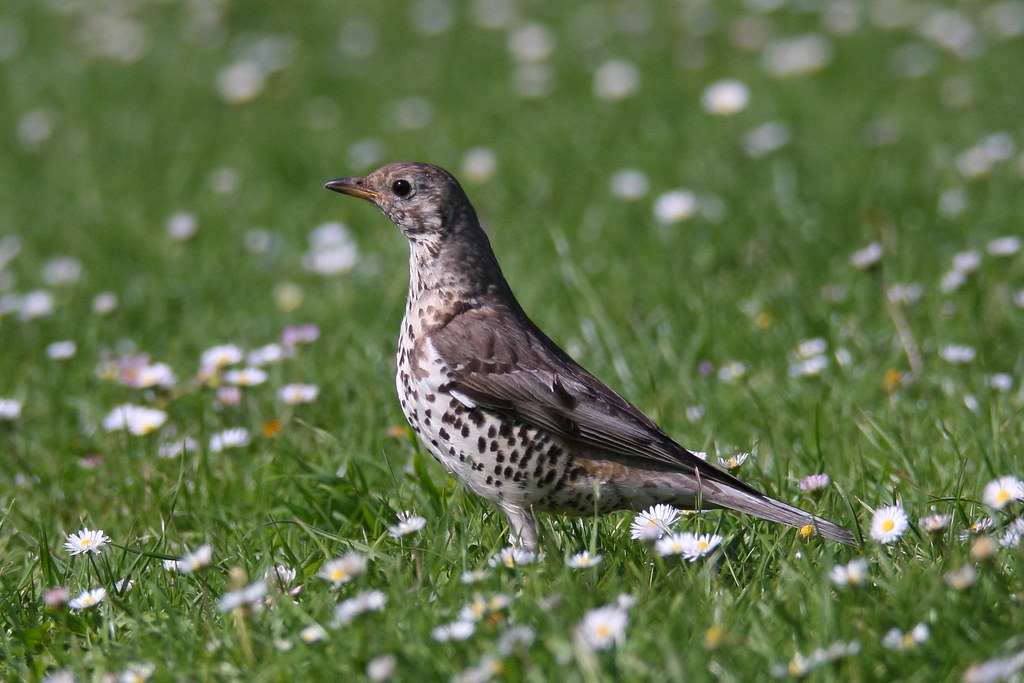
(C) markkilner (shared under a CC BY-NC-SA 2.0 license)
Scientific Name: Turdus viscivorus
Appearance: Larger than blackbird. Upperparts grey-brown. Underparts creamy-white, boldly spotted dark. White underwings, white tail corners and pale rump obvious in flight. Overall paler, colder appearance than song thrush. Sexes alike.
Song: Loud, flutey, melancholy whistling. Often delivered from high perch as short, repetitive phrases. Repertoire and frequency range not as varied as blackbird or song thrush.
When heard: Resident. Males sing from February through to the end of the breeding season in July.
Example:
Pheasant (Common)
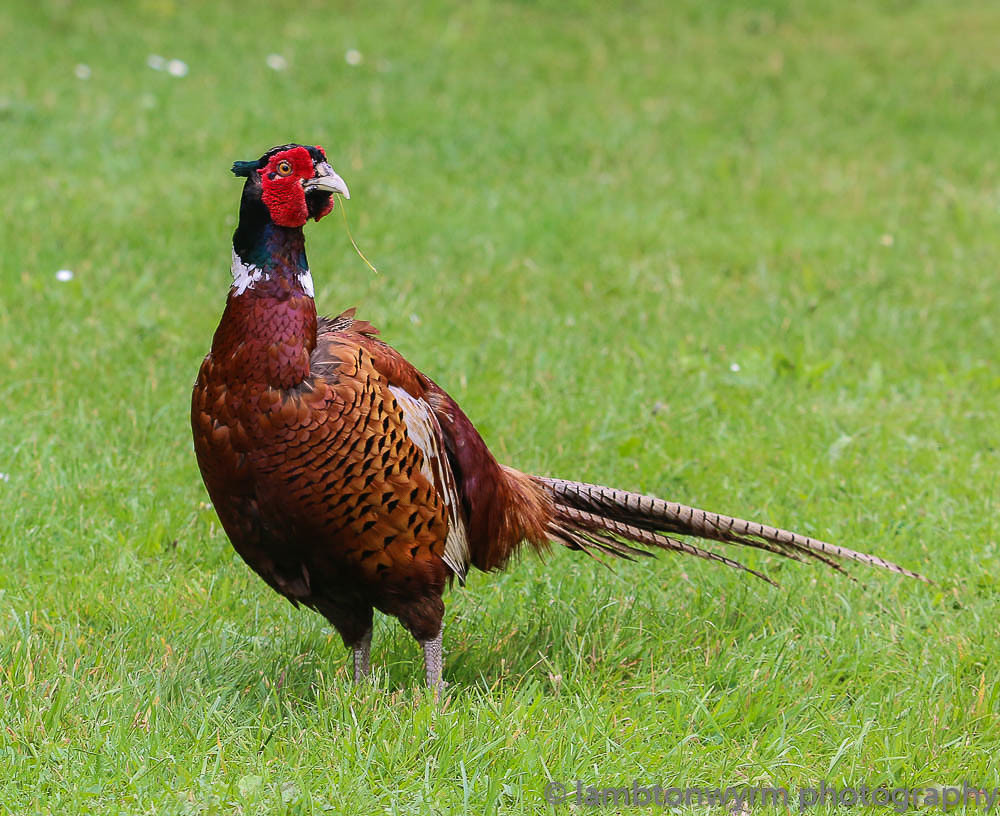
(C) lambtonwrym (shared under a CC BY-NC-ND 2.0 license)
Scientific Name: Phasianus colchicus
Appearance: Large gamebird with long, tapered tail. Male: Glossy green-black head with fleshy, vivid red eye-patch. With or without white neck-ring. Glossy bronze or copper breast with dark spots and orange-copper flanks. Pale rump may be obvious in flight. Female: Plumage pale brown with bold black markings, particularly on upperparts.
Song: Loud, harsh, explosive corr-kok! Followed immediately by a sudden burst of ‘whirring’ wingbeats.
When heard: Introduced. Male advertising call and wingbeats produced during the breeding period from March to July. Similar calls may be heard year-round.
Example:
Song Thrush
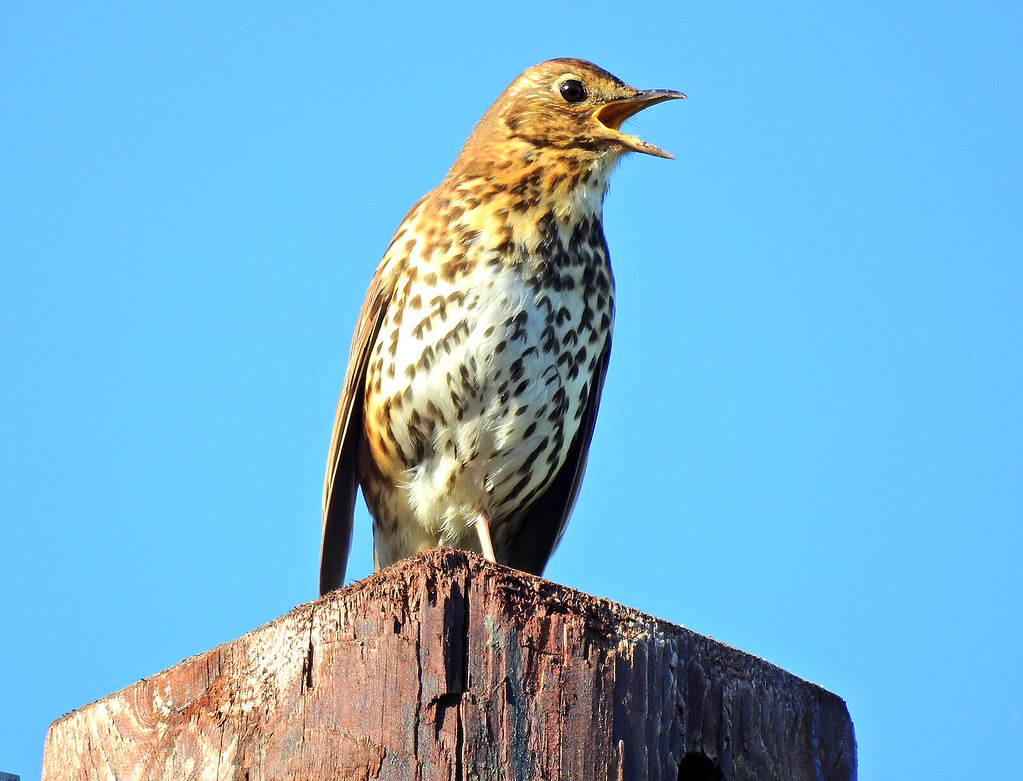
(C) Doug Greenberg (shared under a CC BY-NC 2.0 license)
Scientific Name: Turdus philomelos
Appearance: Markedly smaller than blackbird. Plain brown to olive-brown upperparts. Underparts buff-white and boldly marked with dark, “V”-shaped spots. Orange-buff underwings are noticeable in flight. Sexes alike.
Song: Loud, vigorous and relentless. An extremely varied repertoire; some notes are melodious, some whistled, others harsh or rattled. A distinctive feature is the repetition of each note 2-4 times before moving to the next note.
When heard: Resident. One of the earliest seasonal singers in the UK, being heard as early as January and continuing through to the end of the breeding season in August or September.
Example:
Starling (Common)
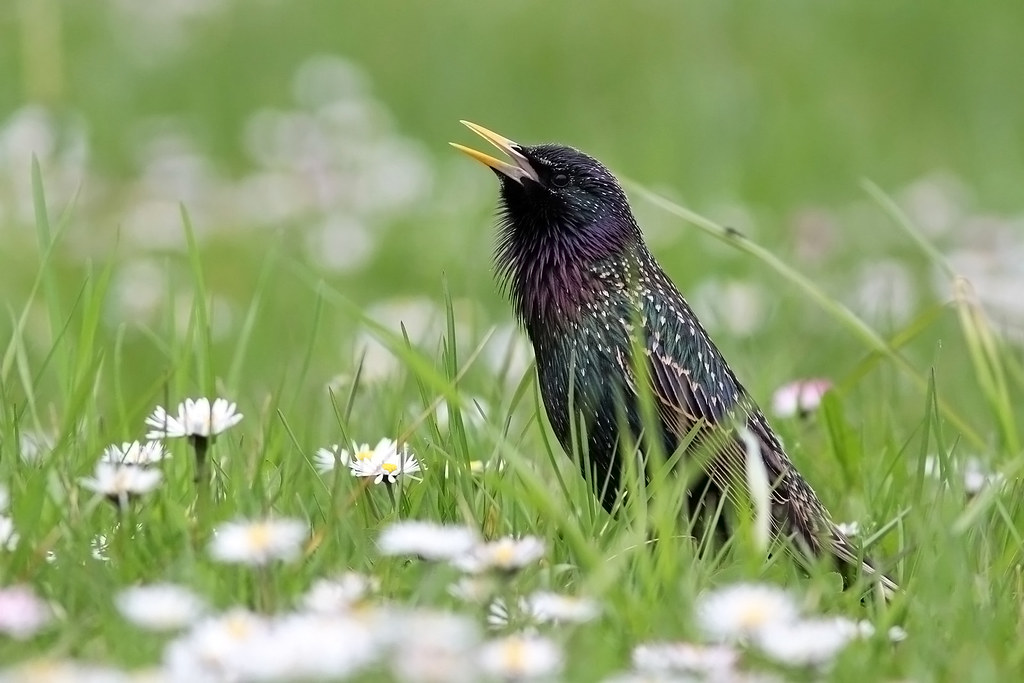
(C) Michał_Kucharski (shared under a CC BY-NC-ND 2.0 license)
Scientific Name: Sturnus vulgaris
Appearance: Similar in size to blackbird. In spring and summer, glossy black plumage prominently spotted light, especially on back and belly. Elongated feathers on throat. Sharp, yellow bill, base of lower mandible bluish-grey in male, pinkish-white in female. Short, square tail obvious in flight.
Song: Large repertoire of highly variable mechanical gurgles, rattles, trills and whistles. Can also incorporate mimicry of other birds as well as non-avian sounds.
When heard: Resident. Males typically sing early in breeding season from February to end of July.
Example:
Stock Dove
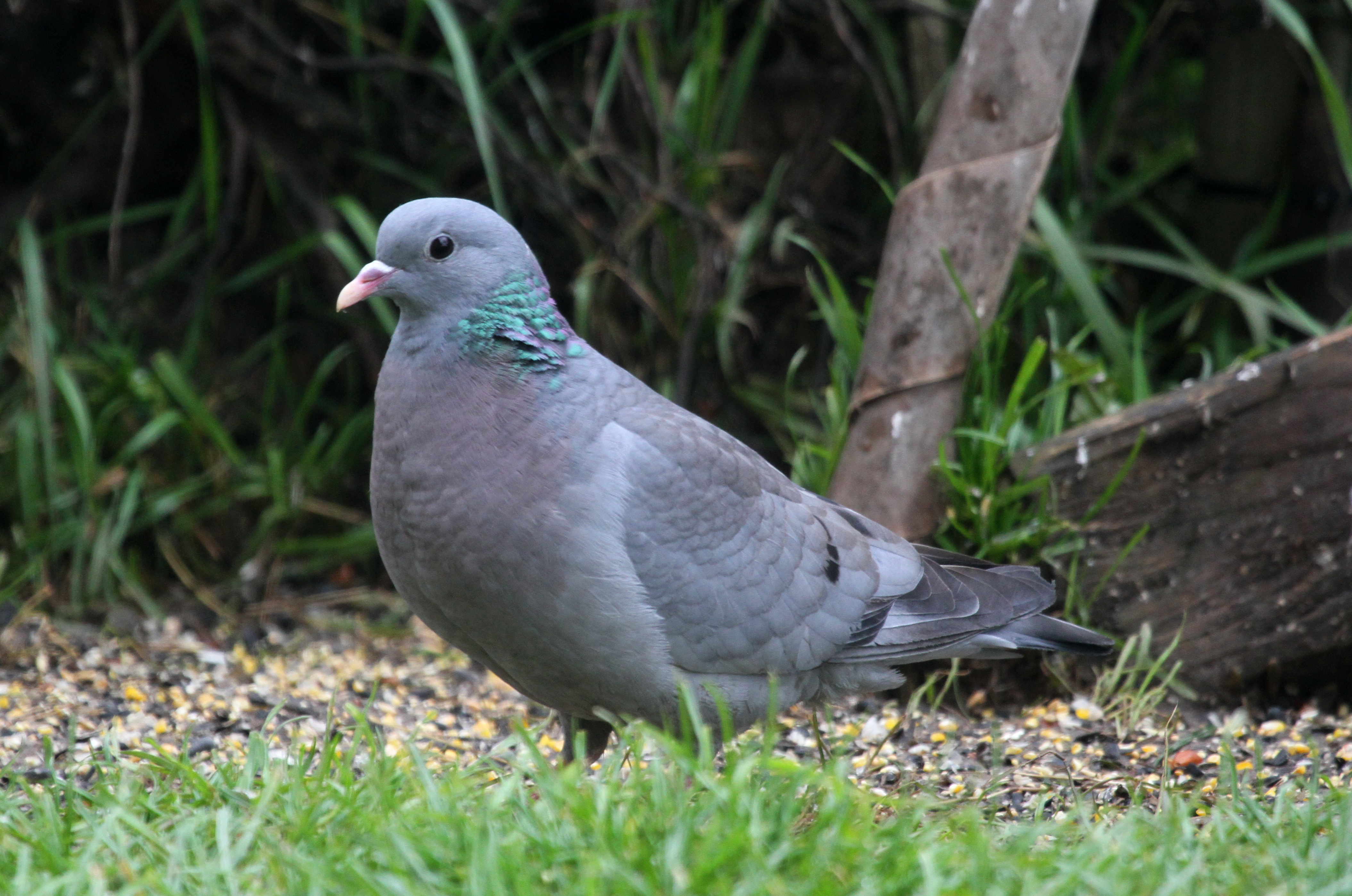
(C) Stephen G. Willis (shared under a CC BY-ND 2.0 license)
Scientific Name: Columba oenas
Appearance: Smaller than woodpigeon. Uniform ash-grey head, mantle and back with glossy green neck. Breast deep pink. Black wing-tips and pale mid-wings displayed in flight. Sexes alike.
Song: Low, pumping, disyllabic coo, repeated several times with increased emphasis, ooo-woo ooo-woo. Not strictly ‘song’, which is produced only by passerines.
When heard: Resident. May be heard more or less year-round, but less frequently in autumn and winter months.
Example:
Tawny Owl
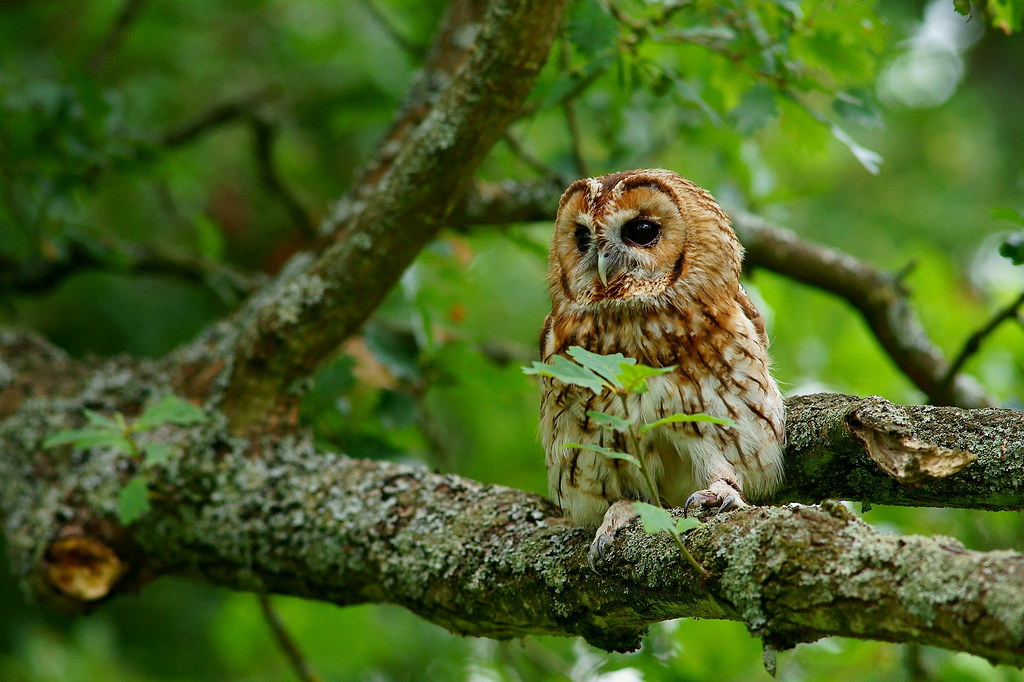
(C) Peter G Trimming (shared under a CC BY 2.0 license)
Scientific Name: Strix aluco
Appearance: Similar in size to woodpigeon or carrion crow, with large, round head. Large, black eyes set in obvious facial disc. Upperparts red-brown or grey-brown with row of bold white spots on each side. Underparts white, streaked brown. Brown wings, with dark barring and pale spots and bars evident in flight. Small, yellowish-white hooked bill.
Song: Male produces familiar long, quavering hoot. Both sexes produce yapping notes and loud ke-wick! calls, although the latter more commonly used by female.
When heard: Resident. Calls heard throughout year, with maximum vocal activity from February to May and August to October.
Example:
Hoot:
Ke-wick call :
Tree Sparrow (Eurasian)
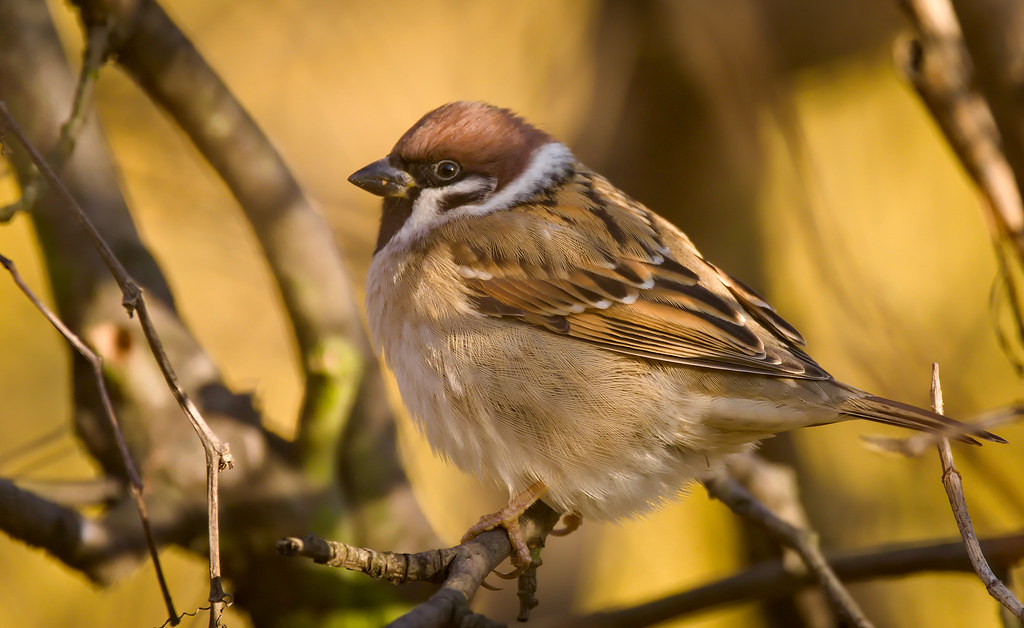
(C) hedera.baltica (shared under a CC BY-SA 2.0 license)
Scientific Name: Passer montanus
Appearance: Crown and nape rich rufous-brown. Black spot on whitish cheeks, black ‘mask’ and small, black ‘bib’ on throat. White collar. Back brown, streaked black. Underparts unmarked grey-buff. Double, thin, whitish wing-bar and buffish rump visible in flight. Sexes alike.
Song: Simple, bright, monotonous chirrup, similar to house sparrow, but readily distinguishable with experience.
When heard: Resident. Male chirping song produced during breeding period, from February through to September.
Example:
Treecreeper (Eurasian)
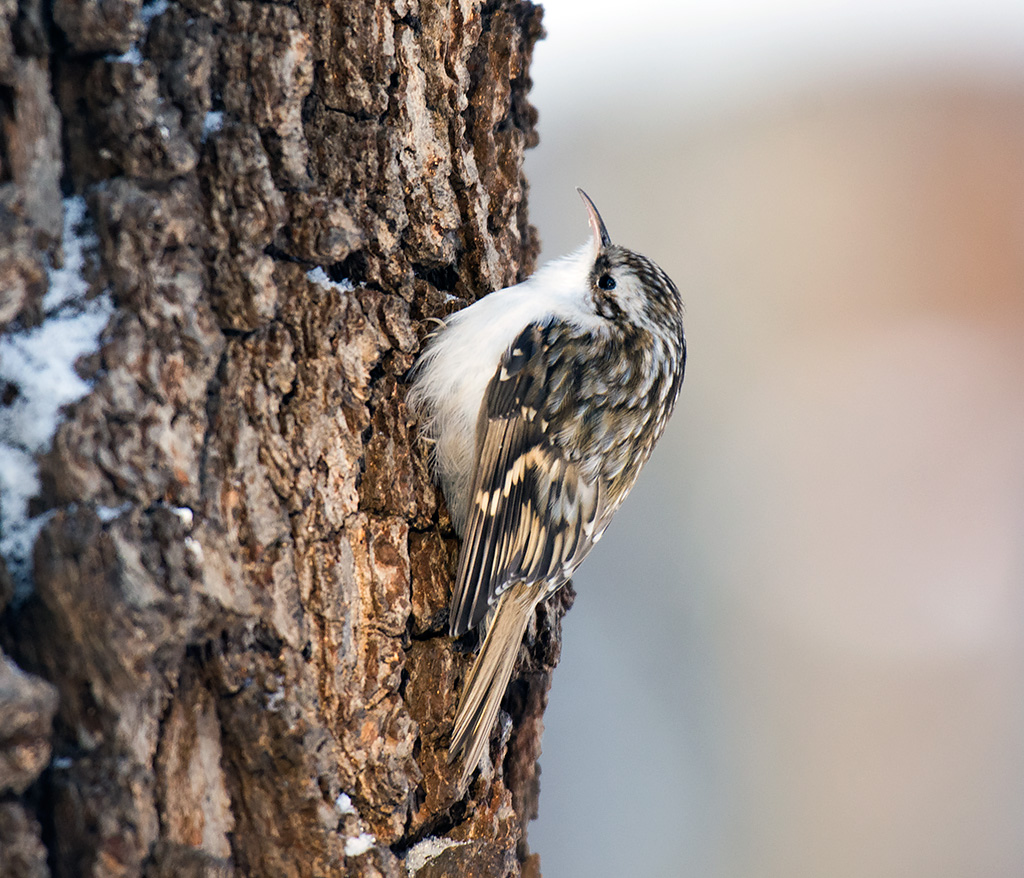
(C) Sergey Yeliseev (shared under a CC BY-NC-ND 2.0 license)
Scientific Name: Certhia familiaris
Appearance: Similar in size to blue tit. Fine, curved bill. Prominent white or whitish stripe over eye. Upper plumage brown with cream and dark mottling. Underparts light greyish-white to silky white. Dark wings display pale and white wing bars in flight. Sexes alike.
Song: High-pitched, musical, falling trill with final flourish.
When heard: Resident. Males sing from February through to the end of breeding in June or July.
Example:
Willow Tit
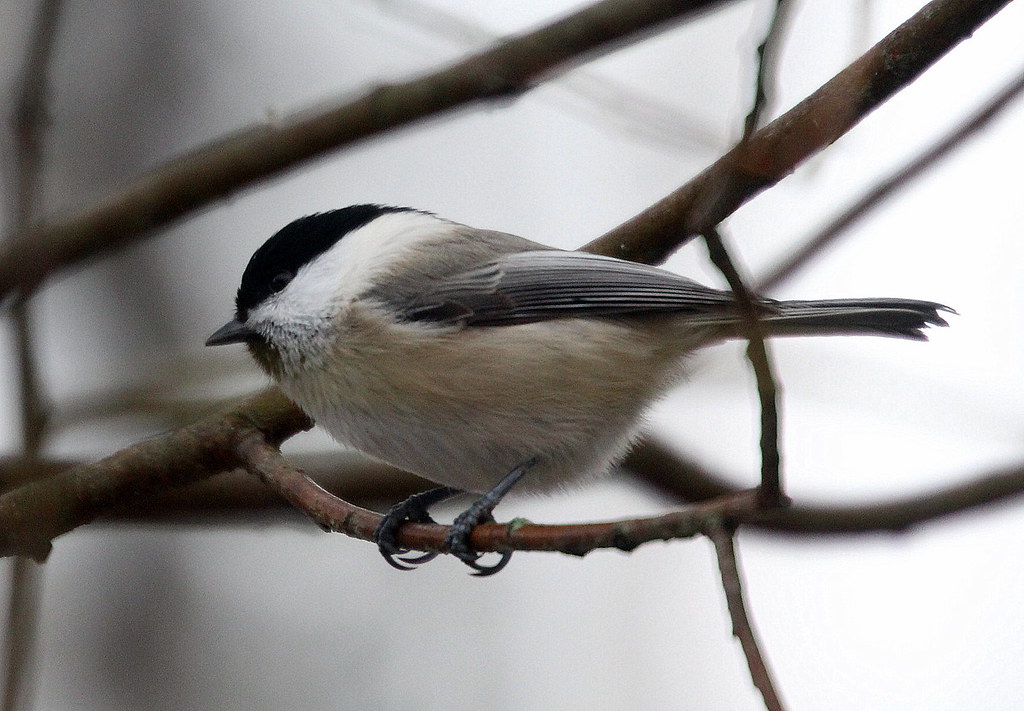
(C) irio.jyske (shared under a CC BY 2.0 license)
Scientific Name: Poecile montanus
Appearance: Difficult to distinguish from marsh tit, but overall appearance is of a less neat-looking bird. Large, dull black cap extending to back of neck. Small, black ‘bib’ on chin, less sharply defined than marsh tit. White cheeks. Upperparts dull grey-brown. Underparts dull grey-buff, with orange-buff flanks. Pale panel often visible on brown wings when folded. Sexes alike.
Song: Simple, clear, repetition of descending piping notes, tyoo tyoo tyoo.
When heard: Resident. Peak singing activity during nest excavation in March and April, but may be heard throughout breeding season from February to July.
Example:
Willow Warbler
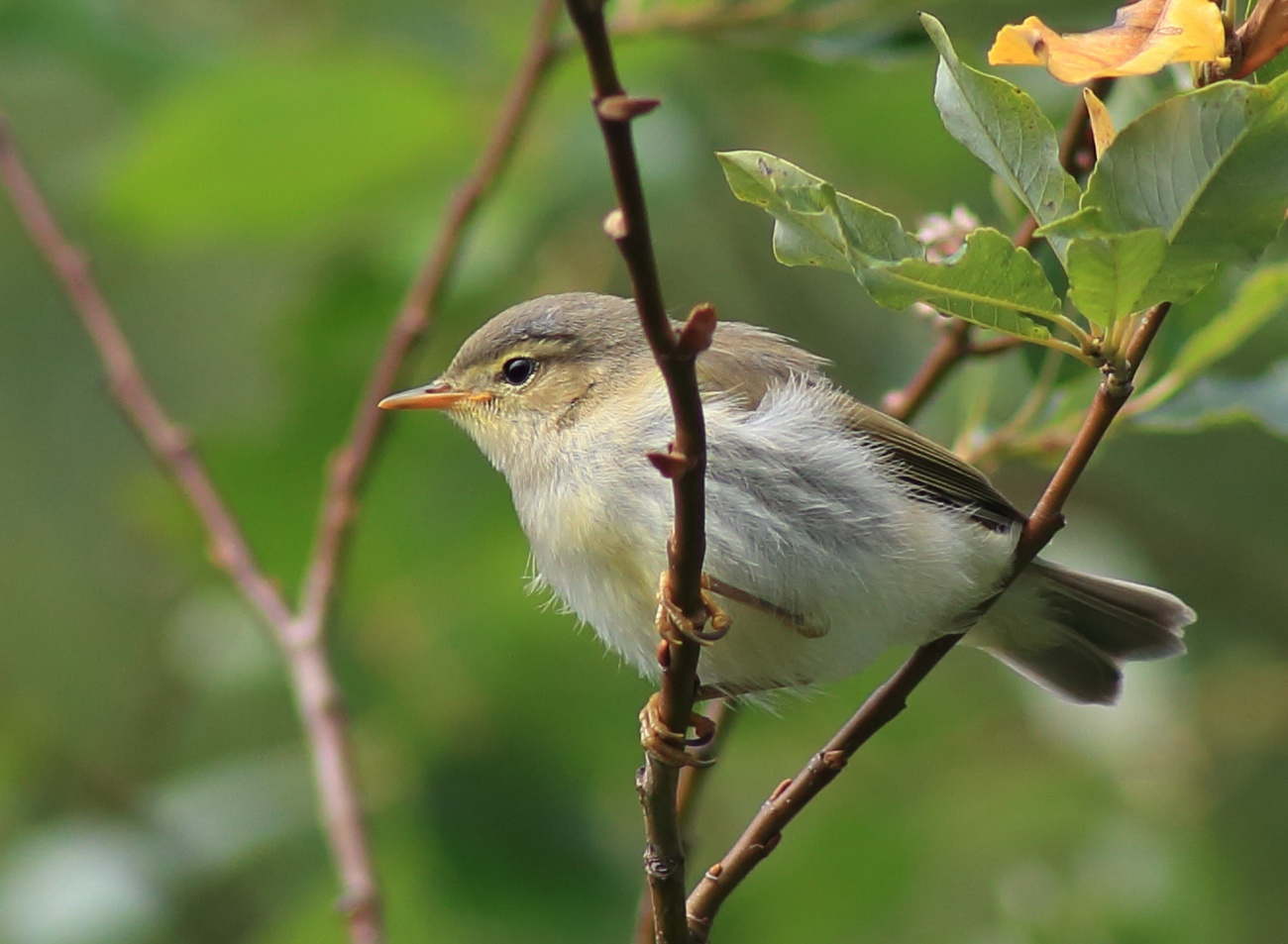
(C) Estormiz (shared under a CC0 1.0 license)
Scientific Name: Phylloscopus trochilus
Appearance: Small and slim with short, thin bill. Pale yellowish or whitish stripe over eye. Grey-green to olive-brown upperparts. Throat and breast dull yellow or off-white usually with variable amount of yellow streaks, flanks sometimes faintly tinged buffish. Juvenile birds may have an overall brighter appearance, with more yellow or buff in plumage. Legs usually medium or light dull brown, distinguishing from chiffchaff in the field, but can also be rather dark grey-brown. Sexes alike.
Song: Cascading, spiralling warble, falling thinner before fading, sometimes with slight flourish. May be likened to chaffinch, but sweeter, more melodic. Song bouts consist of similarly constructed phrases repeated at regular intervals.
When heard: Summer migrant. Males sing upon arrival from April through to the end of breeding in August.
Example:
Wood Mouse
Scientific name: Apodemus sylvaticus
Family: Muridae
Appearance: The Wood Mouse is one of Britain’s most abundant mammals. In appearance it is typically mouse-shaped with a long tail, pointed muzzle and large ears. It has dark brown fur with whitish underparts and its eyes are prominent and black. Some animals have a small, isolated, yellowish chest patch. Where present this is always smaller than the yellow neck and chest markings on the Yellow-necked Mouse.
Size: Head and body 6.1-10.3 cm; tail 7.1-9.5 cm
Natural history: Despite its name the Wood Mouse is not restricted to woodland habitats and may be found in gardens, road verges, hedgerows and arable fields as well as on moorland and heathland. Wood Mice are largely nocturnal and live in burrows underground which have round entrances. They do not hibernate but may be less active in cold winters when burrows may be shared with others. During the breeding season they are more territorial. Breeding begins in March and runs through until at least October. Females may have four litters a year – or more in favourable conditions. A litter is made up of 4-7 young which are weaned at around 18 days. They feed on a variety of items including seeds, nuts, berries, snails, insects, centipedes and worms.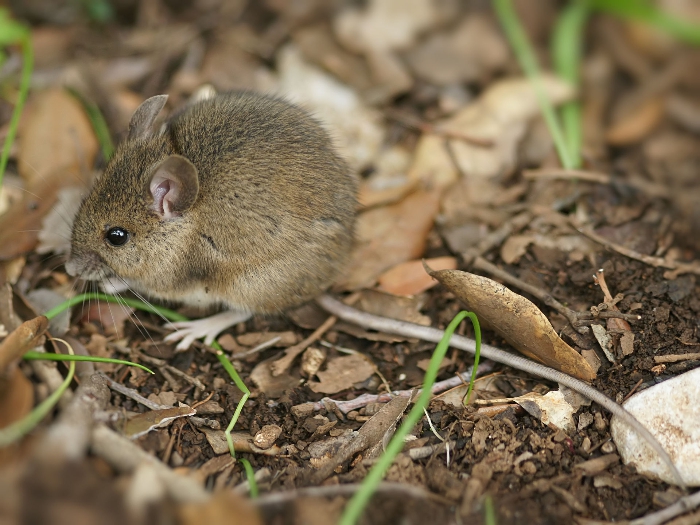
Image by © Hans Hillewaert /, CC BY-SA 3.0, https://commons.wikimedia.org/w/index.php?curid=10179776
Wood Warbler
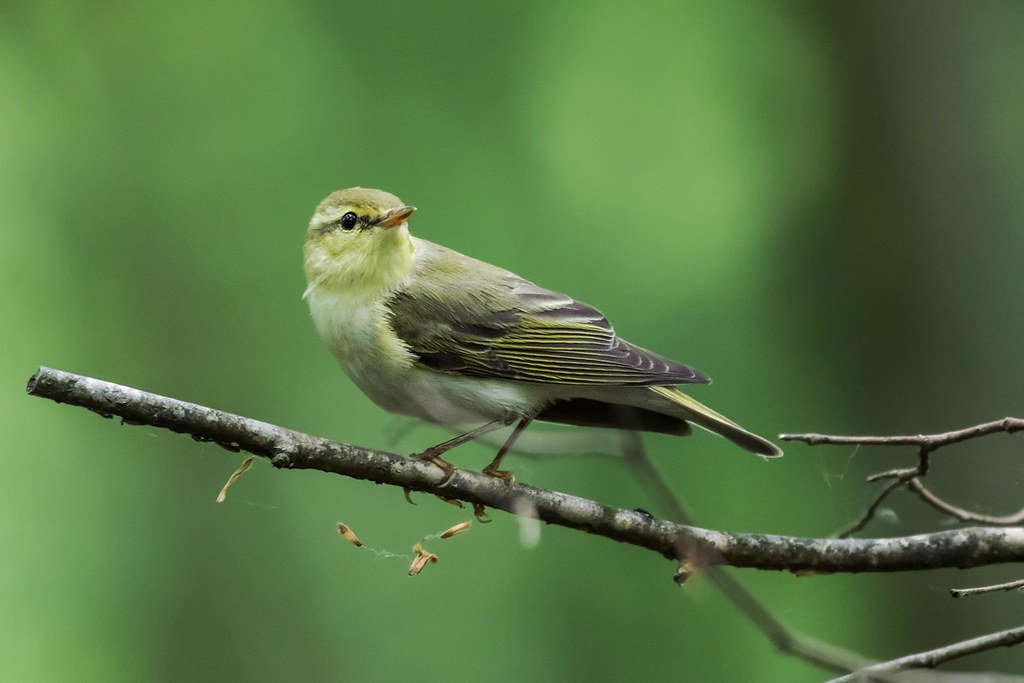
(C) nickathanas (shared under a CC BY-NC-SA 2.0 license)
Scientific Name: Phylloscopus sibilatrix
Appearance: Larger and more robust than chiffchaff and willow warbler, and has an overall brighter appearance than both. Head and upperparts bright green. Long, wide yellow stripe over eye and dark line through eye. Chin, throat and upper breast yellowish-green. Underparts silky white. Brown flight feathers contrastingly edged pale yellowish. Sexes alike.
Song: High ticking, accelerating and descending into a vibrant trill, ti-ti-ti-ti-ti-tik-ik-ik-ikirrrrrrrrrrr.
When heard: Summer migrant. Males sing upon arrival from mid- to late-April, through to the end of nesting around the end of July.
Example:
Woodpigeon (Common)
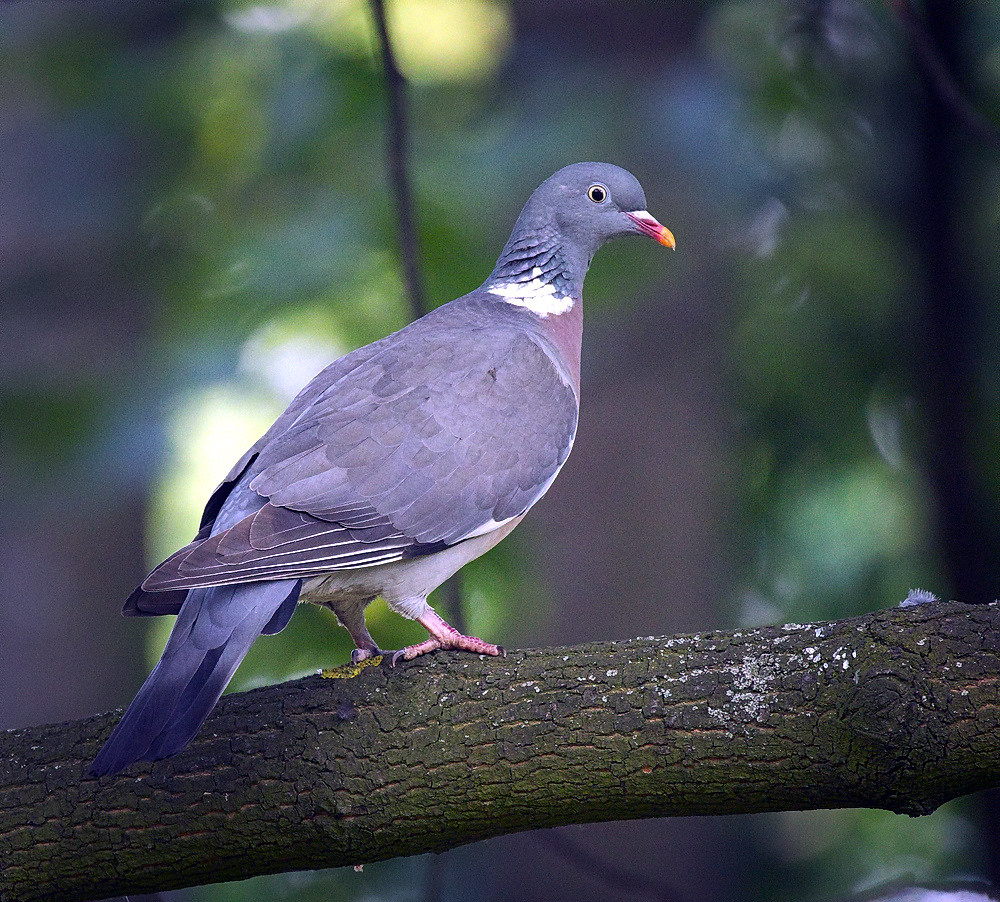
(C) hedera.baltica (shared under a CC BY-SA 2.0 license)
Scientific Name: Columba palumbus
Appearance: Large size. Uniform dark slate-grey head and back with paler grey rump. Bold white patch on side of neck. Deep pink breast. Dark outer-wings and broad white stripe across mid-wings displayed in flight. Sexes alike.
Song: Deep, muffled, five-note territorial coo, with increased emphasis on the second note, cu-cooo-cu, cu-coo.
When heard: Resident. Coo may be heard more or less year-round, but less frequently in autumn and winter months.
Example: