Select your language




Field guide to the most commonly encountered mammals and birds
Here, we provide some basic information regarding commonly observed species (plus some others about which we have had queries).
Feel free to contact us by email if you have any questions regarding species you have encountered on the site.
For more information about mammals, we recommend the Mammal Society's species hub, here. For birds, excellent resources are available from the RSPB (here) and the BTO (here).
Show Common Species Show All Species
House Sparrow
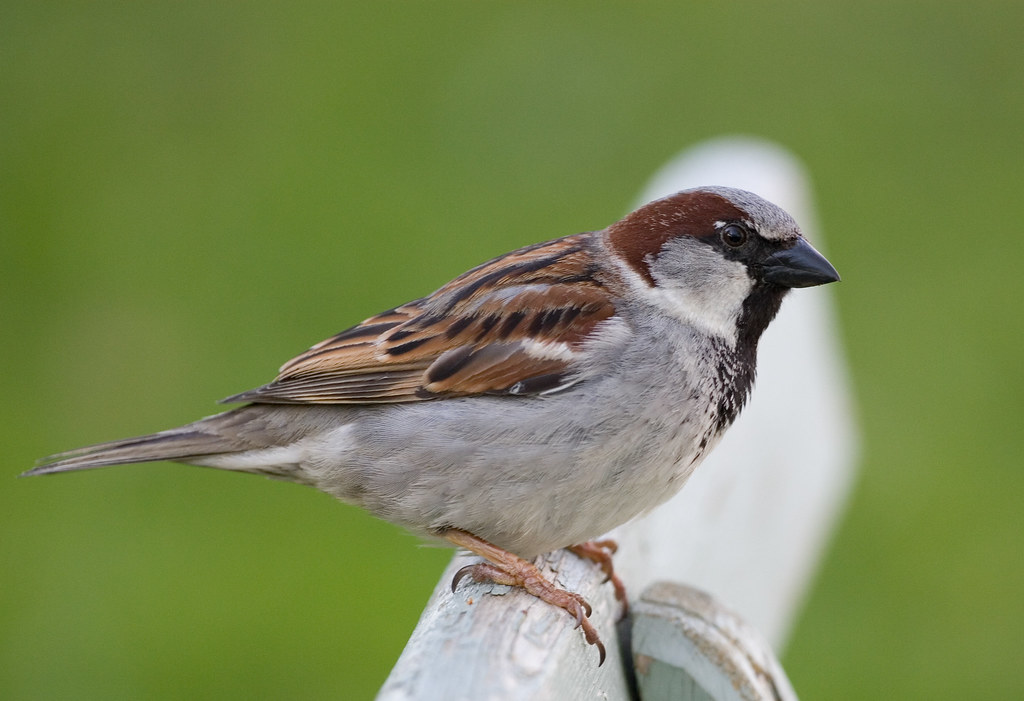
(C) Andreas Åkre Solberg (shared under a CC BY-NC-SA 2.0 license)
Scientific Name: Passer domesticus
Appearance: Sexes differ. Male: grey crown and rufous sides of head. Black throat ‘bib’. Rufous and buff back, streaked black, and pale, greyish rump. Underparts unmarked grey. Female: plain-looking, dull grey-brown tinged olive above, lighter grey-buff below. Yellow-brown crown and rather wide, pale stripe behind eye. Both sexes have heavy, conical bill, and single whitish wing-bar visible in flight.
Song: Simple, monotonous, cheerful chirping. Repeated, ‘rolling’ chirrup.
When heard: Resident. Male chirping song produced during extended breeding period, from January through to September.
Example: