Select your language




Field guide to the most commonly encountered mammals and birds
Here, we provide some basic information regarding commonly observed species (plus some others about which we have had queries).
Feel free to contact us by email if you have any questions regarding species you have encountered on the site.
For more information about mammals, we recommend the Mammal Society's species hub, here. For birds, excellent resources are available from the RSPB (here) and the BTO (here).
Show Common Species Show All Species
Red squirrel
Scientific name: Sciurus vulgaris
Family: Sciuridae
Appearance: These squirrels are reddish-brown, with the red fading somewhat in winter, and white underparts. They have tufted ears and bushy tails.
Size: Body length: 32-44 cm Tail length: 15-20 cm Weight: 250-350 g
Natural history: Red squirrels are forest-dwellers, spending more time in the treetops than greys. Their nests, called dreys, are high-up, in holes in trees or woven from twigs. Red squirrels do not hibernate, but may shelter in a drey for many days in bad weather. They eat nuts, seeds, berries, bark and fungi. Through the autumn, they stockpile nuts to feed on through the winter when other food sources become scarce.
Red squirrels have two litters per year, normally of three or four young called kittens. During bad years for the pine cone crop, squirrels can delay gestation until the following year.
Red squirrels can be right-handed or left-handed, seen in the way they eat pinecones.
A virus carried by invasive grey squirrels has caused serious declines in Britain’s red squirrel population. Red squirrels survive in a continually-shrinking area of northern England, parts of Scotland, and scattered populations protected by the eradication of greys. Many conservation groups are developing programmes to help them reoccupy their natural range, which they readily do when greys are controlled.
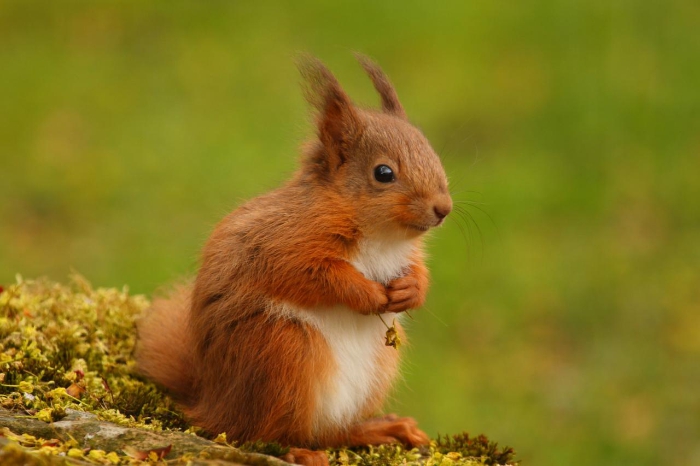
(C) Bob Hall (shared under a CC BY-NC-ND 2.0 license)
Red-necked Wallaby
Scientific name: Macropus rufogriseus
Family: Macropodidae
Appearance: The Red-necked Wallaby is a small kangaroo with a characteristic upright stance and long counterbalancing tail. It is a brownish-grey colour with a chestnut patch on the neck and upper arm and has a black nose and paws.
Size: Head and body 65-92 cm; Tail 62-86 cm; Weight 11-27 kg.
Natural history: The Red-necked Wallaby is an introduced species and has been kept in captivity in Britain and Ireland for many decades. Some of these individuals have escaped and have established small, localised colonies in the wild. The current wild population is estimated to be around 150 individuals mostly on the Isle of Man. Sightings have also been reported from several English counties. Red-necked Wallabies are active throughout the year and are mainly nocturnal. During the day they will hide in dense undergrowth. They feed on grasses, heather and bracken. Females give birth to a single youngster between June and December which then grows in its mother’s pouch until it emerges between May and June.
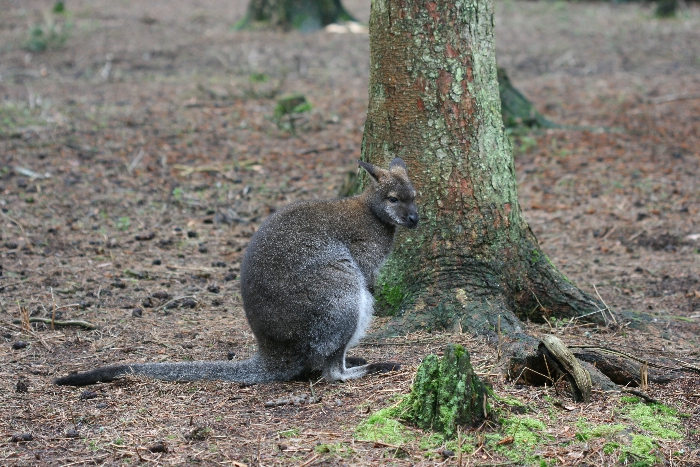
(C) Simon Willison (shared under a CC BY-NC 2.0 license)
Redstart (Common)
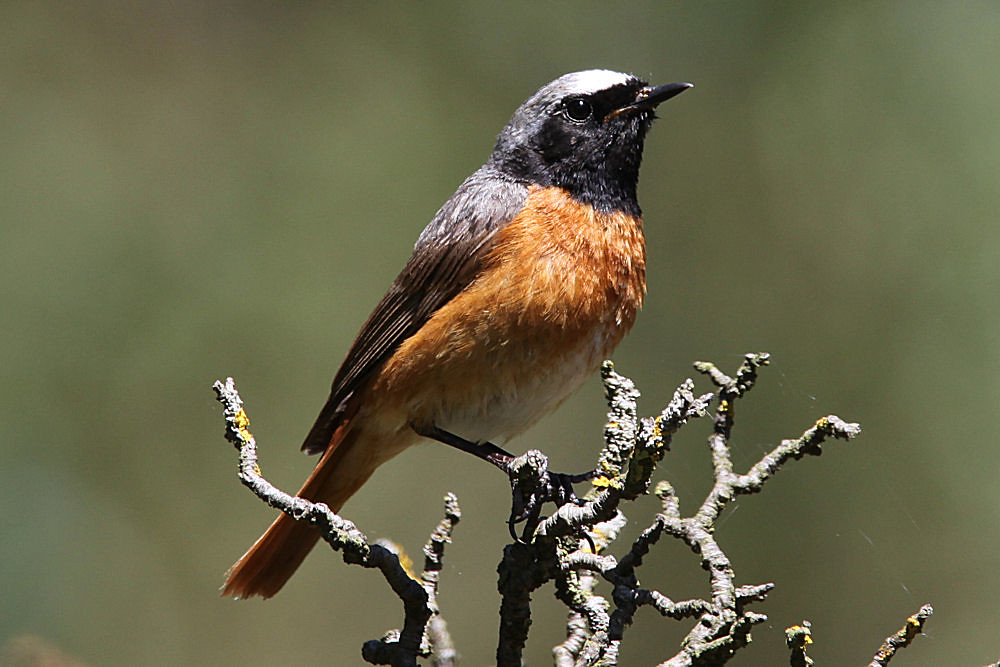
(C) EdwynAnderton (shared under a CC BY-NC-SA 2.0 license)
Scientific Name: Phoenicurus phoenicurus
Appearance: Robin-sized. Sexes differ. Male: Crown, nape, mantle and back bluish-grey, and bold white forehead. Face and throat black. Underparts rich orange-red. Rusty-red rump and dark centre on rusty-red tail visible in flight. Female: Plain grey-brown head and upperparts. Underparts buffish off-white. Rusty-red tail.
Song: Brief, bright and snappy, commencing with several low rolling notes and ending with a high musical warble or whistle. Song bouts consist of similarly constructed, but not identical, phrases repeated at regular intervals.
When heard: Summer migrant. Males produce song on arrival in mid-April through to the end in breeding in late-July or early-August.
Example:
Reindeer
Scientific name: Rangifer tarandus
Family: Cervidae
Appearance: Reindeer are large, heavily built members of the deer family. They have a soft coat of a creamy-brown colour with darker legs and rear. Both sexes have antlers which are long and branched at the ends. Males shed their antlers in December/January and females in May.
Size: Head and body 1.05-1.6 m; Tail 10-15 cm; Height at shoulder 1.07-1.22m; Weight 40-55 kg (males), 28-40 kg (females).
Natural history: Reindeer were native to Britain until towards the end of the last glaciation but became extinct as the climate warmed. There are currently two small free-ranging herds in the Cairngorms in Scotland. Reindeer are active all year round and throughout the day, they are herd animals and in some native populations are migratory and capable of moving at considerable speed. The Reindeer rut occurs between mid-September and early October and females give birth to a single calf in May. The young calves can walk within an hour of birth.
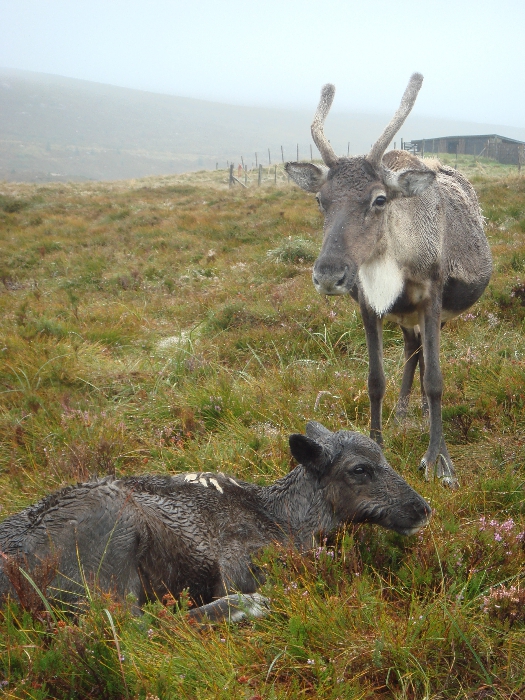
(C) Stravaiger (shared under a CC BY-NC-ND 2.0 license)
Ring-tailed Coati
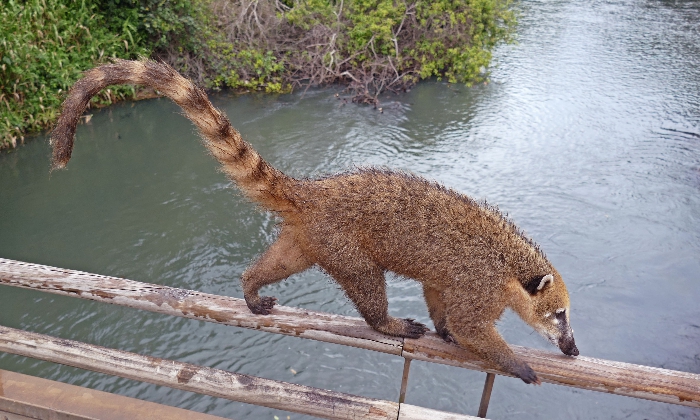
(C) Gustavo Fernando Durán (shared under a CC BY-NC-SA 2.0 license)
Scientific name: Nasua nasua
Family: Procyonidae
Appearance: The South American Coati is a member of the Raccoon family. It has a red-brown coat above and is paler underneath, its tail is long and has yellow rings. The head is long and elongated with a flexible snout which enables it to poke around under rocks and into crevices when searching for food.
Size: Head and body 41-67 cm; Tail 32-69 cm; Weight 3.5-6 kg
Natural history: The South American Coati is an introduced species to the UK but there is currently no evidence to suggest that there are any breeding populations in the wild. They are active during the day, are both arboreal and terrestrial and usually inhabit forest. Males are solitary while females and young travel in groups. Their diet consists of fruit, invertebrates and small mammals. Breeding takes place when the main fruit in the diet is in season. Females mate with multiple males and give birth to a litter of between 2 and 4 young.
Robin (European)
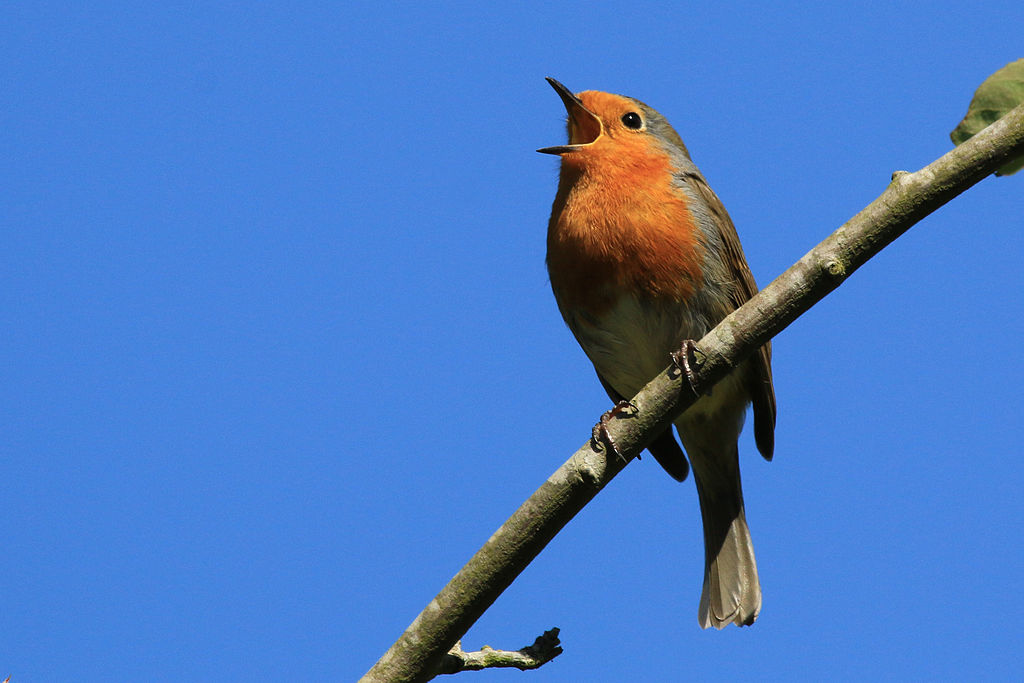
(C) Charles J Sharp (shared under a CC BY-SA 3.0 license)
Scientific Name: Erithacus rubecula
Appearance: Upperparts olive-brown with olive-buff underside. Breast, throat, forehead and face orange-red. Small, fine, dark bill. Sexes alike.
Song: Rich, full, varied warbling in long series of phrases and pauses. Pours out notes that rise and fall rapidly through a broad range of frequencies. Overall shriller sound than blackbird.
When heard: Resident. Males sing throughout much of the year, with a short lull during the post-breeding moult in high summer. Both sexes sing in autumn/winter, and the only UK passerine within which females regularly sing.
Example:
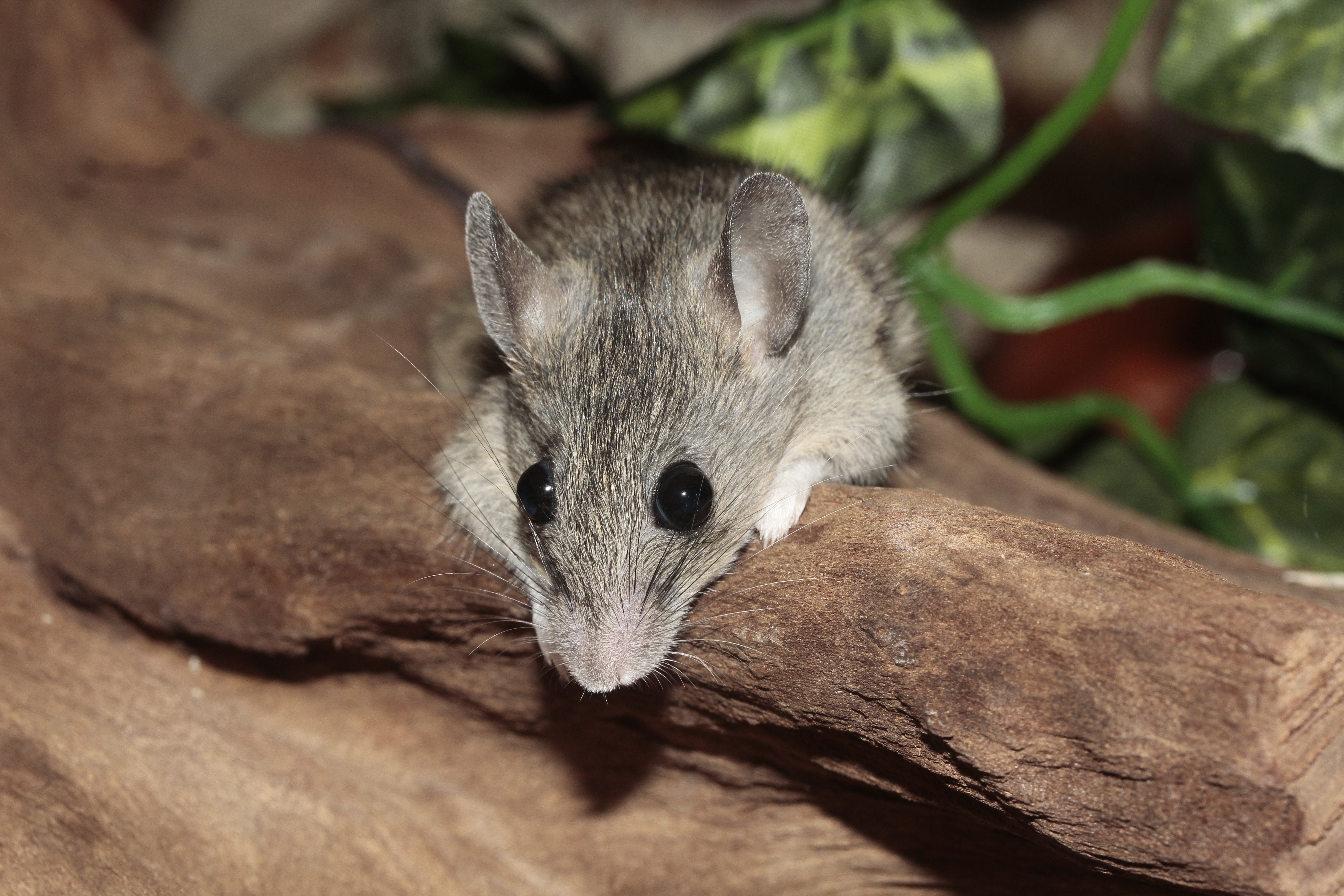
Rock mouse
Scientific name: Apodemus mystacinus
Appearance: Small size and grey colour with large, protruding ears and relatively large eyes.
Roe Deer
Scientific name: Capreolus capreolus
Family: Cervidae
Appearance: Adults are 60 - 75cm at the shoulder and weigh 10 - 25kg. Males are slightly larger than females. A summer coat of reddish brown turning to grey, pale brown or (occasionally) black in winter. They have a black nose, white chin and white rump patch, and exhibit a bounding gait when alarmed. Antlers (on males) are short (less than 30cm) and have three tines (points) on each.
Natural history: Widespread in the UK, roe deer are browsers found mainly in woodland and agricultural areas. The rut, or breeding season, occurs between mid-July to mid-August. Bucks become aggressive and maintain exclusive territories around one or more does prior to the rut. Fights between bucks can result in serious injury or death with the winner taking over the loser’s territory or attendant doe. Courtship involves chasing between the buck and doe for some time until the doe is ready to mate. Although mating occurs in this period the fertilised egg does not implant and grow until January. This is thought to be an adaptation to avoid giving birth during harsh northern winters. The gestation period is nine months (four months of no embryonic growth followed by five months of foetal growth) with kids (usually two or three) being born May – June. Heavy mortality may occur shortly after birth and during the first winter. Roe do not maintain exclusive territories but live within overlapping home ranges. Males mate with several females and females mating with several males has also been observed. Roe deer are solitary, forming small groups in winter. They are active throughout the 24-hour period but make more use of open spaces during the hours of darkness in populations experiencing frequent disturbance. Peak times of activity are at dawn and dusk. Long periods are spent ‘lying up’ where the deer lies down to ruminate between feeding bouts. (Source: https://www.bds.org.uk/index.php/advice-education/species/roe-deer).
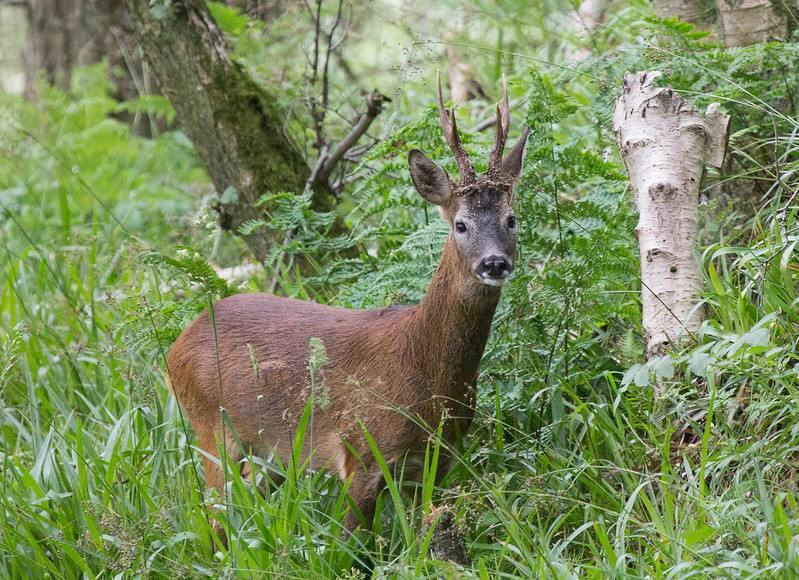
(C) Paweł Sędrowski (shared under a CC BY-NC-ND 2.0 license)
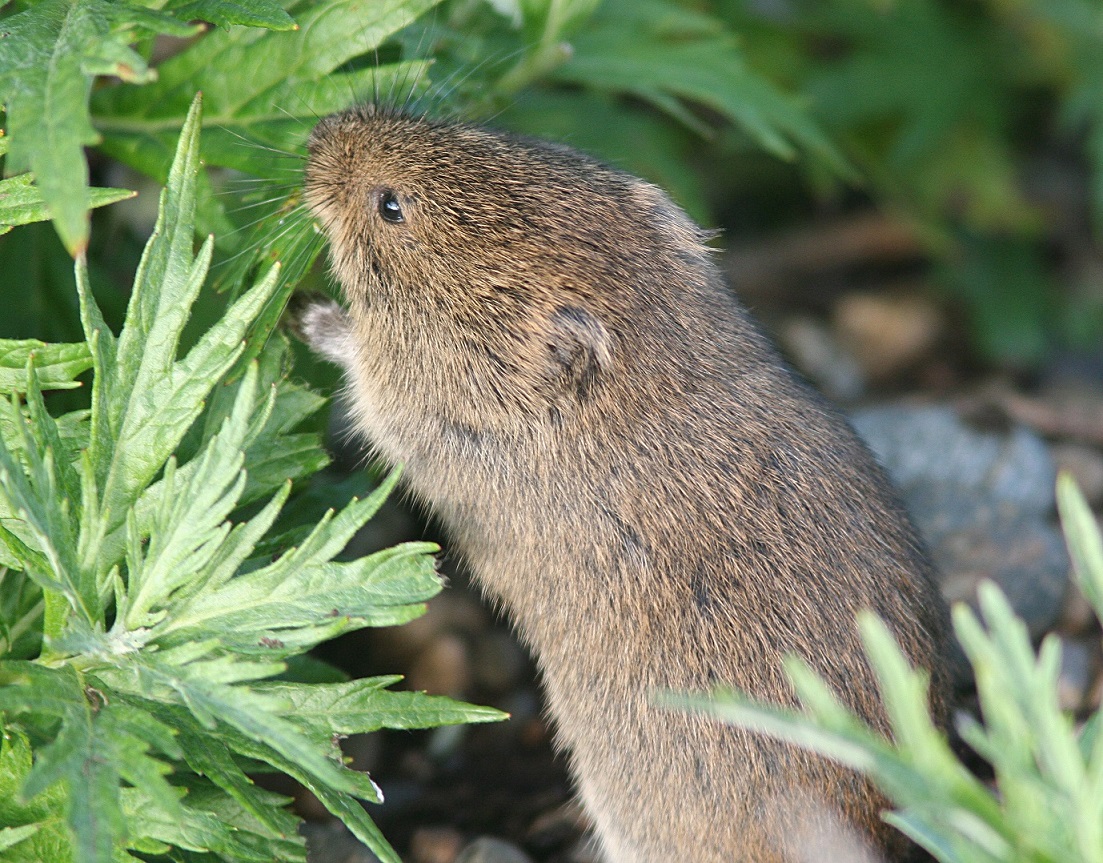
Root vole
Scientific name: Microtus oeconomus
Appearance: Medium size with yellow-brown fur, paler sides and white underbelly, short ears and short tail.
Scottish Wildcat
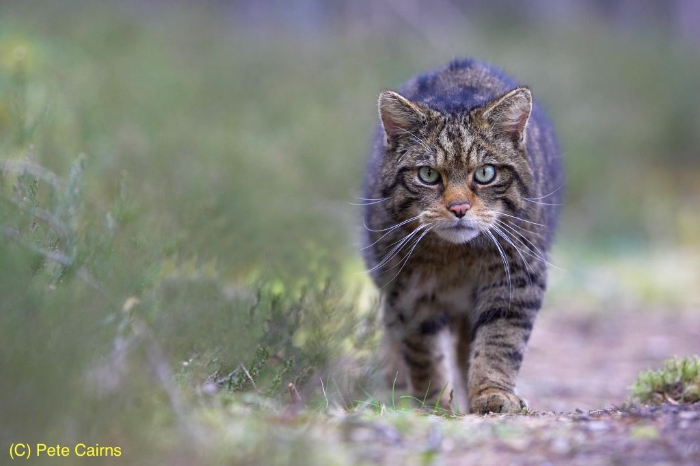
(C) Peter Cairns
Scientific name: Felis silvestris
Family: Felidae
Appearance: A tabby marked cat that is similar in appearance to a domestic cat, though slightly larger. Characteristics that distinguish wildcats from domestic cats are 1) A thick blunt-tipped tail with distinctive rings, 2) a dorsal line that extends down the back only as far the base of the tail, 3) four thick stripes down the nape, 4) two thick stripes on the shoulder, and 5) flank markings that consist mostly of stripes and not broken stripes or spots. The boldness of the markings can vary between individuals and season. Colour is brown with black markings. The fur on the back of the ears and nose may be ochre and the fur around the mouth can be pale though usually not pure white.
Size: Head and body 49-54 cm (female), 49-63 cm (male); tail 24-34 cm
Natural history: The current known range of the Scottish wildcat covers an area north of the Highland Boundary fault excluding islands. Within this range, wildcats are usually found in mixed habitats containing woodland or scrub and grassland habitats in which activity is concentrated around habitat edges. They are less commonly found on moorland. Providing there are suitable patches of forest or scrub cover, wildcats can be found in agricultural landscapes. Favoured prey are rabbit but rodents such as field vole, bank vole and wood mouse will be an important component of their diet, especially in the absence of rabbits. Hare may also be important in some areas. Their diet is varied and can also include birds, reptiles and even insects. While considered crepuscular (active at dawn and dusk) wildcats can be active both day and night, though they are likely to be more nocturnal in areas with greater human disturbance.
Wildcats are territorial, with females maintaining exclusive territories from other females and male territories covering those of several females. Male territories show more overlap with each other. Peak breeding season is winter, especially Dec-Mar. Gestation is 68 days and so litters are typically born Mar-Jun. Litters are usually 3-4 kittens which are weaned around 6-7 weeks. Kittens reach independence after 4-5 months, males are sexually mature after 9-10 months and females after one year. Usually only one litter is born each year, though if a litter fails the mother may have another. Males play no part in rearing the young.
Shrew (any sp.)
Scientific name: Soricidae
Appearance: Various species that are hard to tell apart. All are small, insectivorous, with fur and a pointed snout..
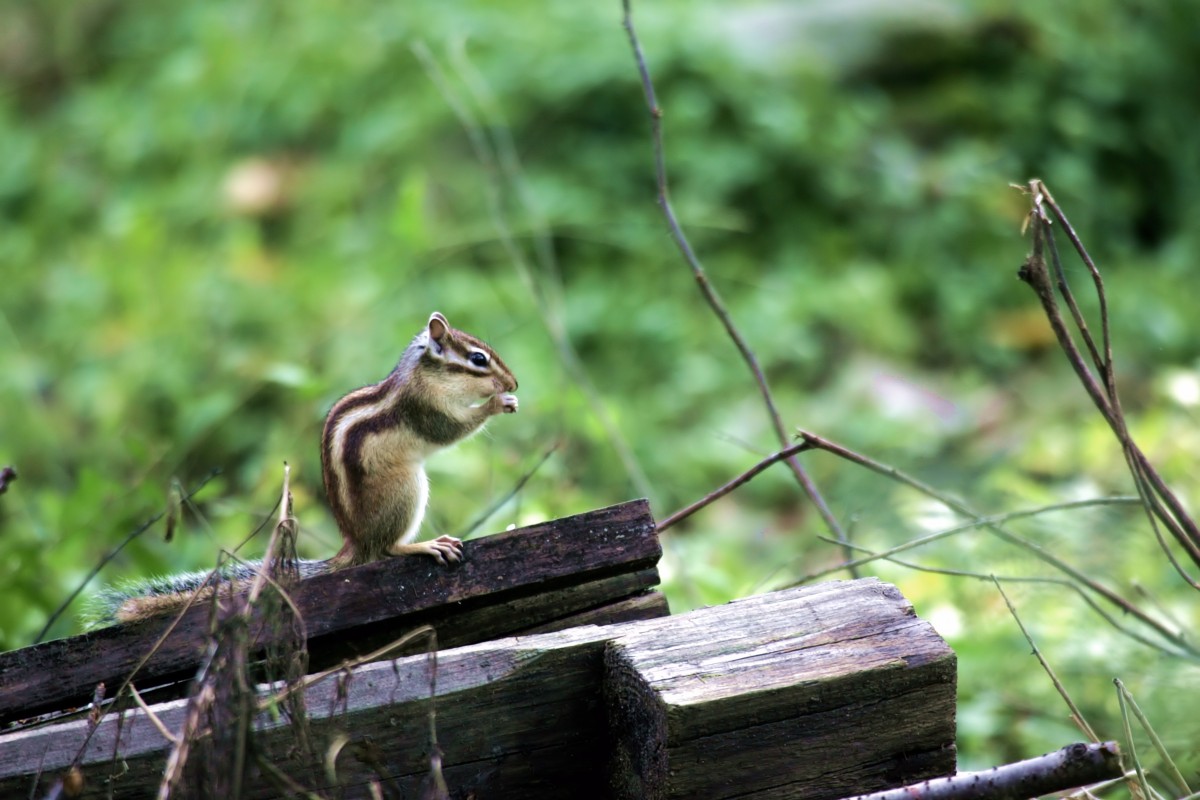
Siberian chipmunk
Scientific name: Tamias sibiricus
Appearance: Yellow-brown coat with four white stripes and five dark stripes along the back and a white chest and belly.
Sika Deer
Scientific name: Cervus nippon
Family: Cervidae
Appearance: The Sika Deer was introduced to Britain from Japan in the 19th century for deer parks and collections but escapes and deliberate releases have resulted in naturalised populations establishing themselves in several locations around the UK and Ireland. Closely related to the Red Deer they are similar in appearance but more slender and slightly built. Hybridisation with Red Deer has taken place and many, if not most, animals are probably hybrids. When in their summer coat, which is dappled with white spots, Sika Deer may appear more like fallow deer. The distinguishing features of the Sika Deer are a white gland on the lower back leg and the white rump patch which is encircled in black (no black in Red Deer). Antlers are carried by males only and while similar in structure to Red Deer antlers are smaller with a maximum of four points.
Size: Head and body 1.2-1.9 m (males), 1.1-1.6 m (females); Height at shoulder 1.07-1.22 m; Tail 10-15 cm; Weight 40-55 kg (males), 28-40 kg (females)
Natural history: Sika Deer are active throughout the year and the day with activity peaking at dawn and dusk. Largely solitary outside the breeding season although females sometimes form loose groups. They browse and graze mainly on grasses and heather, shoots and leaves of coniferous and deciduous trees, holly, gorse and bark. The rut takes place during October and November and stags have been recorded displaying a variety of mating strategies such as harems, rutting territories and general wandering in search of opportunistic mating opportunities. Females give birth to a single calf in May or June which suckles for about six months but is also taking solid food after about 10 days.
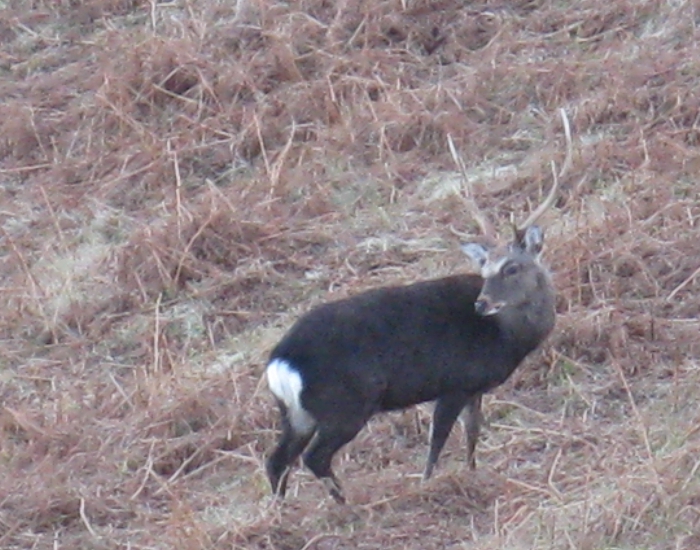
(C) Michael Day (shared under a CC BY-NC 2.0 license)
Small Indian mongoose
Scientific name: Herpestes auropunctatus
Appearance: Small and slender body with pale to dark brown fur, golden flecks and a pale underbelly, short legs and small rounded ears located on the side of its head, bushy tail .
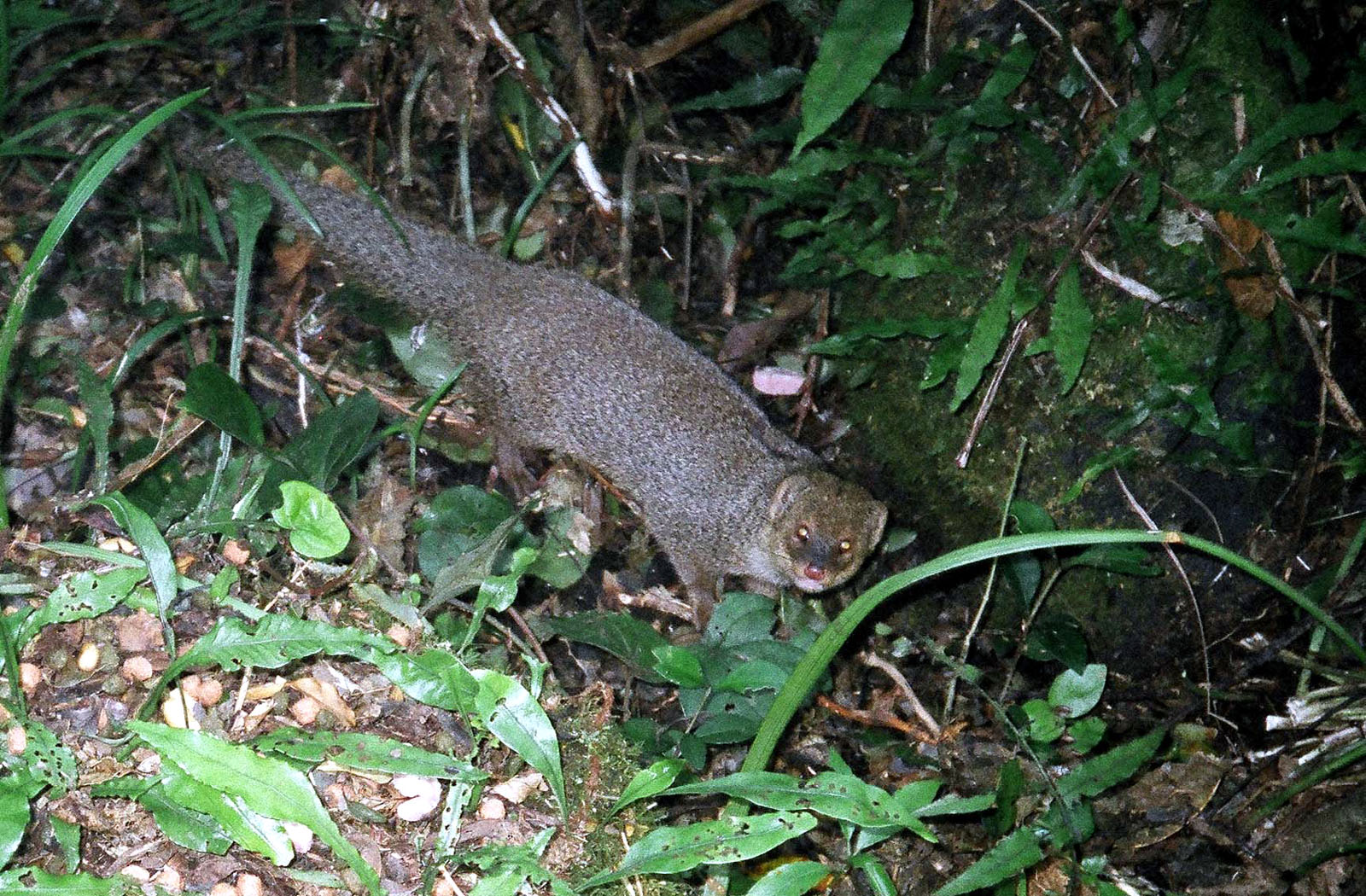
(C) 環境省 (shared under a CC0 license)
Small mustelid (any)
Scientific name: mustelidae
Appearance: long tube-shaped body, short legs, and a strong, thick neck with a small head.
Snow vole
Scientific name: Chionomys nivalis
Appearance: Long, dense, pale grey and brown fur, white tail, rounded nose, black beady eyes, long white whiskers and moderately large ears.
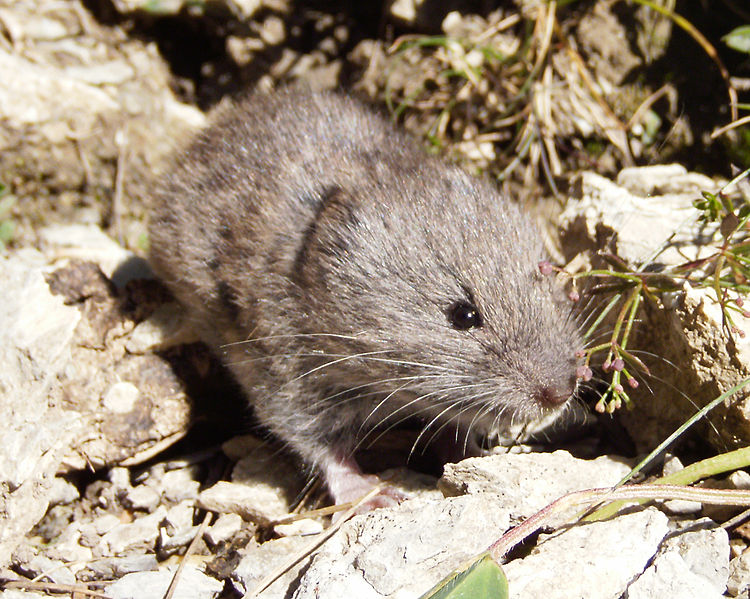
(C) Svíčková (shared under a CC BY-SA 3.0 license)
Song Thrush
Scientific name: Turdus philomelos
Family: Turdidae
Appearance: The Song Thrush is a small and compact member of the thrush family – smaller than the Mistle Thrush with which it is often confused. Its plumage is warm brown above and yellowish-white to white below with dark speckles resembling arrow heads pointing upwards towards the head. These are often arranged in lines. The legs are pink and the bill is brown.
Size: Length 23 cm; wingspan 34 cm
Call: As its name suggests the Song Thrush is an excellent singer and can be recognised – and distinguished from the Blackbird – by its habit of repeating phrases. It sings loudly with cascades of notes which are varied and sometimes shrill - usually from a prominent perch.
Natural history: Song Thrushes breed in woodland, parks and gardens and their preferred food items are insects, worms, snails and fruit. A Song Thrush nest may often be very well concealed, perhaps in a dense hedge. The female lays a clutch of 4 bright blue eggs with black spots which are incubated for around 14 days and fledge 14 days later. They may well have 2 or 3 broods a year.
Song Thrush numbers declined rapidly from the mid-1970s until the mid-1990s probably as a result of changes in farming practices.
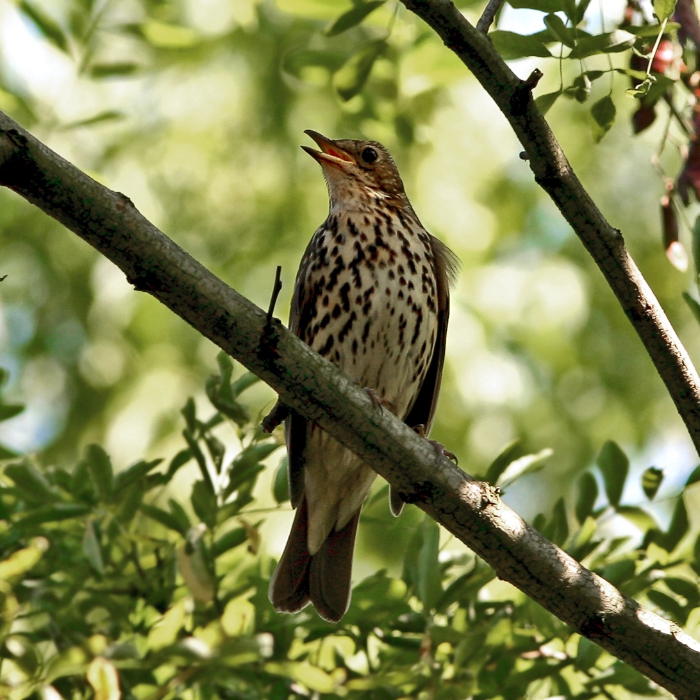
Image by Taco Meeuwsen from Hellevoetsluis, The Netherlands - THRUSH TUNE, CC BY 2.0, https://commons.wikimedia.org/w/index.php?curid=5343495
Song Thrush
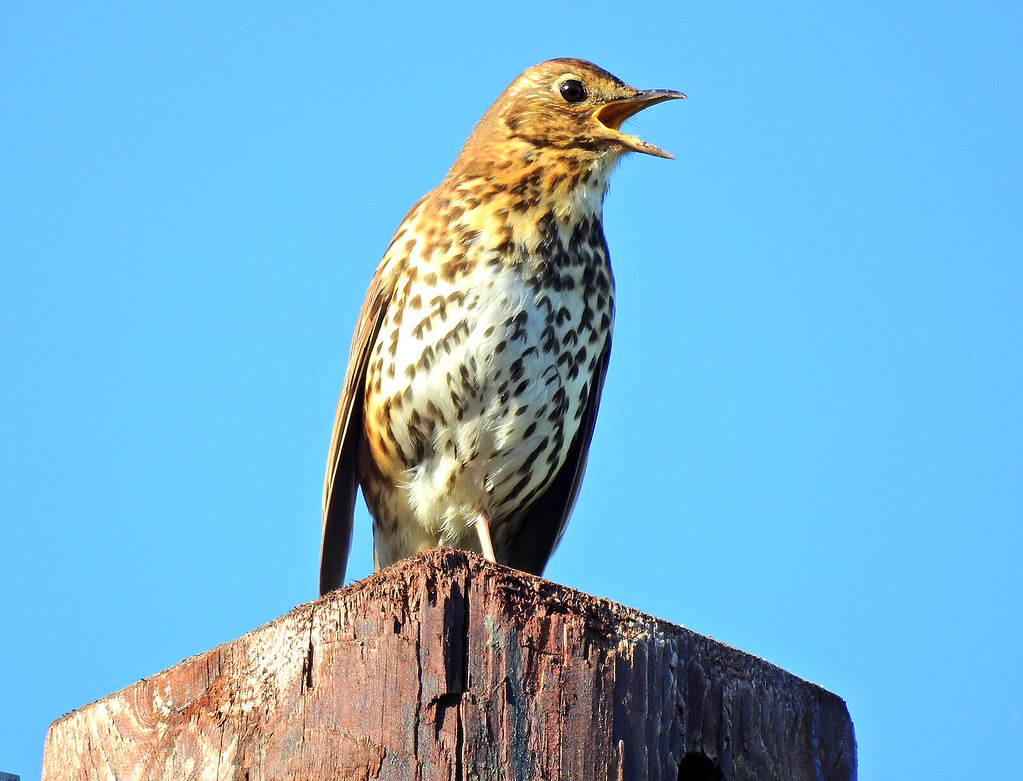
(C) Doug Greenberg (shared under a CC BY-NC 2.0 license)
Scientific Name: Turdus philomelos
Appearance: Markedly smaller than blackbird. Plain brown to olive-brown upperparts. Underparts buff-white and boldly marked with dark, “V”-shaped spots. Orange-buff underwings are noticeable in flight. Sexes alike.
Song: Loud, vigorous and relentless. An extremely varied repertoire; some notes are melodious, some whistled, others harsh or rattled. A distinctive feature is the repetition of each note 2-4 times before moving to the next note.
When heard: Resident. One of the earliest seasonal singers in the UK, being heard as early as January and continuing through to the end of the breeding season in August or September.
Example:
Southern birch mouse
Scientific name: Sicista subtilis
Appearance: Grey-brown fur with dark stripe along the spine bordered by two lighter stripes .
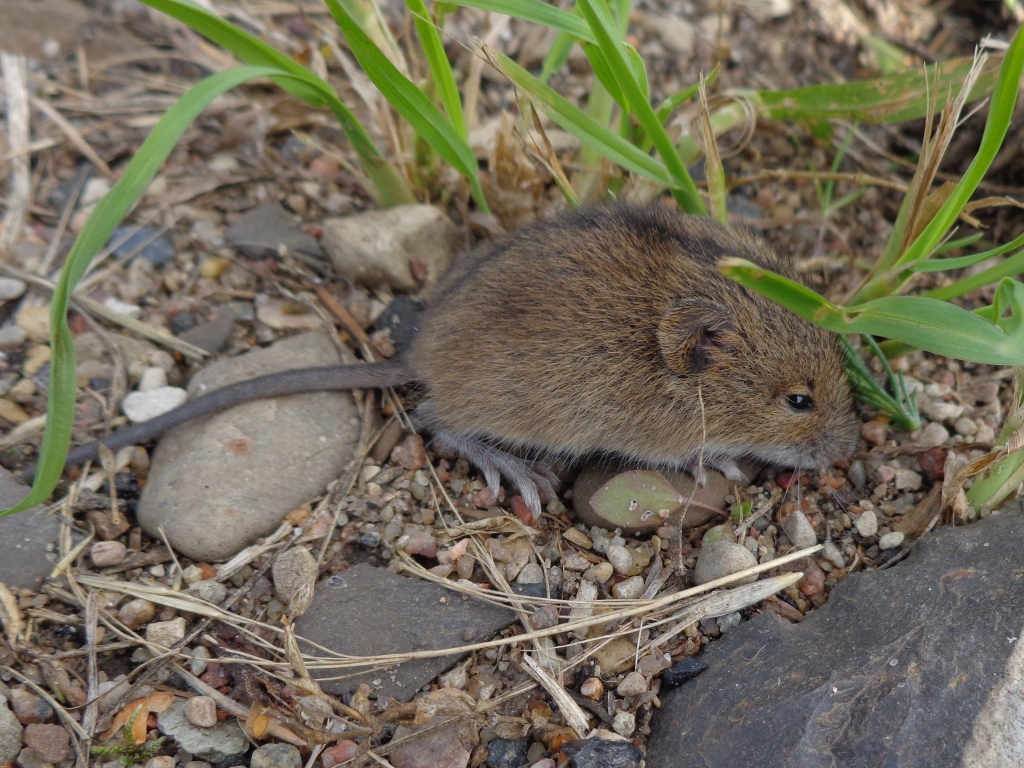
(C) Rbrausse (shared under a CC BY 2.0 license)
Southern water vole
Scientific name: Arvicola sapidus
Appearance: Thick, dark brown or black back and lighter flanks and underbelly, barely visible small ears, and a tail covered in short, stiff, sparse hairs.
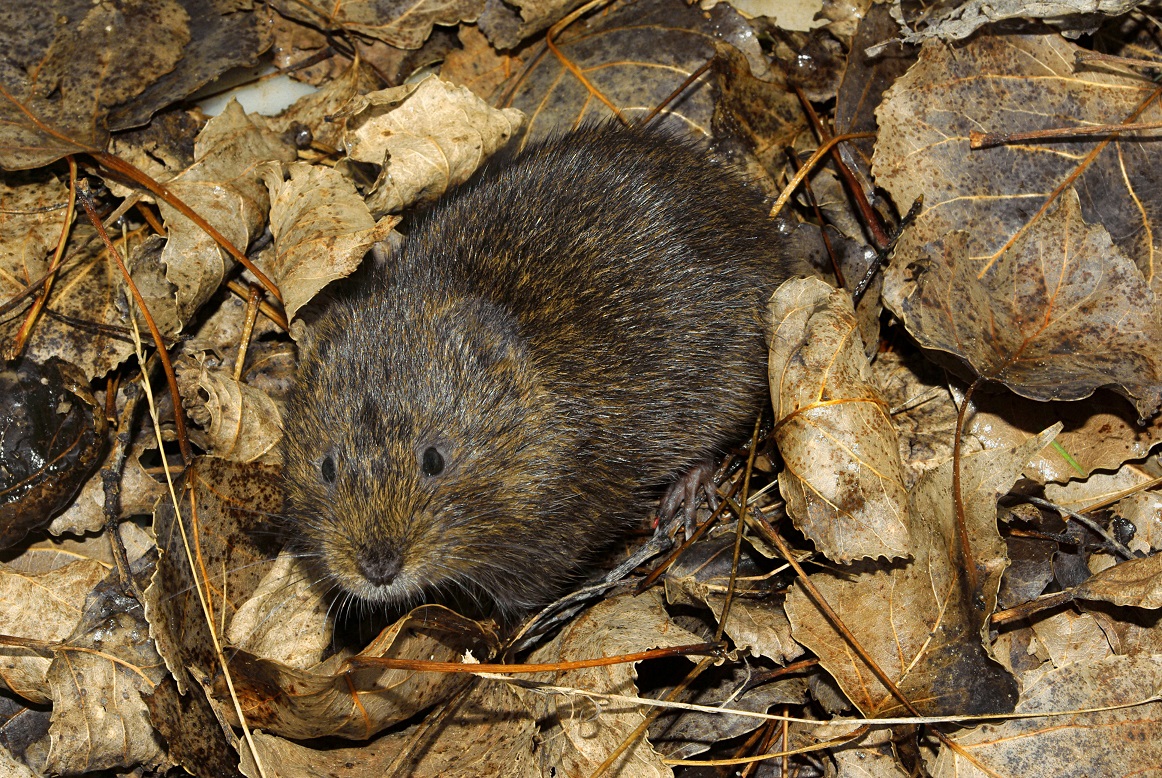
(C) David Perez (shared under a CC BY 3.0 license)
Spanish ibex
Scientific name: Capra pyrenaica
Appearance: Brown coat with short legs and large hooves; males have large, curved horns.
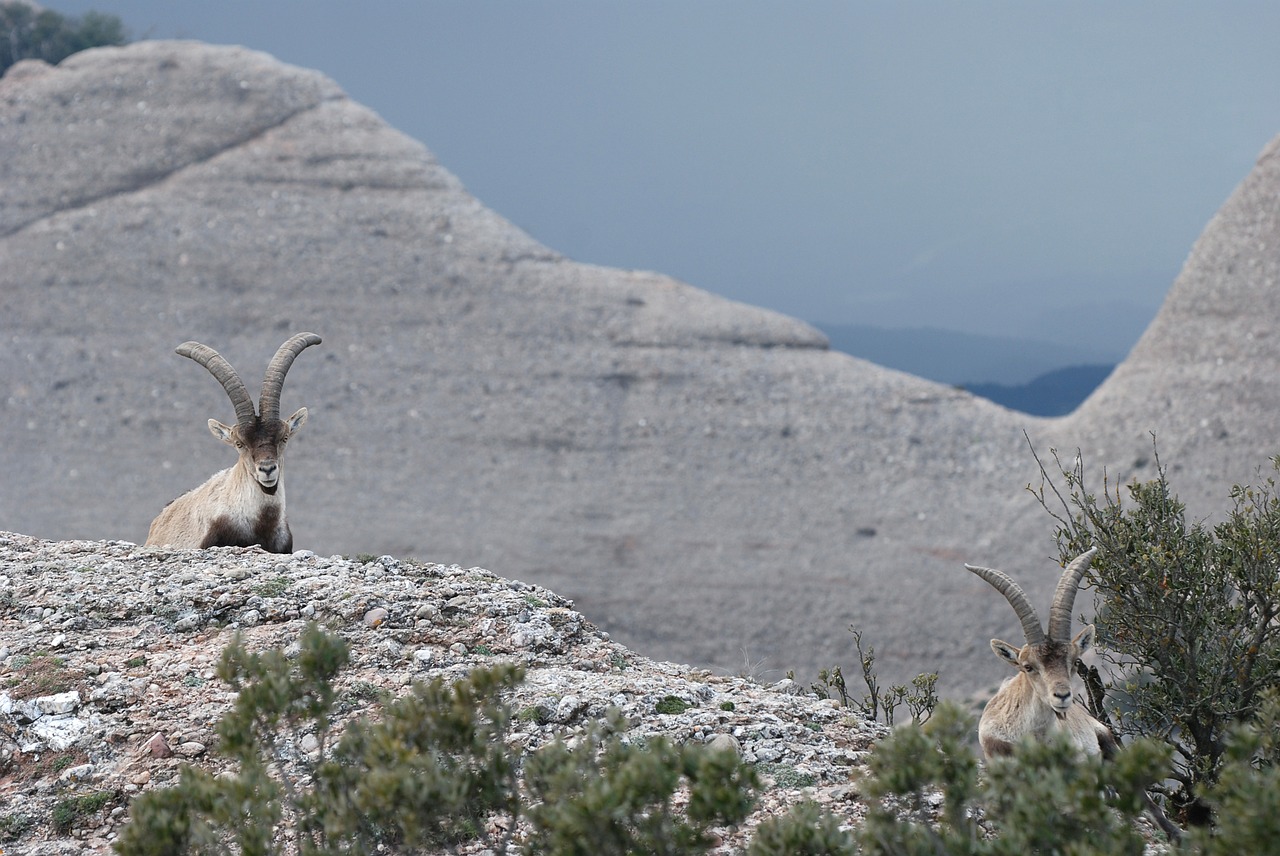
(C) (shared under a CC0 license)
Spanish shrew
Scientific name: Sorex granarius
Appearance: Dark-coloured back, lighter tan sides and off-white underbelly, comparatively small and flat snout.
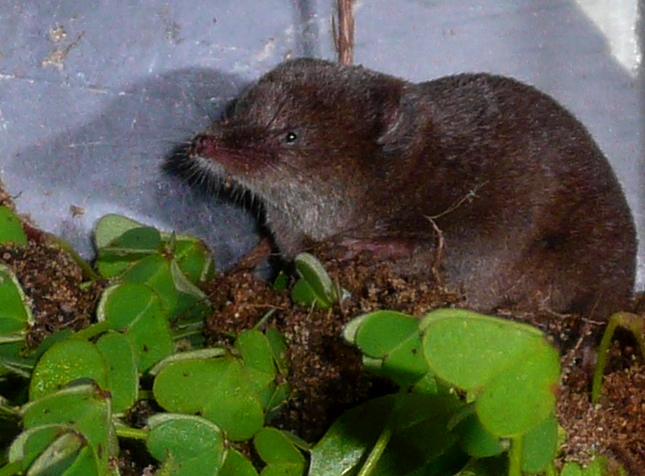
(C) Sophie von Merten (shared under a CC BY 3.0 license)
Spotted souslik
Scientific name: Spermophilus suslicus
Appearance: Relatively small with dark-brown fur, white spots on its back and a short, thin tail.

(C) Esther Westerveld from Haarlemmermeer, Nederland (shared under a CC BY 2.0 license)
Starling (Common)
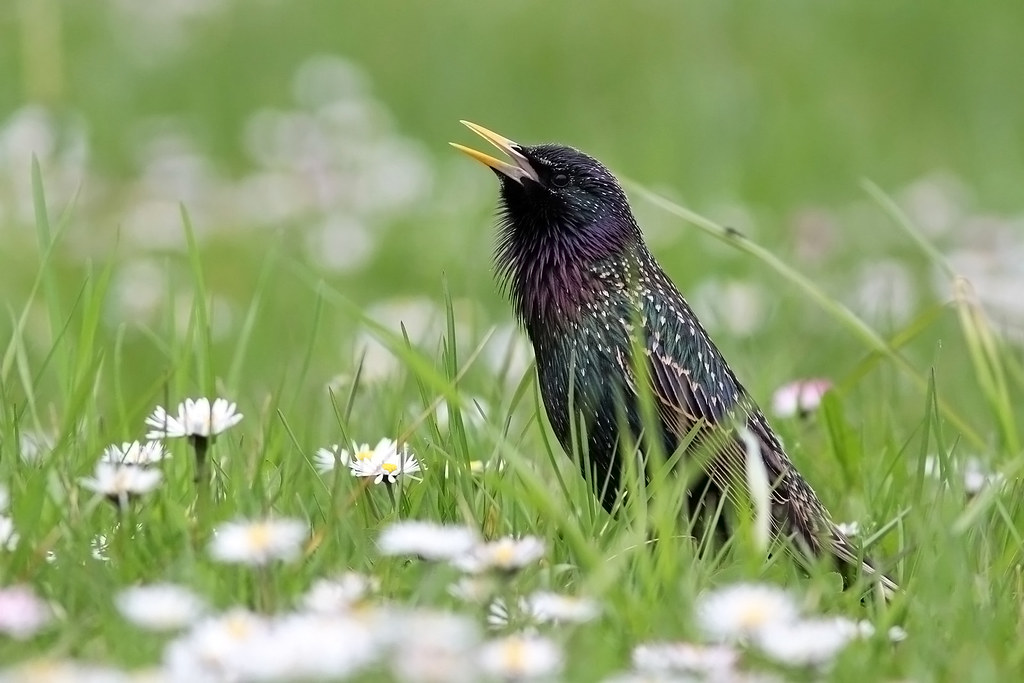
(C) Michał_Kucharski (shared under a CC BY-NC-ND 2.0 license)
Scientific Name: Sturnus vulgaris
Appearance: Similar in size to blackbird. In spring and summer, glossy black plumage prominently spotted light, especially on back and belly. Elongated feathers on throat. Sharp, yellow bill, base of lower mandible bluish-grey in male, pinkish-white in female. Short, square tail obvious in flight.
Song: Large repertoire of highly variable mechanical gurgles, rattles, trills and whistles. Can also incorporate mimicry of other birds as well as non-avian sounds.
When heard: Resident. Males typically sing early in breeding season from February to end of July.
Example:
Steppe mouse
Scientific name: Mus spicilegus
Appearance: Uniform grey with no red-tone, but some populations are bi-coloured and have paler underparts, slender tail.
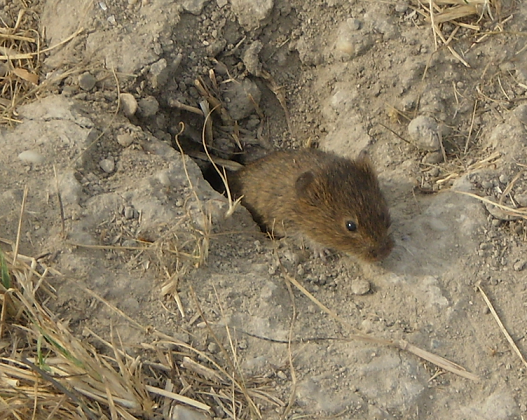
(C) Oliv0 (shared under a CC BY-SA 3.0 license)
Steppe polecat
Scientific name: Mustela eversmanii
Appearance: Yellow-brown coat with dark limbs and a dark mask across the face contrasted by paler fur.
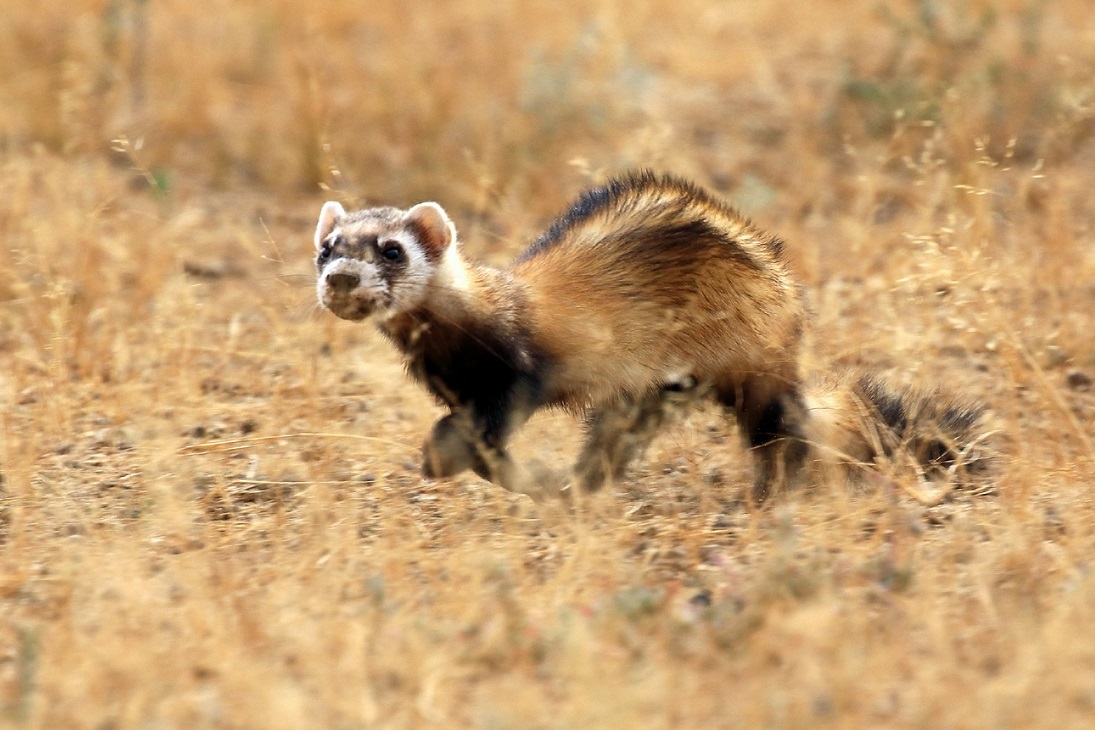
(C) Andrey Giljov (shared under a CC BY-SA 4.0 license)
Stoat
Scientific name: Mustela erminea
Family: Mustelidae
Appearance: Stoats have a long, thin physique. They are brown with white underparts and a black tip to the tail, which distinguishes them from their smaller relative, the weasel.
Size: Body length: 17-32 cm Tail length: 6.5-12 cm Weight: 180-250 g
Natural history: Stoats occupy small territories, around 200m by 200m, in farmland, woods and heaths. They are largely carnivorous, and hunt by day or night. Stoats can take prey much larger than themselves, such as rabbits. Being small, they are often prey for hawks, owls and larger mammalian predators.
Especially in the north, stoats’ fur turns white in winter to camouflage them against the snow. This white pelt, known as ermine, was prized in medieval times and worn often by royalty.
Stoats have one litter of six to twelve young each year. Their lifespan is up to ten years, but typically under two.
Stoats have been widely introduced elsewhere in an attempt to control other invasive species such as rabbits. These introduction programmes have typically been disastrous failures: many target regions have never seen mammalian predators before, so naïve native species make easy prey for stoats and native populations have collapsed as a result.
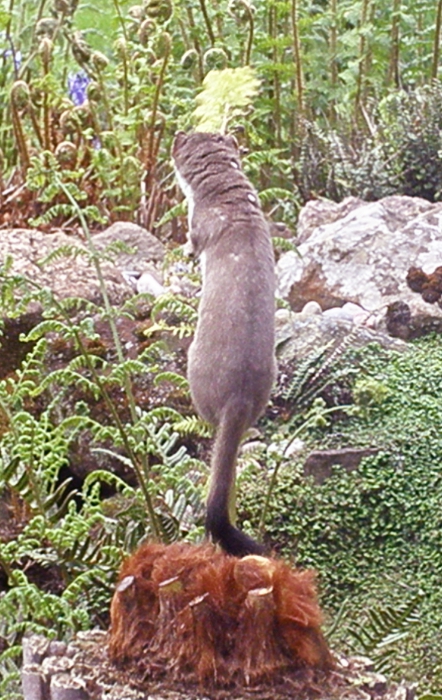
(C) Amanda Slater (shared under a CC BY-SA 2.0 license)
(C) Mark Kilner (shared under a CC BY-NC-SA 2.0 license)
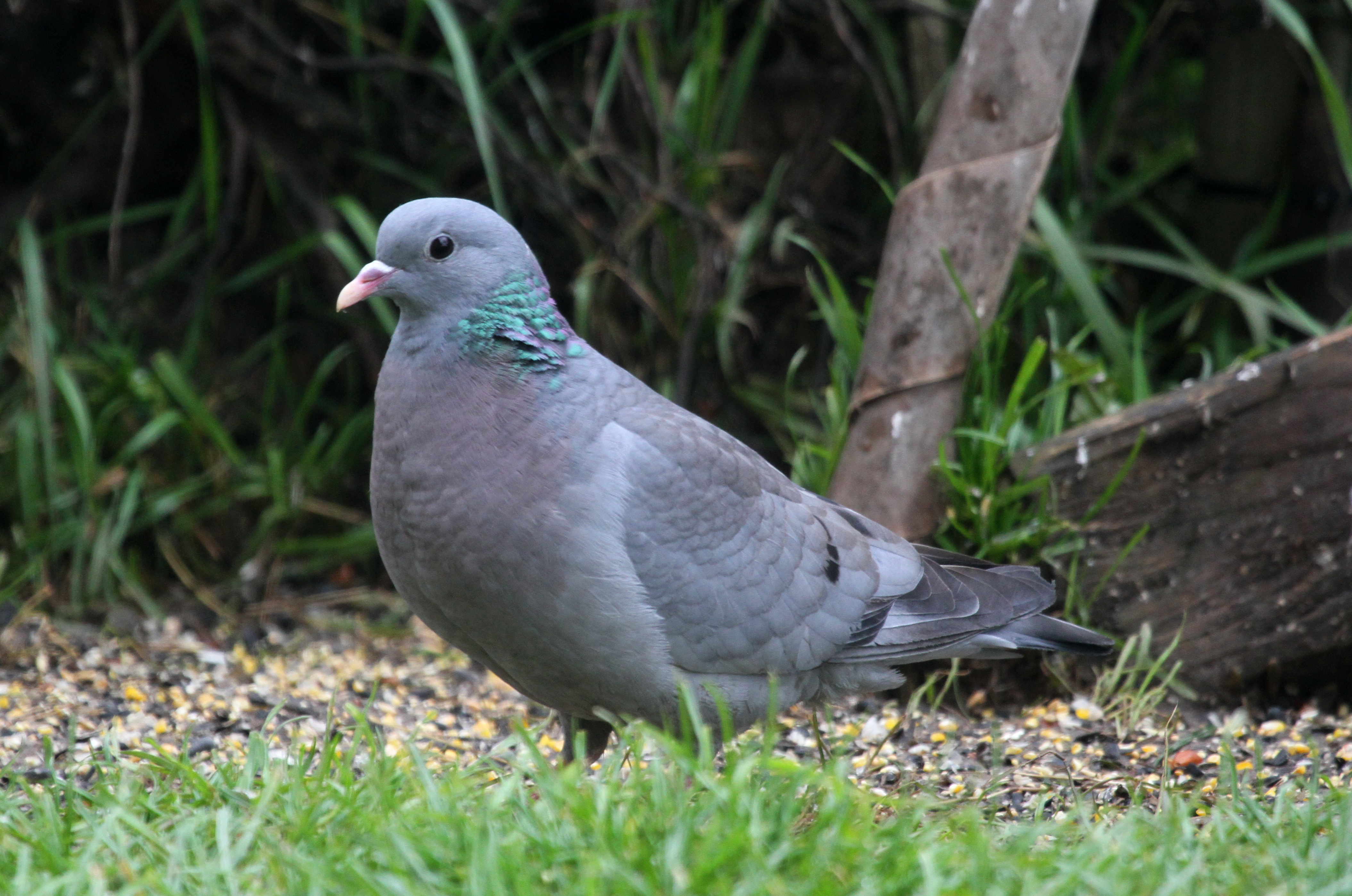
Stock Dove
(C) Stephen G. Willis (shared under a CC BY-ND 2.0 license)
Scientific Name: Columba oenas
Appearance: Smaller than woodpigeon. Uniform ash-grey head, mantle and back with glossy green neck. Breast deep pink. Black wing-tips and pale mid-wings displayed in flight. Sexes alike.
Song: Low, pumping, disyllabic coo, repeated several times with increased emphasis, ooo-woo ooo-woo. Not strictly ‘song’, which is produced only by passerines.
When heard: Resident. May be heard more or less year-round, but less frequently in autumn and winter months.
Example:
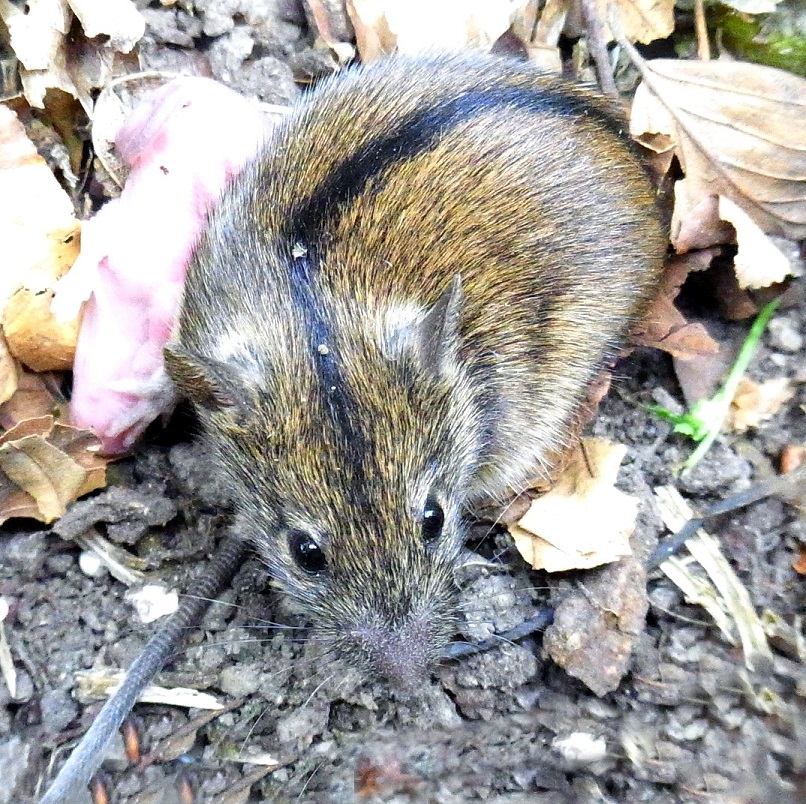
Striped field mouse
Scientific name: Apodemus agrarius
Appearance: Grey-brown rust-toned back with pale grey underbelly, prominent black stripe down the spine, relatively small ears and eyes.
(C) Siga (shared under a CC BY-SA 3.0 license)
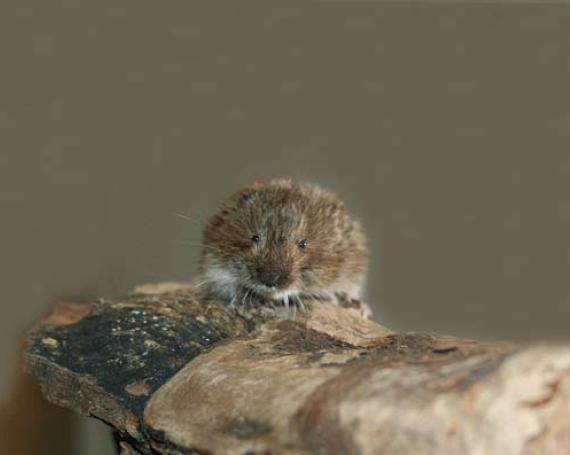
Tatra vole
Scientific name: Microtus tatricus
Appearance: Grey-brown fur with large, round ears, small eyes and a long, thin body.
(C) Igor Zagorodniuk (shared under a CC BY 3.0 license)
Tawny Owl
Scientific name: Strix aluco
Family: Strigidae
Appearance: The Tawny Owl is a medium-sized, woodland bird roughly the size of a woodpigeon. It has a large, rounded head and broad wings and is a reddish-brown colour with the whole plumage being mottled and streaked. The facial disc has a surrounding edge of dark feathers and the eyes are dark. The bill is a greenish-yellow and hooked and the legs and feet are feathered.
Size: Length 37-39 cm; wingspan 94-104 cm
Call: The Tawny Owl has a distinctive call, but it is not in fact “tu-whit – tu woo” as commonly thought. This is in fact a combination of the different calls of the male and female. The female makes a sound like “kewick” while the male responds with its territorial hoot “hoo-hoo-oooo”. The Tawny Owl has many other vocalisations that are rarely heard unless within close range.
Natural history: Tawny Owls are nocturnal and feed on small mammals such as voles, shrews, mice and rabbits but will also take amphibians and small birds. The nest is built in a hole in a tree or an empty building, they also use man-made nest boxes. One clutch of between 1-7 eggs is laid a year which are incubated by the female. The incubation period is between 28 and 30 days, the newly hatched young are fed by both parents with fledging taking place after around 32-37 days.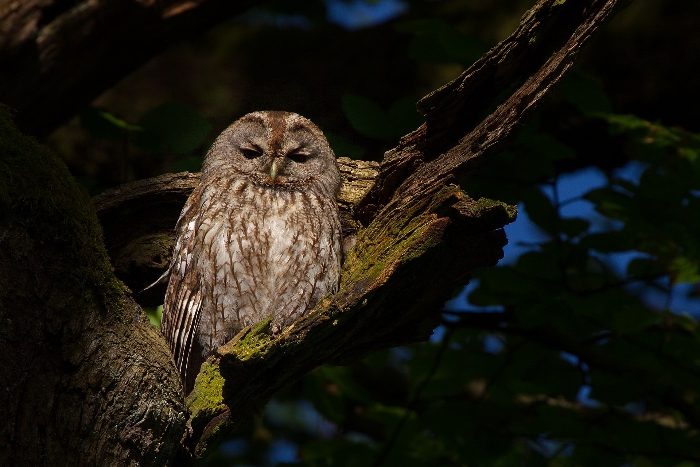
Image by Andreas Trepte - Own work, CC BY-SA 2.5, https://commons.wikimedia.org/w/index.php?curid=26228166
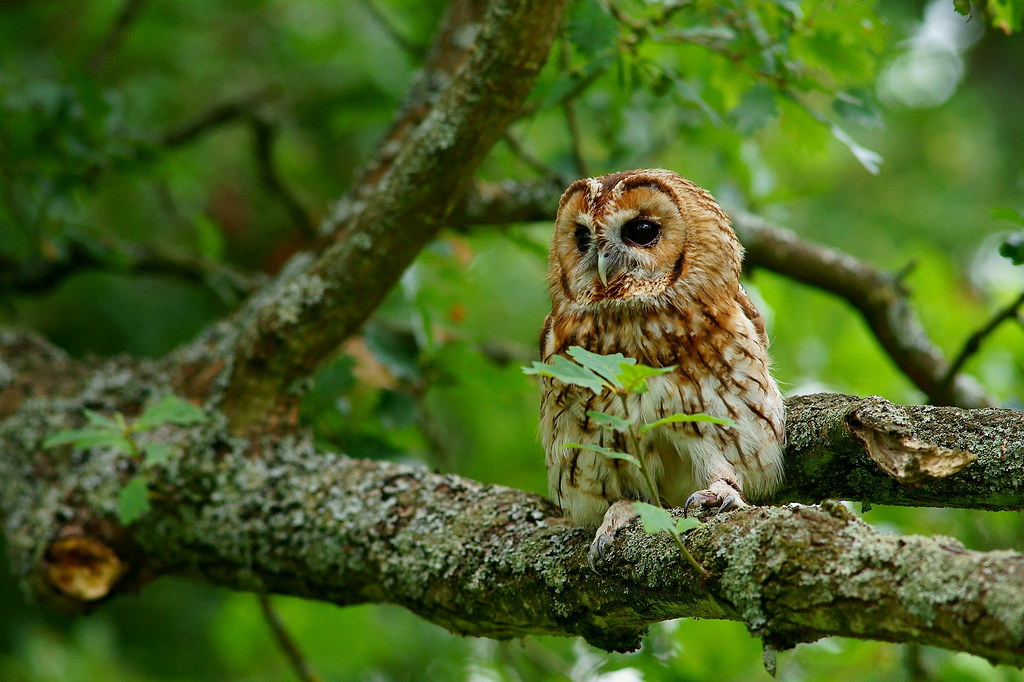
Tawny Owl
(C) Peter G Trimming (shared under a CC BY 2.0 license)
Scientific Name: Strix aluco
Appearance: Similar in size to woodpigeon or carrion crow, with large, round head. Large, black eyes set in obvious facial disc. Upperparts red-brown or grey-brown with row of bold white spots on each side. Underparts white, streaked brown. Brown wings, with dark barring and pale spots and bars evident in flight. Small, yellowish-white hooked bill.
Song: Male produces familiar long, quavering hoot. Both sexes produce yapping notes and loud ke-wick! calls, although the latter more commonly used by female.
When heard: Resident. Calls heard throughout year, with maximum vocal activity from February to May and August to October.
Example:
Hoot:
Ke-wick call :
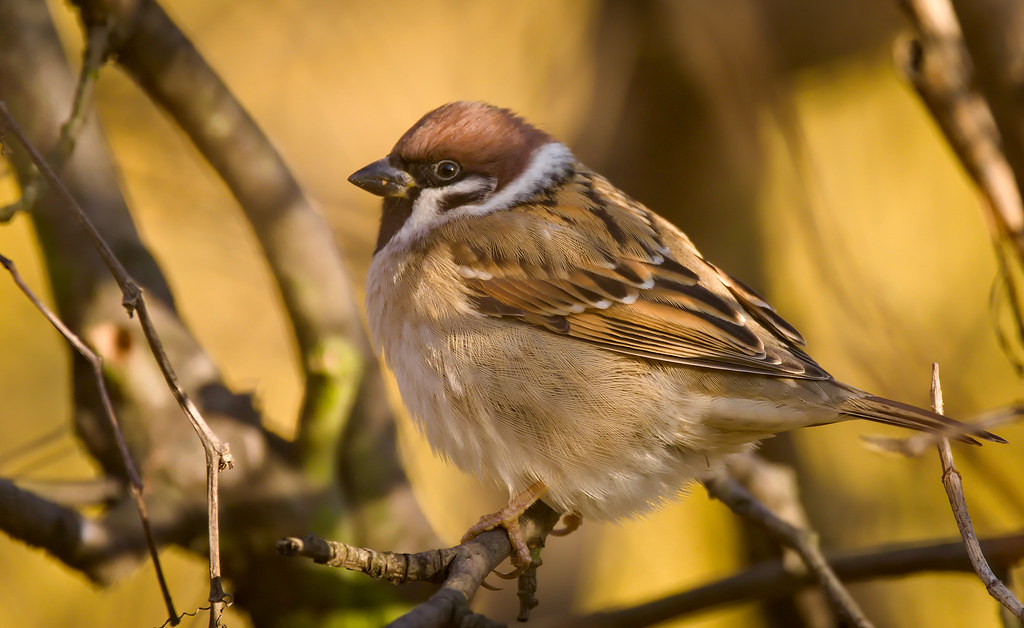
Tree Sparrow (Eurasian)
(C) hedera.baltica (shared under a CC BY-SA 2.0 license)
Scientific Name: Passer montanus
Appearance: Crown and nape rich rufous-brown. Black spot on whitish cheeks, black ‘mask’ and small, black ‘bib’ on throat. White collar. Back brown, streaked black. Underparts unmarked grey-buff. Double, thin, whitish wing-bar and buffish rump visible in flight. Sexes alike.
Song: Simple, bright, monotonous chirrup, similar to house sparrow, but readily distinguishable with experience.
When heard: Resident. Male chirping song produced during breeding period, from February through to September.
Example:
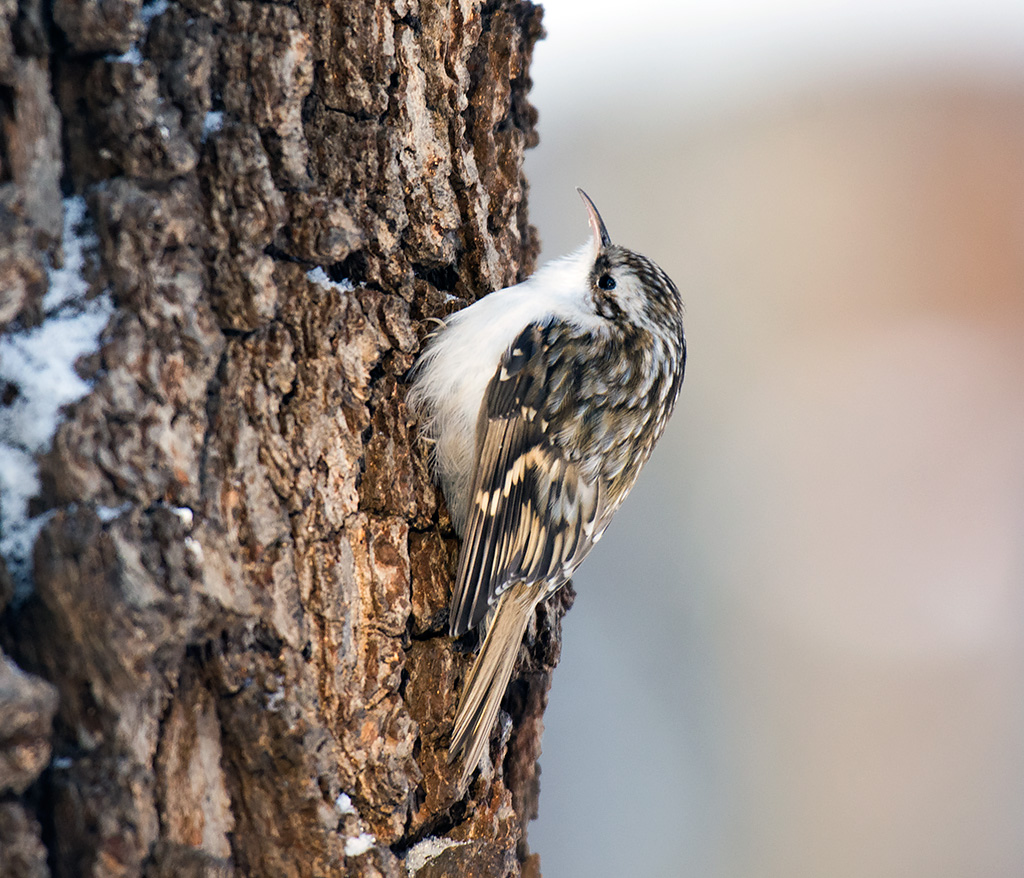
Treecreeper (Eurasian)
(C) Sergey Yeliseev (shared under a CC BY-NC-ND 2.0 license)
Scientific Name: Certhia familiaris
Appearance: Similar in size to blue tit. Fine, curved bill. Prominent white or whitish stripe over eye. Upper plumage brown with cream and dark mottling. Underparts light greyish-white to silky white. Dark wings display pale and white wing bars in flight. Sexes alike.
Song: High-pitched, musical, falling trill with final flourish.
When heard: Resident. Males sing from February through to the end of breeding in June or July.
Example:
Vole (any sp.)
Scientific name: Arvicolinae
Appearance: Small rodents that are relatives of mice but with a stouter body; a shorter, hairy tail; a slightly rounder head; smaller ears and eyes; and differently formed molars.
Water Shrew
Scientific name: Neomys fodiens
Family: Soricidae
Appearance: The Water Shrew is the largest shrew in Great Britain and is similar in appearance to the Common Shrew except it is larger and darker above. The pale underparts look very white in comparison (although there are some individuals that are completely black). The dense fur helps to insulate them from the cold and wet. Most Water Shrews also have a small tuft of white hair on the ears and white hairs around the eyes. The underside of the tail is also white.
Size: Head and body 6.3-9.6 cm; Tail 4.7-8.2 cm; Weight 8.23 g.
Natural history: Water Shrews can be found amongst dense vegetation on the banks of both fast-flowing freshwater streams and rivers and still waters such as ponds, canals and marshes. In Scotland they are also found on rocky beaches. They live in burrows which they either dig themselves or utilise abandoned rodent burrows. Generally solitary, they maintain territories - but not aggressively - and individuals may live quite close together. They feed both on land and underwater on crustaceans, insect larvae, snails, frogs, newts, beetles, worms and millipedes (other British shrews do not forage underwater and rarely swim). They are also unusual in having venomous saliva which helps to stun their prey. They are active throughout the year. Breeding takes place between April and September, but most births occur in May and June. The females have one or two litters a year containing an average of six young. The young are born blind and helpless and may remain with their mother for up to 40 days.
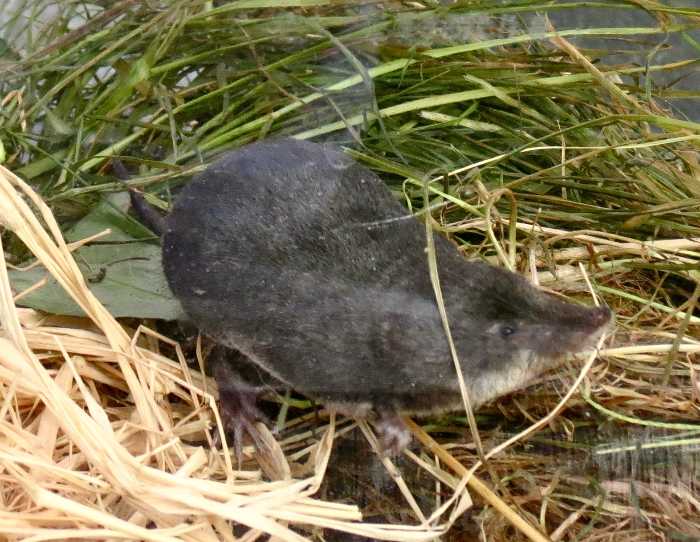
(C) Wildlife in a Dorset garden (shared under a CC BY-NC-SA 2.0 license)
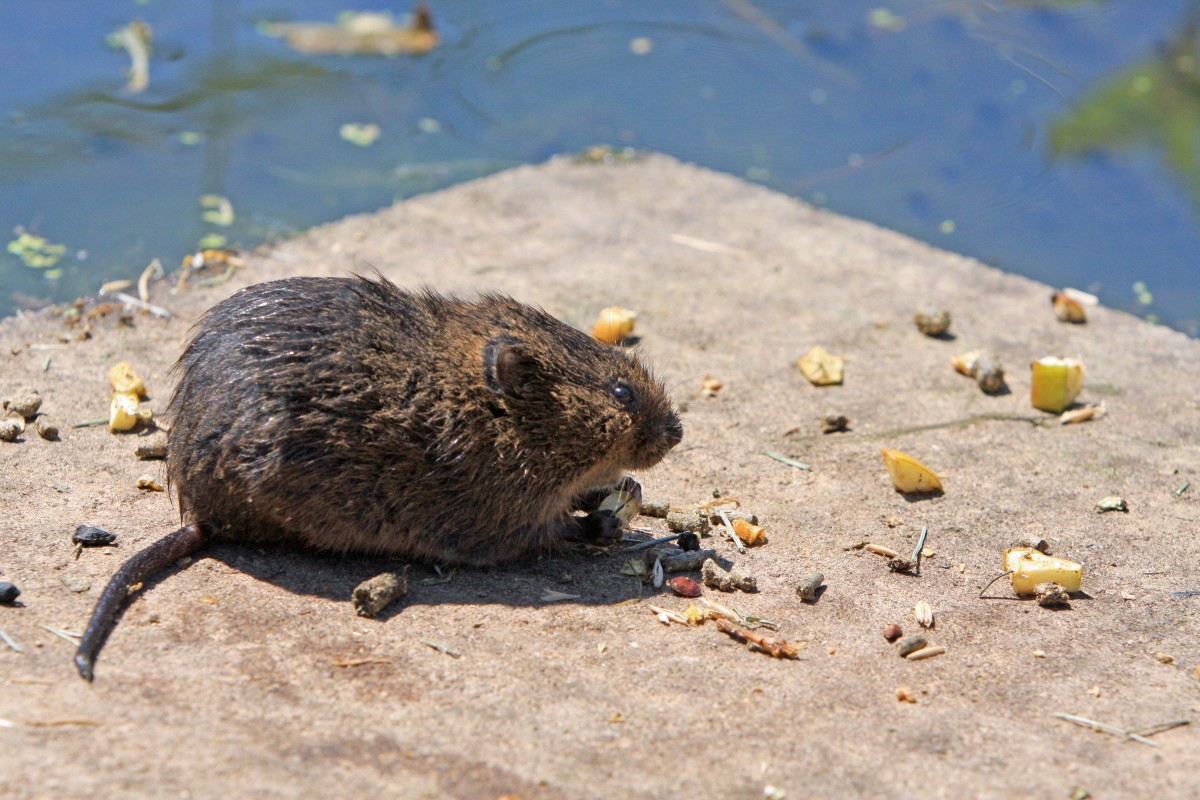
Water vole
Scientific name: Arvicola terrestris
Appearance: Relatively large with chestnut-brown fur, a blunt, rounded nose, small furry ears, and a furry tail.
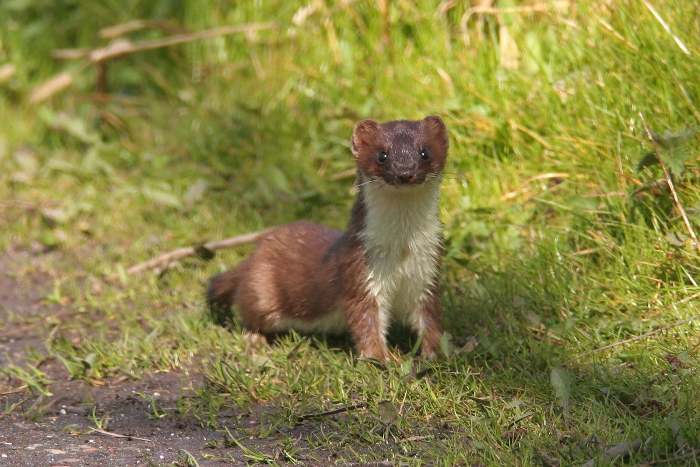
Weasel
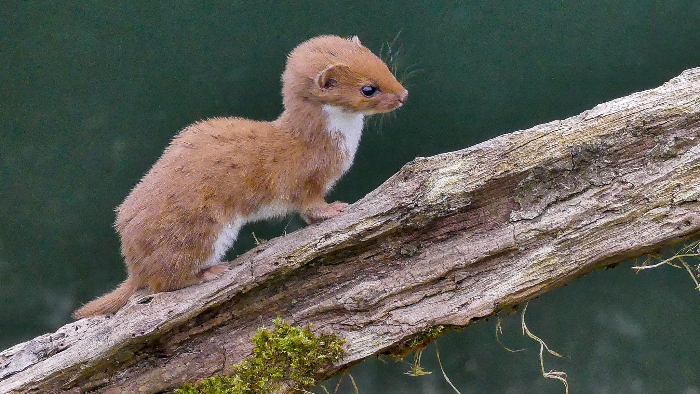
(C) Mike Prince (shared under a CC BY 2.0 license)
Scientific name: Mustela nivalis
Family: Mustelidae
Appearance: Weasels have a very small elongated body with russet-brown fur everywhere except their white breasts. Unlike stoats, the tail has no black tip and the fur does not turn white in winter.
Size: Body length: 114-260 mm Tail length: 12-87 mm Weight: 29-250 g
Natural history: Weasels mainly eat small rodents. However, they have been known to take prey as large as a brown hare. Their long thin body lets them squeeze into rodents’ burrow to hunt, but also gives them a very high surface area to body ratio. This means they lose heat rapidly, so they have to eat very often.
Weasels nest in their prey’s former burrows, lined with hay or moss. In the nest, females raise one litter of three to six kittens each year.
Weasels are excellent climbers. In Inuit mythology, weasels are considered wise and courageous.
Western Hedgehog
Scientific name: Erinaceus europaeus
Family: Erinaceidae
Appearance: Hedgehogs are brown with spines covering their backs.
Body length: 25 cm Tail length: 2-3 cm
Weight: up to 2 kg
Natural history: Hedgehogs mainly eat invertebrates but have a varied diet that also includes birds’ eggs and amphibians. They are regularly found in gardens, where they eat pests such as slugs. Nonetheless, urban development and habitat loss contribute to their current decline. Hedgehogs are known for curling into balls with their spines facing outwards to protect themselves from predators. However, so many are being killed on roads that they are now losing this trait to better escape cars. Hedgehogs hibernate through the winter. They may wake from hibernation occasionally to find additional food or move nests.
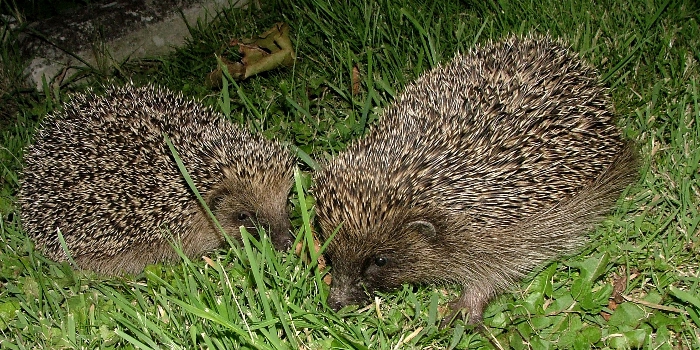
(C) Giles Watson (shared under a CC BY-NC-ND 2.0 license)
White-tailed deer
Scientific name: Odocoileus virginianus
Appearance: Reddish-brown to grey-brown coat, characteristic white underside to the tail, males have antlers with a variable number of prongs.
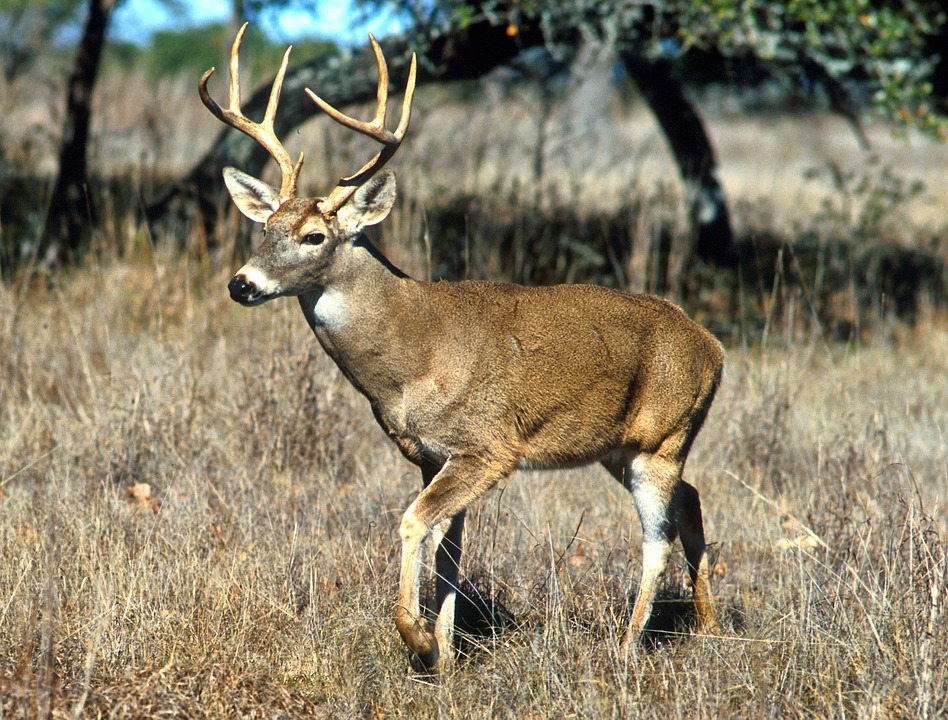
(C) (shared under a CC0 license)
Wild Boar
Scientific name: Sus scrofa
Family: Suidae
Appearance: Wild Boar are dark-coloured with an abundance of bristly hair that can vary in colour from black to light brown. The piglets are born with brown and white/yellow stripes leading to them being called ‘humbugs’. They lose their stripes after about 3-4 months when they develop a reddish-brown coat.
Size: Body length 0.9-1.8 m; Height at shoulder 55-110 cm; Weight 100-175 kg (male), 80-120 kg (female).
Natural history: Wild Boar although native to Britain were hunted to extinction in the Middle Ages. The current extant population is made up of a mixture of animals that either escaped, or were deliberately released, from Wild Boar farms in the past 40 years. Still confined to discrete areas of the country such as the Forest of Dean in Gloucestershire and the Sussex Weald, they inhabit woodland that provides plenty of cover. They are active throughout the year and are mainly nocturnal and crepuscular. They can cover large areas during a night’s foraging (depending on the availability of food) but will return to the same resting place during the day. Wild Boar are predominantly herbivorous eating a wide variety of nuts, seeds, fruits and crops. However, they will also take invertebrates, carrion and the eggs and chicks of birds.
Males are solitary except during the rut which begins in winter. Females (sows) and young offspring form informal groups known as ‘sounders’ which may consist of between 6 and 30 animals. The peak time for giving birth is April. A sow will leave the group at this time to construct a ‘farrowing’ nest where she will give birth to 4-6 piglets and will remain in the nest with her new offspring for between 4 and 6 days. She will then rejoin the group and the piglets will cross-suckle between other lactating sows.
Wild Boar will breed with domestic and feral pigs resulting in hybrids. Some populations may be made up of a mixture of all three.
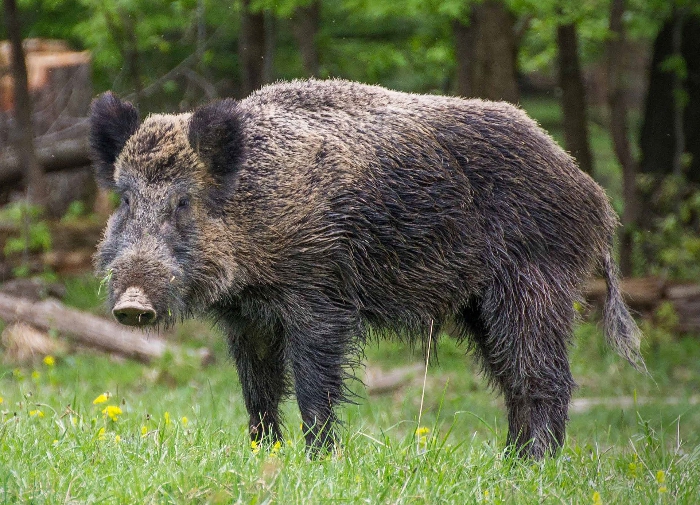
Image by Valentin Panzirsch - File:Wildschein, Nähe Pulverstampftor.jpg, CC BY-SA 3.0 at, https://commons.wikimedia.org/w/index.php?curid=46902117
Willow Tit
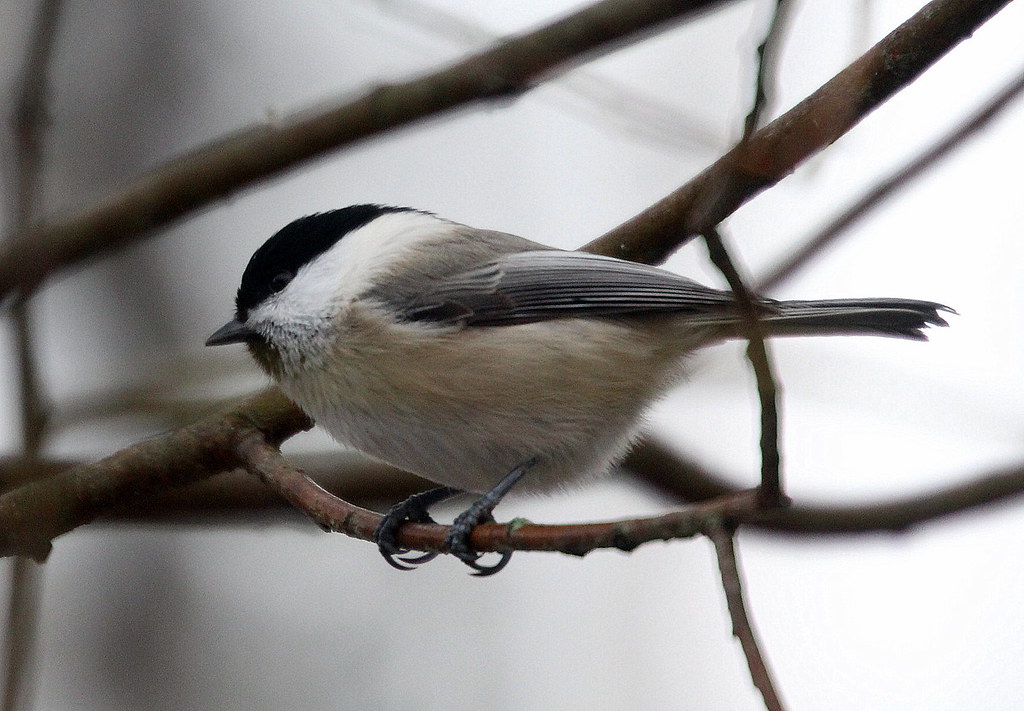
(C) irio.jyske (shared under a CC BY 2.0 license)
Scientific Name: Poecile montanus
Appearance: Difficult to distinguish from marsh tit, but overall appearance is of a less neat-looking bird. Large, dull black cap extending to back of neck. Small, black ‘bib’ on chin, less sharply defined than marsh tit. White cheeks. Upperparts dull grey-brown. Underparts dull grey-buff, with orange-buff flanks. Pale panel often visible on brown wings when folded. Sexes alike.
Song: Simple, clear, repetition of descending piping notes, tyoo tyoo tyoo.
When heard: Resident. Peak singing activity during nest excavation in March and April, but may be heard throughout breeding season from February to July.
Example:
Willow Warbler
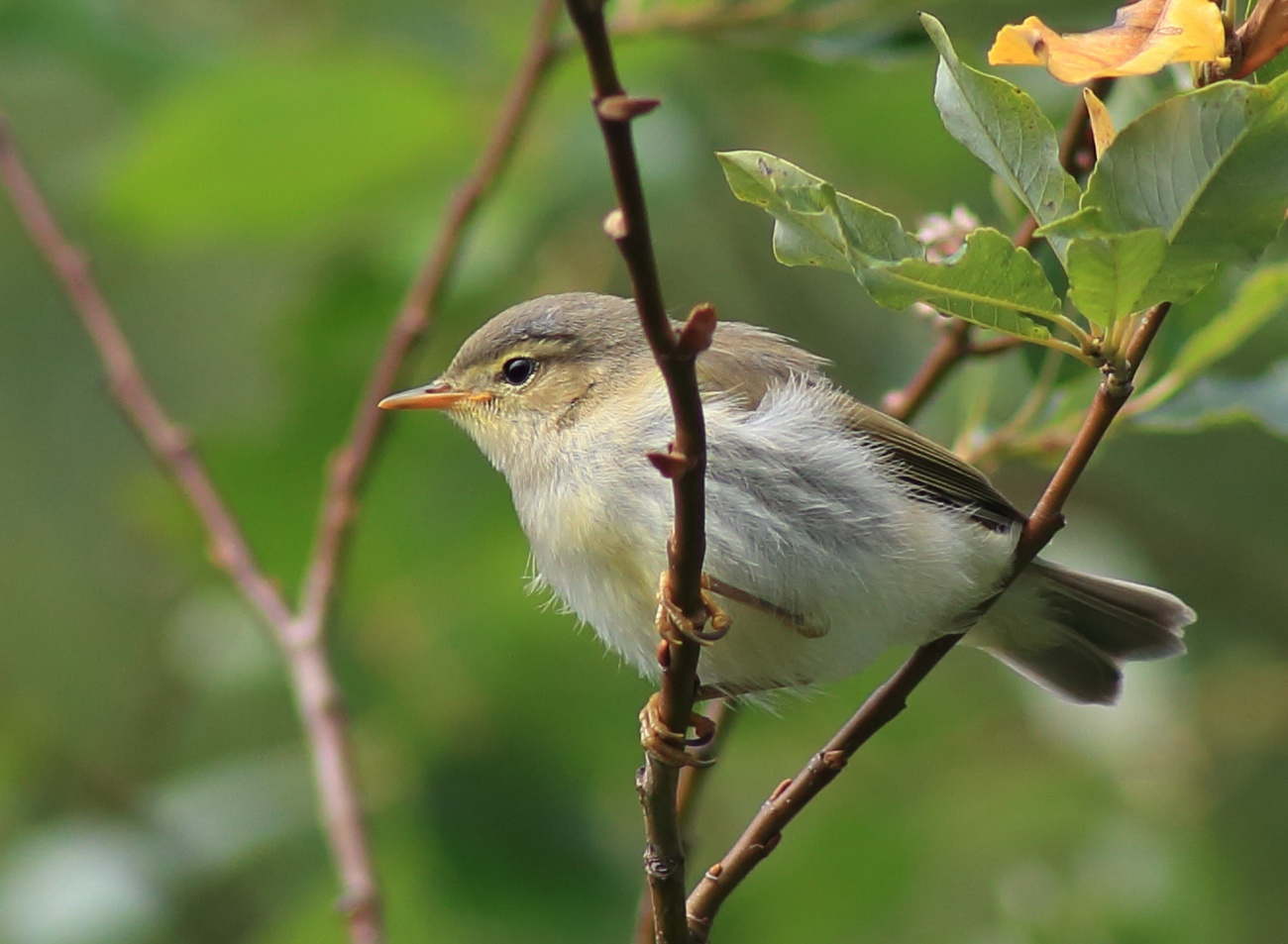
(C) Estormiz (shared under a CC0 1.0 license)
Scientific Name: Phylloscopus trochilus
Appearance: Small and slim with short, thin bill. Pale yellowish or whitish stripe over eye. Grey-green to olive-brown upperparts. Throat and breast dull yellow or off-white usually with variable amount of yellow streaks, flanks sometimes faintly tinged buffish. Juvenile birds may have an overall brighter appearance, with more yellow or buff in plumage. Legs usually medium or light dull brown, distinguishing from chiffchaff in the field, but can also be rather dark grey-brown. Sexes alike.
Song: Cascading, spiralling warble, falling thinner before fading, sometimes with slight flourish. May be likened to chaffinch, but sweeter, more melodic. Song bouts consist of similarly constructed phrases repeated at regular intervals.
When heard: Summer migrant. Males sing upon arrival from April through to the end of breeding in August.
Example:
Wood Mouse
Scientific name: Apodemus sylvaticus
Family: Muridae
Appearance: The Wood Mouse is one of Britain’s most abundant mammals. In appearance it is typically mouse-shaped with a long tail, pointed muzzle and large ears. It has dark brown fur with whitish underparts and its eyes are prominent and black. Some animals have a small, isolated, yellowish chest patch. Where present this is always smaller than the yellow neck and chest markings on the Yellow-necked Mouse.
Size: Head and body 6.1-10.3 cm; tail 7.1-9.5 cm
Natural history: Despite its name the Wood Mouse is not restricted to woodland habitats and may be found in gardens, road verges, hedgerows and arable fields as well as on moorland and heathland. Wood Mice are largely nocturnal and live in burrows underground which have round entrances. They do not hibernate but may be less active in cold winters when burrows may be shared with others. During the breeding season they are more territorial. Breeding begins in March and runs through until at least October. Females may have four litters a year – or more in favourable conditions. A litter is made up of 4-7 young which are weaned at around 18 days. They feed on a variety of items including seeds, nuts, berries, snails, insects, centipedes and worms.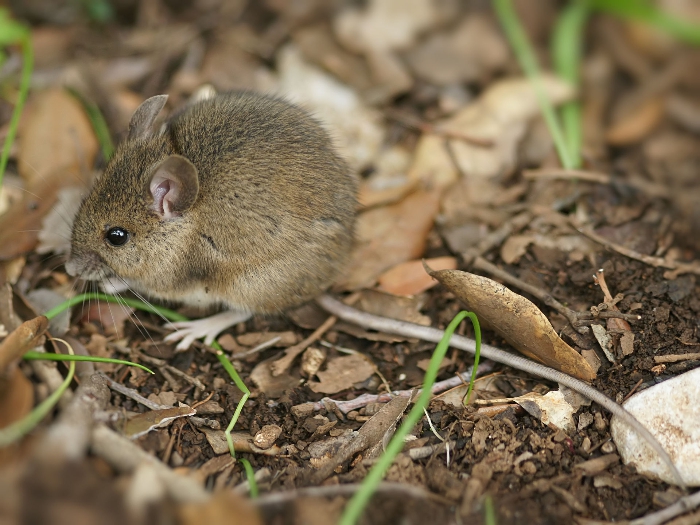
Image by © Hans Hillewaert /, CC BY-SA 3.0, https://commons.wikimedia.org/w/index.php?curid=10179776
Wood Warbler
(C) nickathanas (shared under a CC BY-NC-SA 2.0 license)
Scientific Name: Phylloscopus sibilatrix
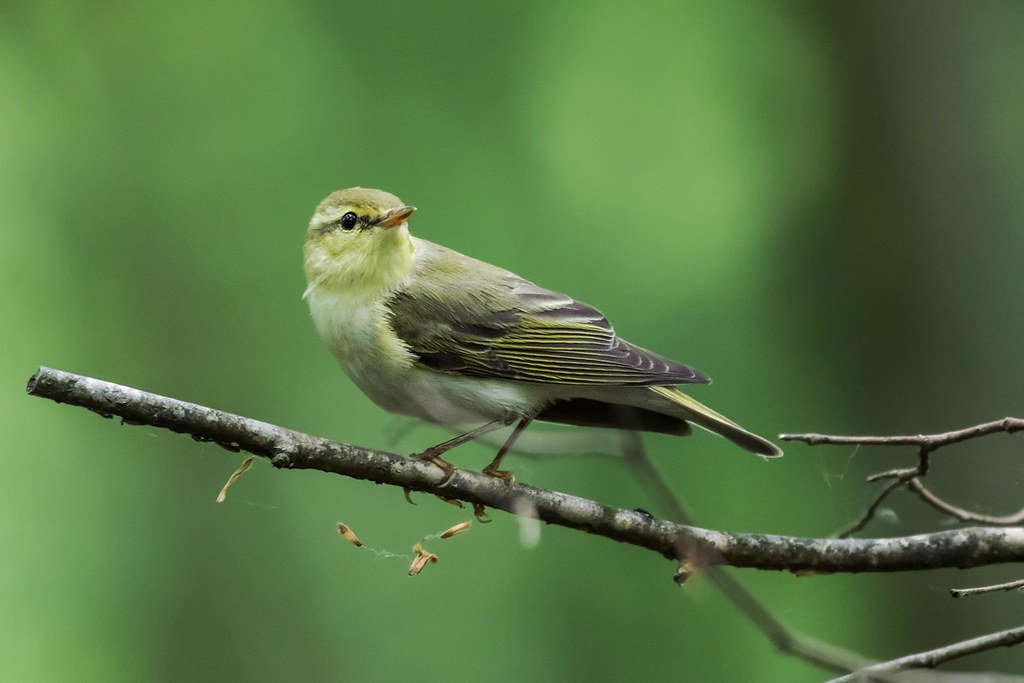
Appearance: Larger and more robust than chiffchaff and willow warbler, and has an overall brighter appearance than both. Head and upperparts bright green. Long, wide yellow stripe over eye and dark line through eye. Chin, throat and upper breast yellowish-green. Underparts silky white. Brown flight feathers contrastingly edged pale yellowish. Sexes alike.
Song: High ticking, accelerating and descending into a vibrant trill, ti-ti-ti-ti-ti-tik-ik-ik-ikirrrrrrrrrrr.
When heard: Summer migrant. Males sing upon arrival from mid- to late-April, through to the end of nesting around the end of July.
Example:
Woodpigeon
Scientific Name: Columba palumbus
Family: Columbidae
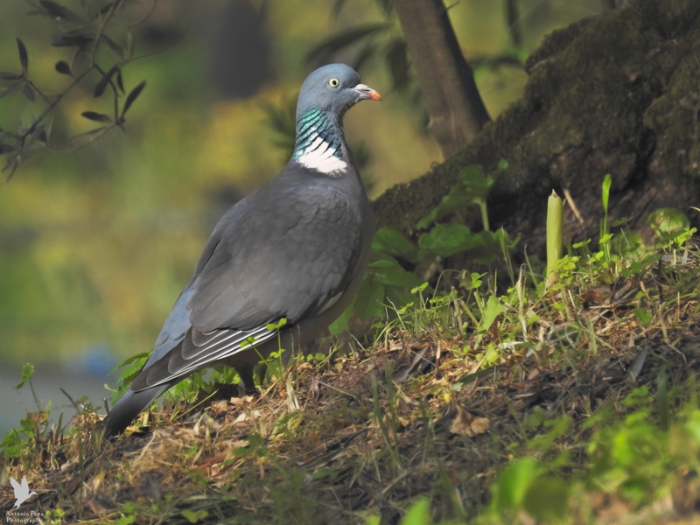
Appearance: Woodpigeons are mostly grey, with white collars, pinkish breasts and orange beaks.
Body length: 38-44.5 cm
Weight: 300-615 g
Natural history: Woodpigeons are found throughout the UK, excluding parts of the Scottish highlands. They have distinctive loud cooing calls and clattering wingbeats. Crops are a large part of their diet, alongside shoots, berries and nuts.
(C) António Pena (shared under a CC BY-NC-SA 2.0 license)
Woodpigeon (Common)
(C) hedera.baltica (shared under a CC BY-SA 2.0 license)
Scientific Name: Columba palumbus
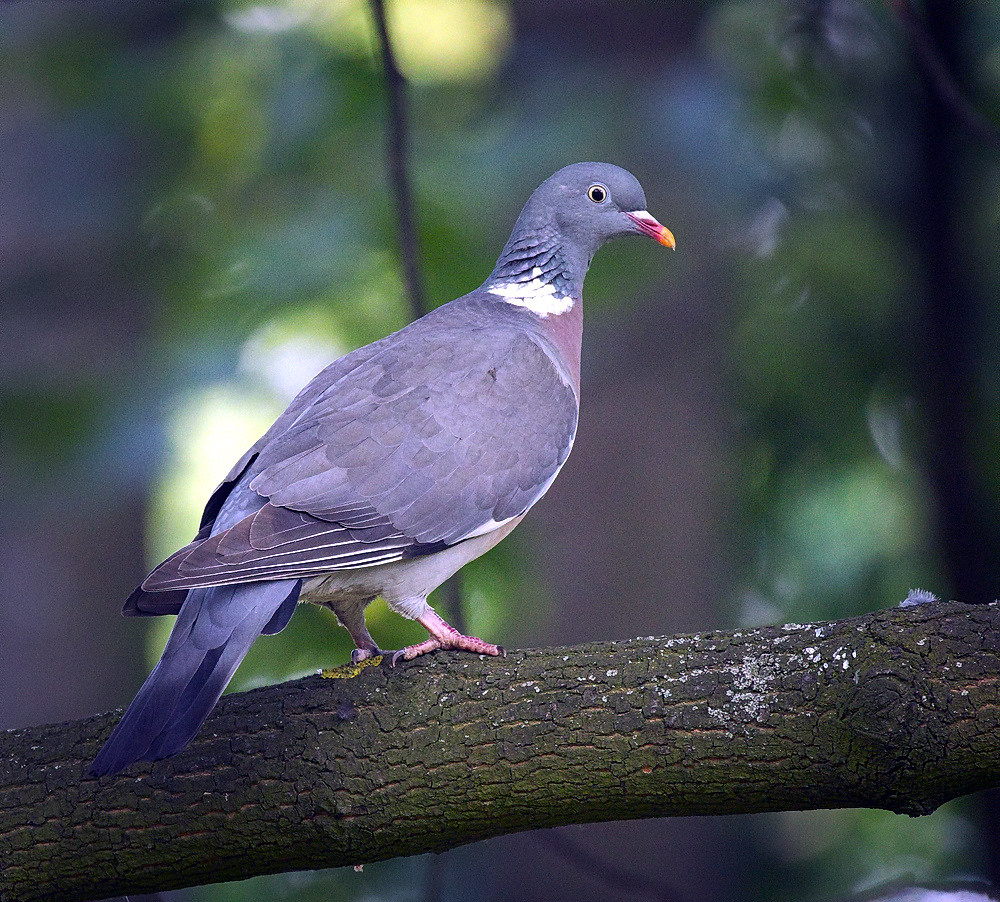
Appearance: Large size. Uniform dark slate-grey head and back with paler grey rump. Bold white patch on side of neck. Deep pink breast. Dark outer-wings and broad white stripe across mid-wings displayed in flight. Sexes alike.
Song: Deep, muffled, five-note territorial coo, with increased emphasis on the second note, cu-cooo-cu, cu-coo.
When heard: Resident. Coo may be heard more or less year-round, but less frequently in autumn and winter months.
Example:
Wren (Eurasian)
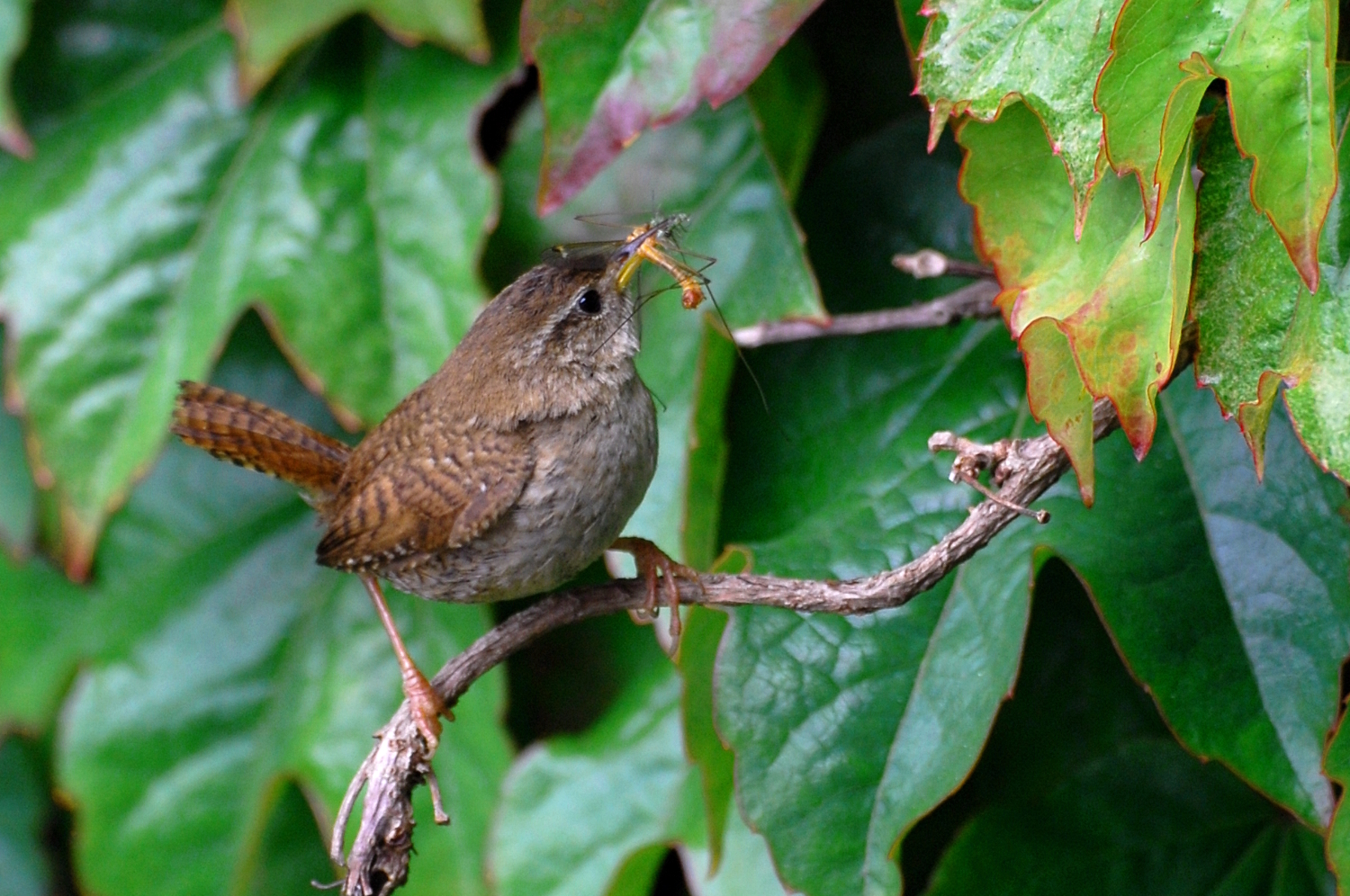
(C) Stuart Brooker
Scientific Name: Troglodytes troglodytes
Appearance: Very small, with a short, rounded tail, often held cocked, and a thin, long bill. Plumage is rufous-brown above with pale buffish-brown underside. Fine, dark barring and off-white markings on tail, wings and flanks, and a distinct long, pale stripe over the eye.
Song: Loud and hurried outburst with distinctive low, hard ‘machine-gun’ trill and fast, ringing notes.
When heard: Resident. Song is produced year-round with no obvious seasonal pause, although much less often heard in autumn and winter months.
Example:
Yellow-necked Mouse
Scientific name: Apodemus flavicollis
Family: Muridae
Appearance: The Yellow-necked Mouse is larger than the Wood Mouse with an orangey-brown coat above and white underparts. It has a band of yellowish fur which runs across its chest which gives it its name and is its distinguishing feature. It also has larger ears, more bulging eyes and a longer thicker tail than the Wood Mouse.
Size: Head and body 9.5-12 cm; Tail 8-11 cm; Weight 14-45 g.
Natural history: The Yellow-necked Mouse is largely nocturnal and generally inhabits mature, deciduous woodland. It is confined to the southern half of Britain from Dorset to Kent and Suffolk and the Severn Basin from Gloucestershire to Staffordshire. It is an excellent climber and forages both on the ground and in the canopy. The diet of the Yellow-necked Mouse consists mainly of tree seeds, but it will also take fruit, buds and some insects. The breeding season runs from February to October and females will have up to three litters a year each containing an average of five young. The juveniles are born blind and naked the eyes opening after around 13-16 days.
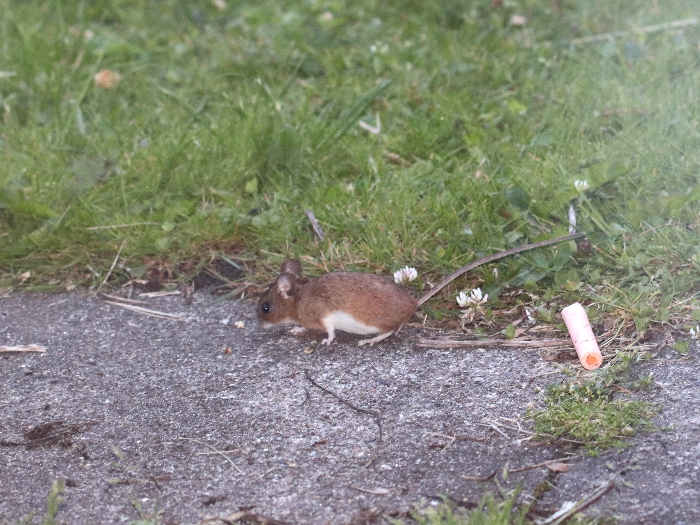
(C) Donald Hobern (shared under a CC BY 2.0 license)
Page 2 of 2